Sites & Travel
Less travel, and more energy efficient offices and factories, will contribute to emission reductions.
Sustainability

Less travel, and more energy efficient offices and factories, will contribute to emission reductions.
Scope 1 and 2 emissions
Our ambition is to achieve net-zero emissions in all of our sites and offices by 2030. To achieve this, we are deeply committed to minimizing scope 1 and 2 emissions, targeting a reduction of 90-95% through focused initiatives.
We will also procure high-quality carbon removal credits to offset any residual emissions. Our preference lies with Direct Air Capture (DAC) projects, as recommended by the globally recognized Science-Based Target initiative.
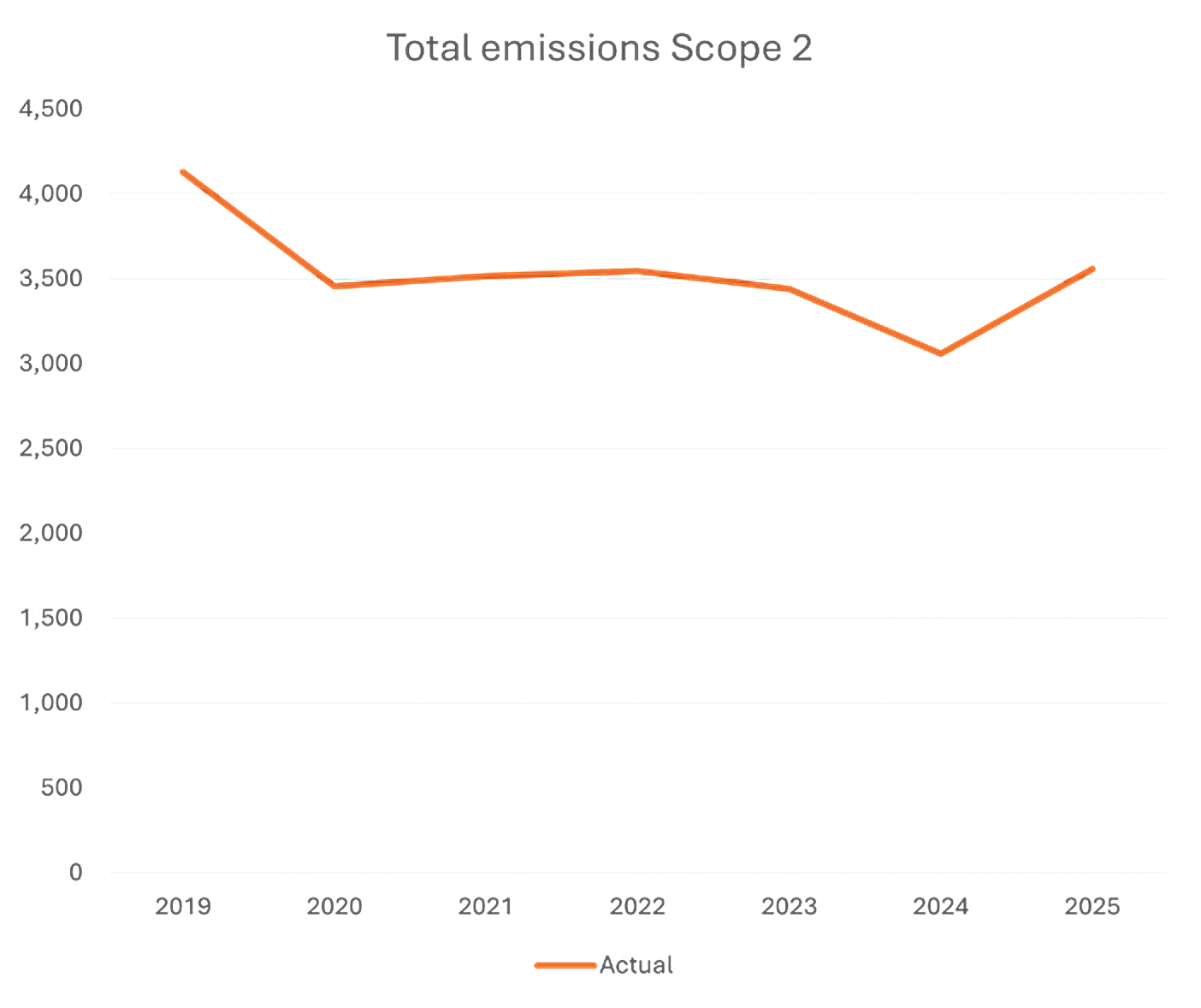
Scope 2 emissions account for less than 5% of our total emissions. From 2024 to 2025, emissions increased by 16% due to higher power usage across our facilities.
However, compared to our 2019 baseline, total Scope 2 emissions have decreased by 14% by 2025
STORY
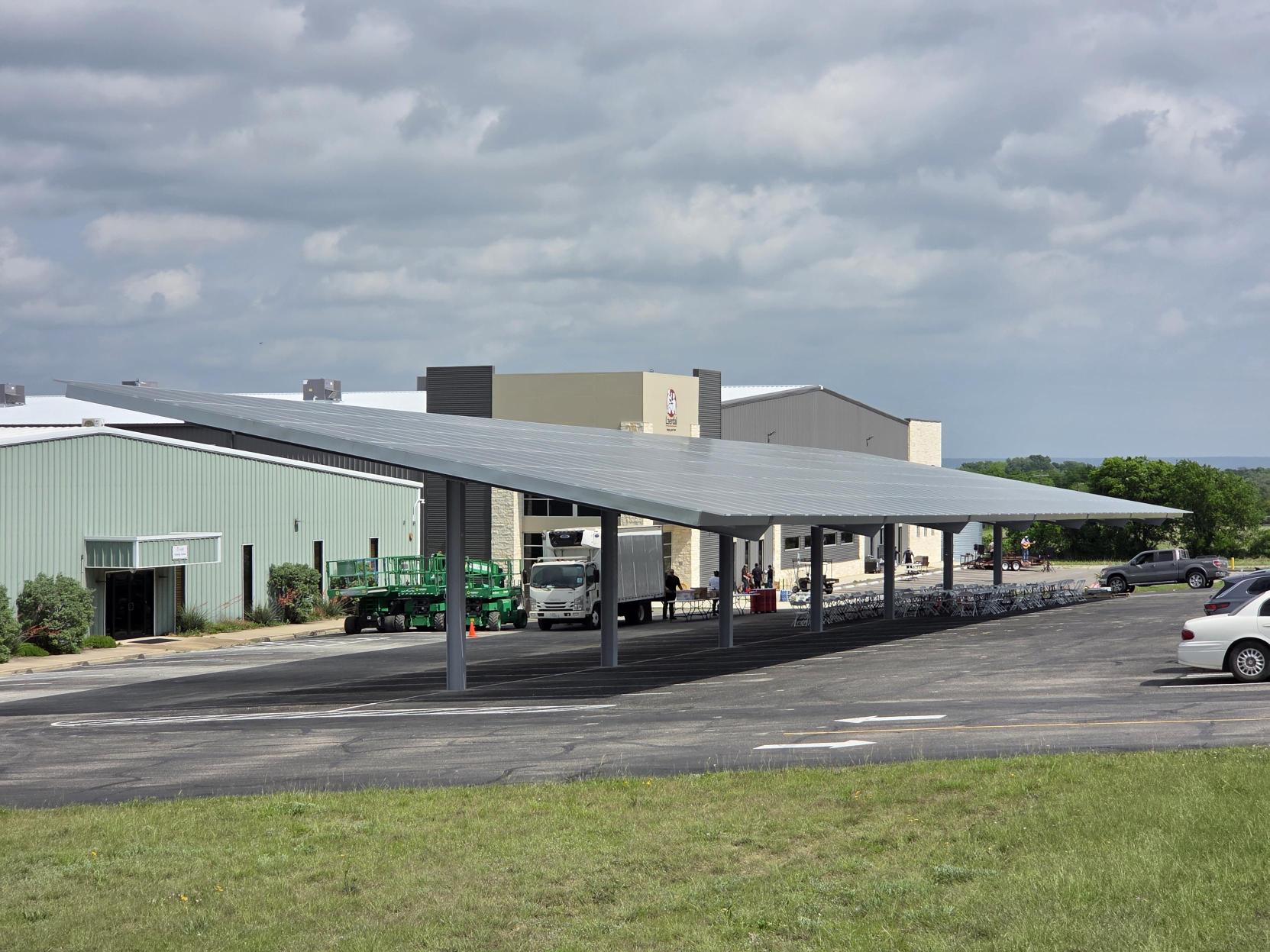
Construction is starting on Phase 3 of our solar installation in Gatesville.
The project will add 177 kW of solar panels and generate around 265 MWh of renewable energy each year, helping to reduce emissions by approximately 124 tonnes of CO₂e annually.
The system will be integrated into a solar carport, providing both clean energy and covered parking for employees and visitors.
Once operational in summer 2026, the installation will help offset the increased electricity demand from the new fully electric distribution building.
Although emissions from travel only make up 3% (2,000 tons of CO2e) of our overall emissions, they are a crucial area where we can realize increased efficiency and cost savings. Our focus on good practices has led to a reduction in emissions. However, the pandemic has further underscored the importance of transitioning to virtual communication, both internally and with our customers and partners.
While physical gatherings remain valuable, most of our communication now takes place online. We aim to conduct at least 80% of our services virtually by 203, with the potential to reduce emissions by 8 to 5 thousand tons of CO2e.
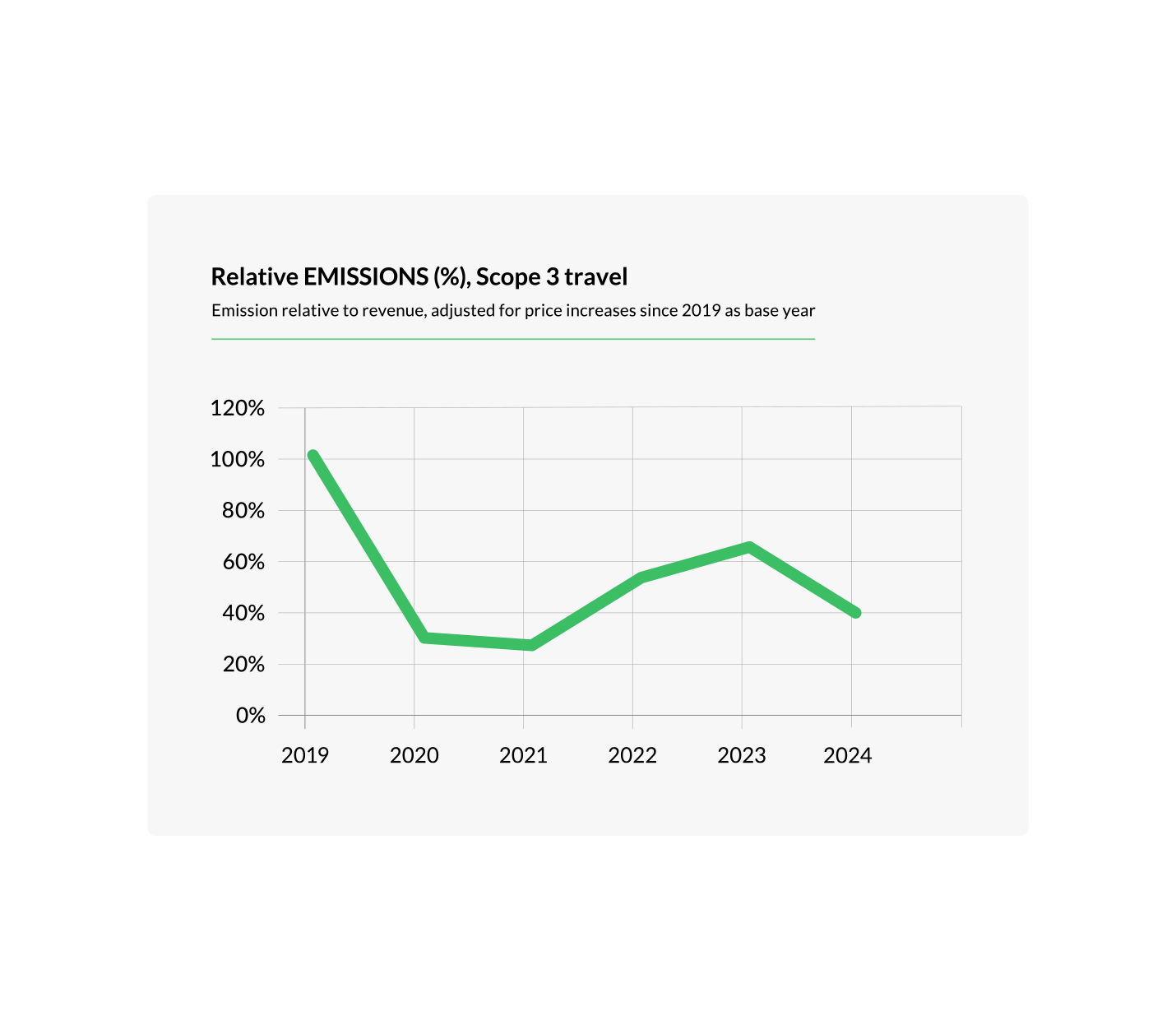
Travel-related emissions represented 21% of total emissions in 2019; in 2023, it was down to 16%. In 2024, it was further reduced and today accounts for 11% of total emissions.
In relative numbers, we see a significant reduction in emissions from 2019 to 2020 and 2021. This is due to extraordinarily low emissions from travel due to the COVID pandemic. As the model shows, the reduction in 2024 indicates a 39% reduction compared to 2023 and 52% compared to 2019.