
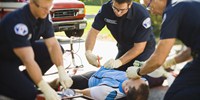
Simulation: an emerging solution
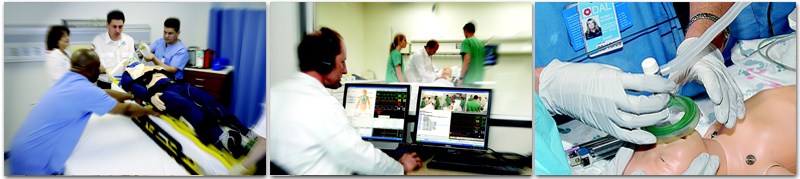
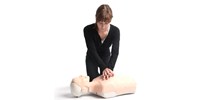
The recognition of the need for more effective and safer teaching methods is not new, but in William Mayo’s time, there was no alternative to the ‘text book, ward-round and then do’ system of medical training. Neither is simulation a new and sudden breakthrough in medical education. In 1960, the Resusci Anne manikin revolutionized CPR training, not just in its effectiveness for teaching CPR skills but also in its far reaching scope to train this life saving skill to millions of people around the world. However, medical simulation in the context of healthcare curricula is still in its infancy and where it exists, is largely due to a minority of individuals and professional groups who have given time and resources to explore its methods and benefits.
In the current wake of growing public awareness of medical errors and a shift in both public and professional opinion that it is no longer acceptable to practice procedures and manage clinical events for the very first time on a patient, one can learn much from the long experience and heavy use of simulation in non-medical industries. It is interesting to note that these industries - commercial aviation, nuclear power production and the military (industries that, in common with healthcare, share intrinsic hazard and complexity) - are widely considered to be highly reliable and safety conscious organizations with in-built systematic safeguards and a very low failure rate, considering their obvious risks.
 Times are changing
Recent technological advancements and innovations have generated possibilities in healthcare training that were previously unavailable. Not least amongst these advances, is the degree in which patient simulators replicate realistic physiological responses to an ever increasing range of defined clinical interventions. Instructors can now create, control, and deviate clinical scenarios through sophisticated software and this way optimize learning opportunities. But perhaps most important of all, simulation offers the means to set a consistent and universally agreed standard for patient care, by which all performances can be measured and standardized. However, the technology does not define simulation, but facilitates it and supports the established elements of the widely accepted Utstein Formula for improved survival.
We believe
At Laerdal, we believe that simulation training for Healthcare Professionals is pivotal in our common goal to improve patient outcomes. Simulation provides the opportunity to train staff without risk to patients. The ability to practice frequently and manage complex medical scenarios helps prevent medical errors, and the subsequent detailed feedback promotes discussion and reinforces the learning process. Simulation will enable your staff to deliver better quality patient care with more integrity, improved consistency, and enhanced confidence.
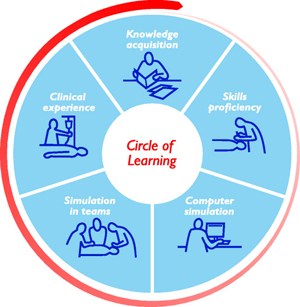 The Circle of Learning
helping build competence
Laerdal has been offering learning products responding to evolving needs in emergency medicine ever since the introduction of Resusci Anne in 1960. Today our range of life saving, cost-efficient learning products include graphic source materials, innovative skills trainers, interactive computer simulators and advanced patient simulators. This reflects our belief that helping build competence is a critical part of our mission of helping save lives.