Healthcare Simulation Funding: How to Find Grants and Financial Support
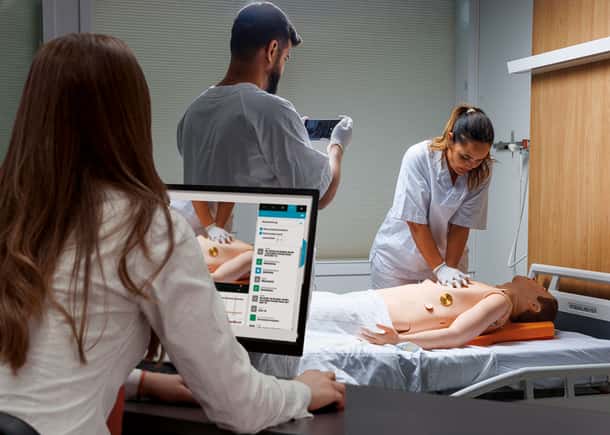
Simulation can help expand clinical education, strengthen workforce readiness, improve patient safety, and prepare learners for practice. However, finding healthcare simulation funding for programs, faculty development, equipment, and training often requires exploring opportunities beyond those labeled as “simulation grants.”
Many grants that support simulation-based education fall under broader categories such as nursing education, workforce development, clinical training, patient safety, rural health, and health professions education. Federal programs, including HRSA initiatives, have incorporated simulation-based technology as part of broader efforts to strengthen healthcare education and workforce readiness.1,2
Whether you lead a nursing program, simulation center, EMS initiative, or healthcare workforce project, knowing how to identify and evaluate funding opportunities can help you find opportunities that align with your organization’s goals.
Healthcare simulation funding may be available through government agencies, foundations, corporations, healthcare organizations, and academic institutions. Successful applicants often connect simulation initiatives to broader goals such as workforce development, nursing education, clinical training, patient safety, or community health improvement. Opportunities can frequently be identified through Grants.gov, foundation directories, and institutional funding programs.
Before searching for funding, define the problem your project addresses.
Simulation often supports objectives such as:
Funding may support:
Key takeaway: Connect simulation to measurable educational, workforce, or patient-care outcomes.
Many simulation-related grants are found within broader funding streams, including:
Programs like HRSA’s NEPQR-SET have supported simulation as part of larger nursing education and workforce development initiatives.
Organizations can search Grants.gov by category, eligibility, agency, and funding type to identify opportunities that align with their goals.
Key takeaway: Look for grants tied to program outcomes, not just simulation.
Simulation funding may come from:
Government funding may support workforce development, nursing education, public health, emergency preparedness, and rural healthcare initiatives. Grants.gov is a common source for federal opportunities.
Many foundations support education, community health, population health, workforce development, and health equity initiatives.
Corporate funders may support healthcare education, technology-enabled learning, workforce readiness, and community impact projects.
Hospitals, universities, and health systems may offer innovation grants, internal funding programs, faculty development support, and community benefit initiatives.
Key takeaway: Opportunities often exist outside the traditional simulation community.
Many funders prioritize project impact and intended outcomes.
Simulation can contribute to:
Organizations that demonstrate how simulation contributes to meaningful outcomes are often better positioned to show project value.
Key takeaway: Explain how simulation drives measurable outcomes aligned with funder priorities.
Review requirements carefully before investing significant time in an application.
Common considerations include:
Depending on the opportunity, applicants may include nursing schools, healthcare facilities, academic-clinical partnerships, community-based organizations, and tribal organizations.
Key takeaway: Confirm eligibility early so your team can focus on the strongest opportunities.
Your proposal should clearly explain:
Potential outcomes may include:
Key takeaway: Connect requested resources to measurable educational, workforce, or patient-care outcomes.
Examples include:
These examples illustrate how simulation is frequently connected to broader workforce, education, and patient-care objectives.
While some funding opportunities are simulation-specific, many are found within broader areas such as nursing education, workforce development, patient safety, rural health, and clinical training.
By defining objectives, exploring multiple funding sources, verifying eligibility requirements, and connecting simulation initiatives to meaningful outcomes, organizations can build a stronger strategy for identifying and pursuing funding opportunities.
Healthcare simulation funding refers to grants or financial support for simulation-based education, workforce development, faculty training, clinical education, or patient safety initiatives.
Potential sources include government agencies, foundations, corporate giving programs, healthcare systems, and academic institutions. Grants.gov is a commonly used resource for federal opportunities.
Some opportunities allow equipment purchases, while others focus on educational programming, faculty development, workforce initiatives, or training expansion. Always review the funding announcement for allowable uses of funds.
Organizations can strengthen proposals by clearly defining the problem, explaining why simulation is an appropriate strategy, identifying anticipated outcomes, and describing how results will be measured.