Airway Management Trainers
Designed for realistic practice of airway management skills.
En savoir plus

In the evolving world of modern healthcare, respiratory care teams encounter many challenges that require a versatile skill set. Because of this, the scope of clinical practice is expanding, demanding more specialized training to ensure healthcare teams are providing patients the best care possible.
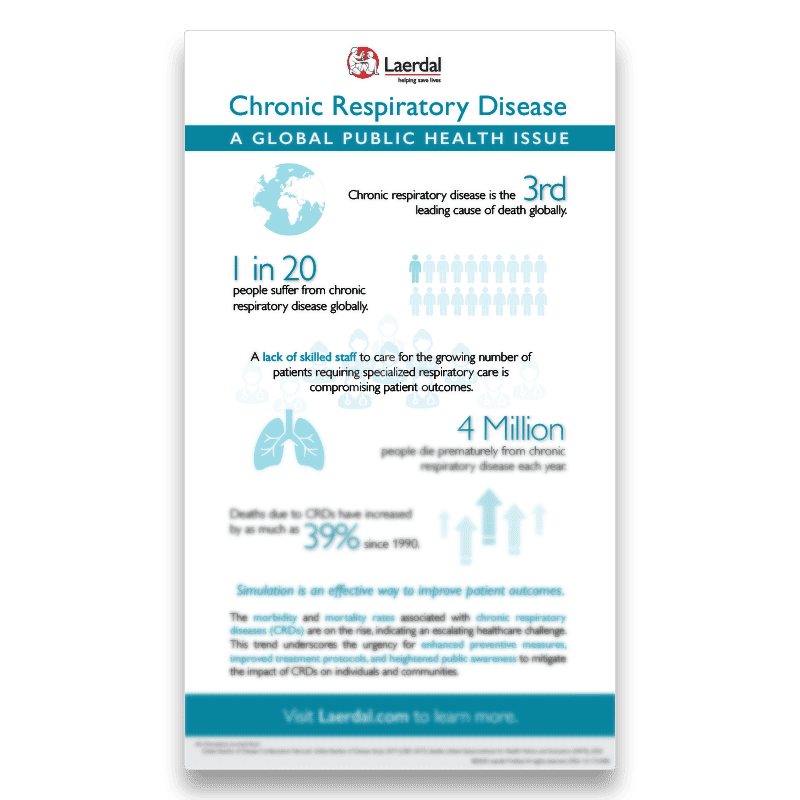
The challenges faced by the respiratory care community were heightened during the COVID-19 pandemic, affecting patient care and safety for those suffering from acute respiratory illness and chronic respiratory diseases (CRDs). Chronic conditions have been a significant contributor to premature mortality rates worldwide, as revealed by the alarming statistics from the 2019 Global Burden of Disease Study1. These findings underscore the urgent need for improved preventive, diagnostic, and therapeutic measures.
This study, along with others, emphasizes the need for respiratory care improvement strategies. Some of these include raising public awareness, improving access to diagnostic tools and medications, and providing more specialized training in respiratory care.
The rise in chronic respiratory diseases (CRDs) underscores the urgency for enhanced preventive measures, improved treatment protocols, and heightened public awareness to mitigate the impacts on individuals and communities.
Improving respiratory care training requires a comprehensive and holistic approach, integrating various training solutions from high-fidelity simulators to task trainers. This strategy helps refine critical thinking in realistic scenarios and improve technical proficiency across diverse procedures.
From replicating complex clinical situations with a high-fidelity simulator to offering targeted practice on task trainers, our bundled solutions for respiratory care training can provide your team with tools to develop and refine competencies in a risk-free, controlled environment.
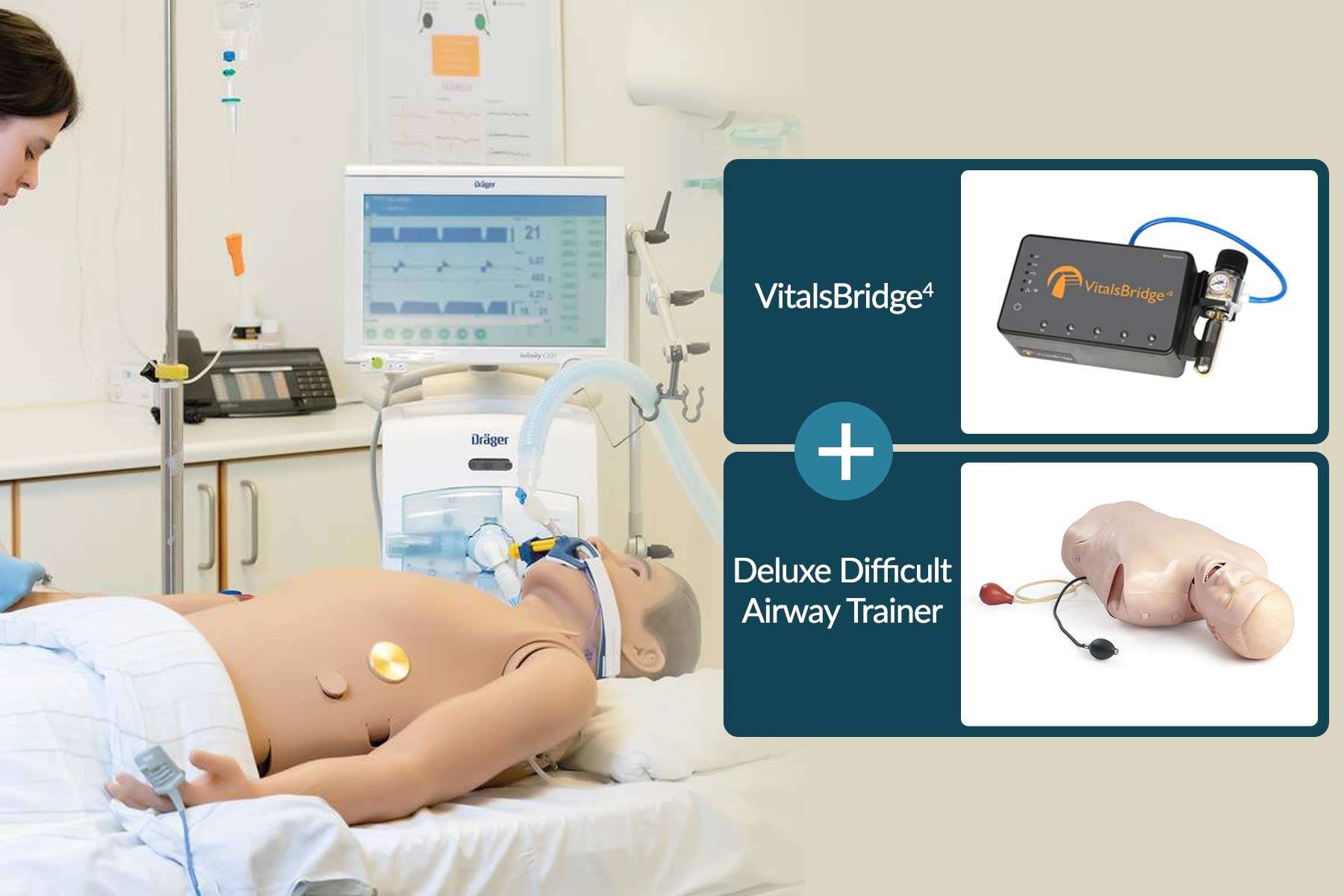
Advanced Critical Care Training Bundle
Experience a complete critical care training solution that integrates real clinical equipment for hands-on learning to help train users to master CO2 monitoring with live capnography and flexible ultrasound skills development across critical, cardiac, and trauma care scenarios.
Advantages:
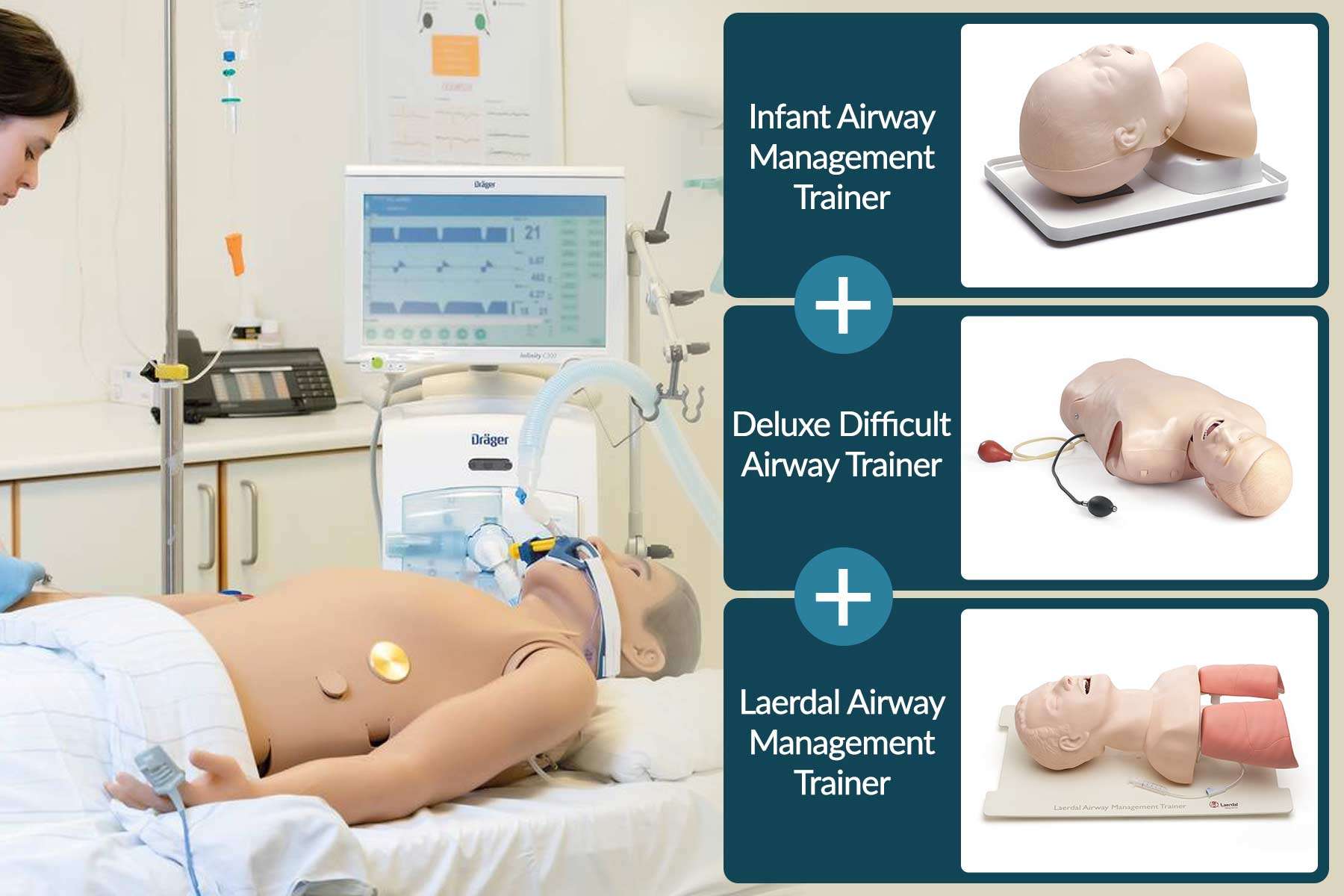
Airway Mastery Bundle for Respiratory Care
The integration of SimMan Critical Care with our airway management trainers helps in the development of essential skills, offering learners the flexibility they need to navigate diverse clinical scenarios.
Advantages:

Flexible Learning Bundle
Using SimMan Critical Care for complex situations with the NG Tube and Trach Care Trainer for specific tasks improves skill transferability to real clinical settings. This approach is cost-effective, providing increased practice opportunities without a significant impact on the budget.
Advantages:

Interactive Education Bundle for Respiratory Care Teams
Blended training using SimMan Critical Care and vSim for Nursing offers a robust simulation experience that combines hands-on respiratory care training with interactive, online learning. This allows students to engage with patients safely and realistically in a virtual environment.
Advantages:

Vascular Skills Bundle for Respiratory Care Training
Using SimMan Critical Care with our IV training arms helps respiratory care learners move from simulation in teams to mastering skills individually, perfecting arterial puncture techniques. This combination enables repeated practice that adapts to various skill levels and training needs.
Advantages:
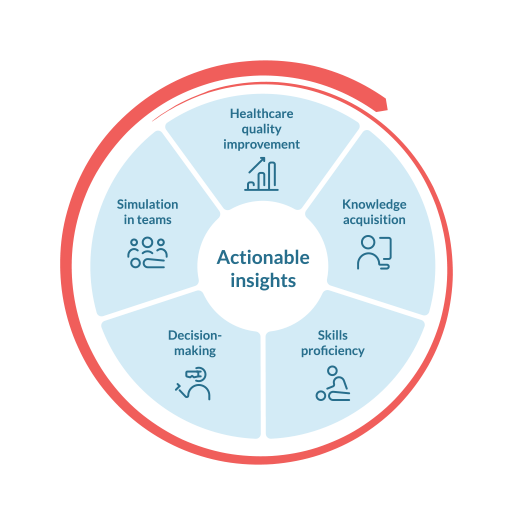
The educational and training needs of the new respiratory care environment continue to expand. The benefits of Laerdal’s training solutions can help. Through a systematic approach such as Laerdal’s Circle of Learning, we can combine solutions to help develop the psychomotor, decision-making, and team communication skills required to meet these rising challenges. The Circle of Learning serves as a bridge between cognitive and skills-based learning with real-life clinical experience. It should be viewed in the context of the whole, but each individual segment functions as an ever-evolving spiral toward lifelong learning and continuous clinical improvement.