Products & Solutions
Minimizing our environmental impact with an ambition to create low-carbon and circular solutions with optimized impact potential.
Sustainability

Minimizing our environmental impact with an ambition to create low-carbon and circular solutions with optimized impact potential.
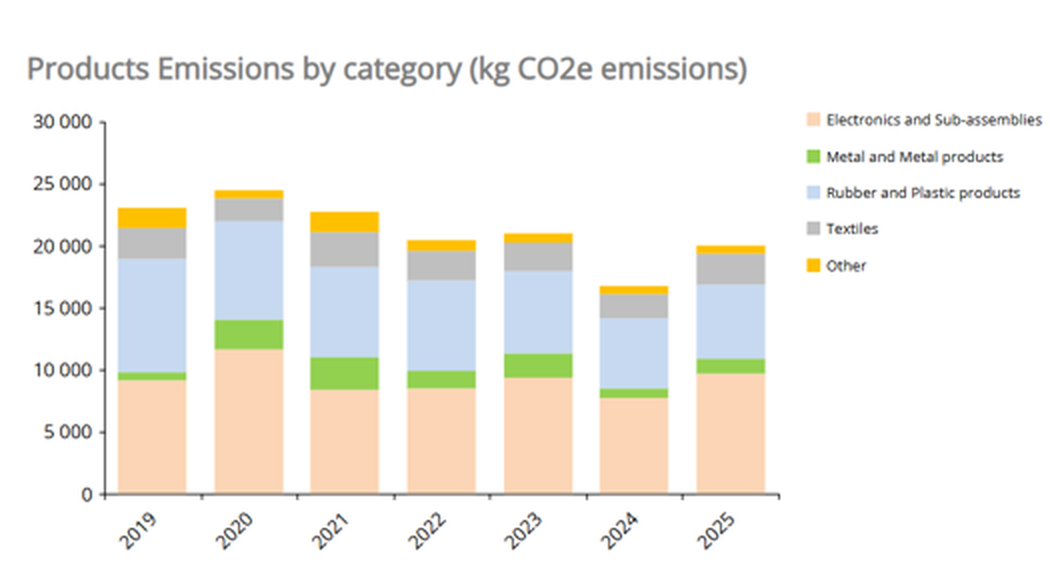
Products and components represent the biggest part of our total company emissions and will require great transition from how we design and produce our products, to how we deliver our solutions. We aim to create low-carbon and circular solutions with optimized impact potential. Below you will find highlights from our action plan toward our ambition.
Services and operational purchases are our largest emissions contributor, accounting for 33% of total emissions. Products and components are the next largest category, representing 26% of total emissions. From 2019 to 2025, the carbon intensity of our products and components decreased by 13%. During this period, we tested and introduced new environmentally friendly and lower-CO₂ material options for selected products (see our Sustainability Report).
Although the overall impact is currently limited, this has been an important learning phase. We expect the effect to become more significant as we build on this experience and scale the use of more sustainable materials across a larger share of our portfolio in the years ahead.
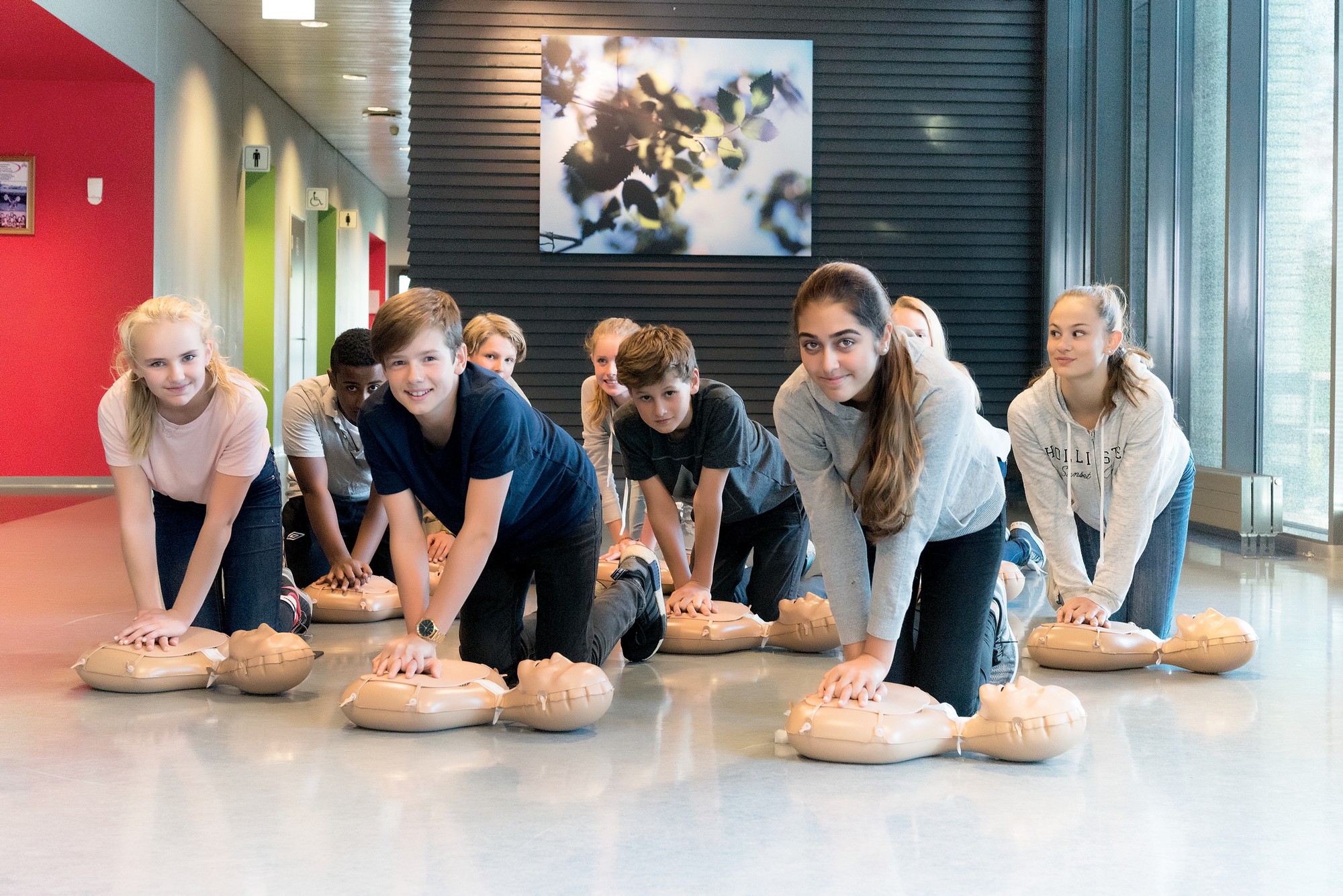
Several of our basic CPR manikins are made of plastic foil to make them more affordable and reduce emissions related to logistics as they are low-weight and inflated or filled with water prior to use. In 2023, we changed the material in several plastic foil products to now include 20% regrinded materials. Quality has been maintained, and we plan to expand this approach to more of our plastic foil-based products.
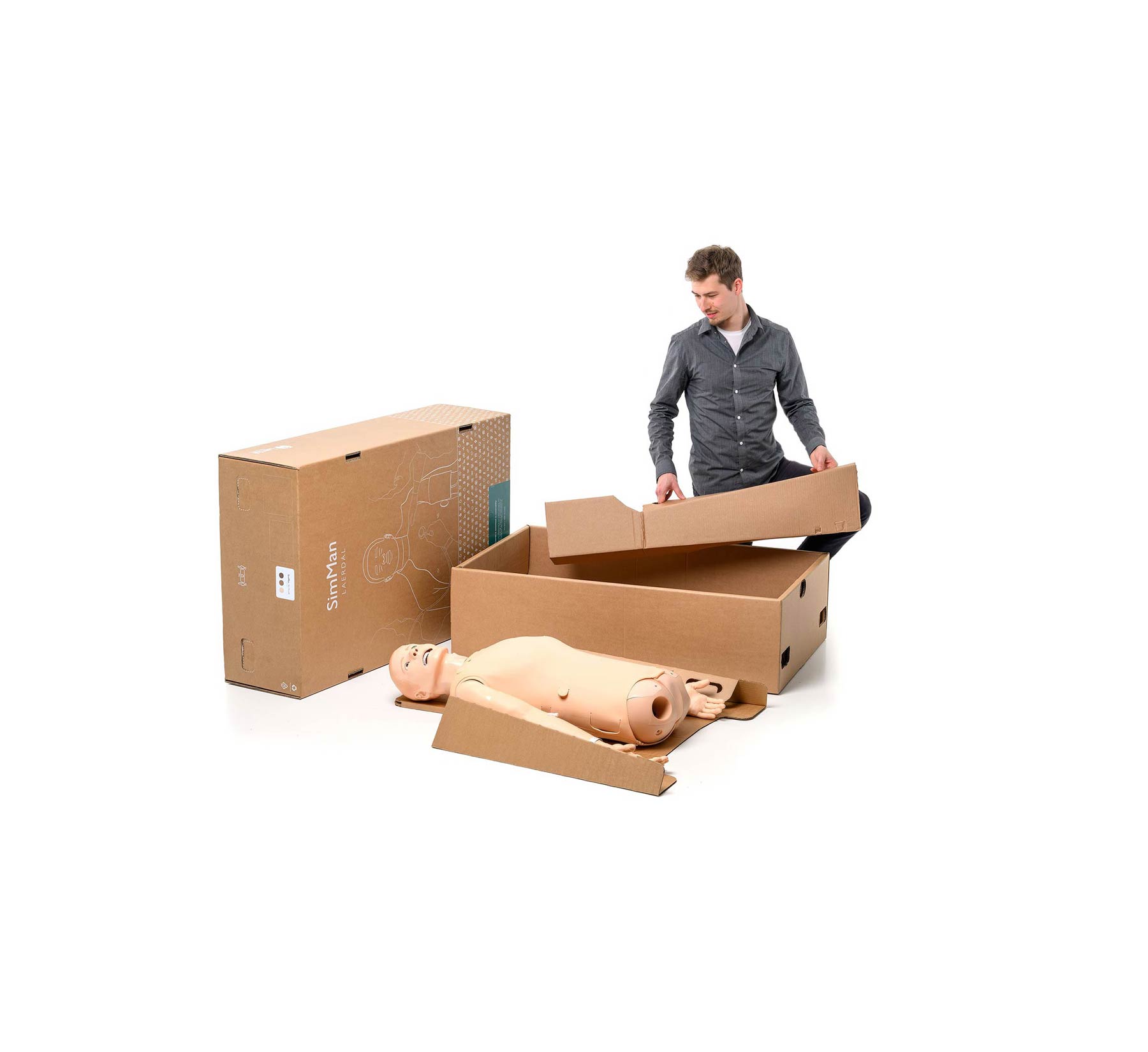
SimMan, the world’s most widely used patient simulator is now packed in cardboard rather than the textile suitcases it has traditionally been packed in.
This initiative has led to a significant reduction in carbon emissions from 134.92 kg CO2e for one set of suitcases to 9.167 kg CO2e. In addition, the entire packaging is fully recyclable, and being half the size of the old packaging has led to space efficiency in shipping.
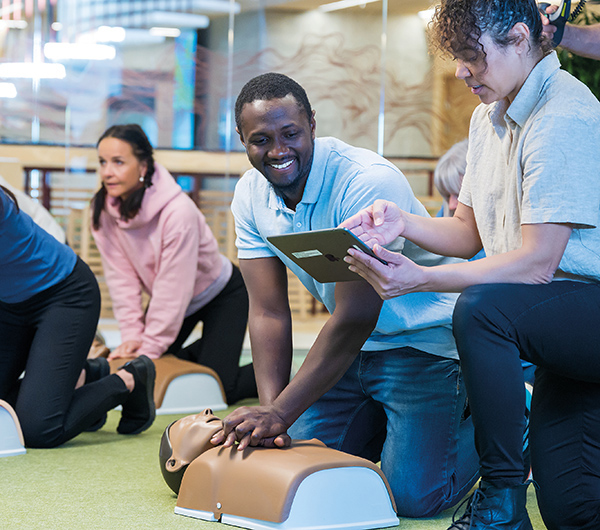
Little Anne, our highest volume basic life support manikin, has been redesigned resulting in a 68% reduction in carbon emissions per manikin. The product uses 59% less material than the previous version and 60% recycled plastics. Single-use PVC lungs are replaced by a single-use filter, and the stackable design uses less volume in transportation.
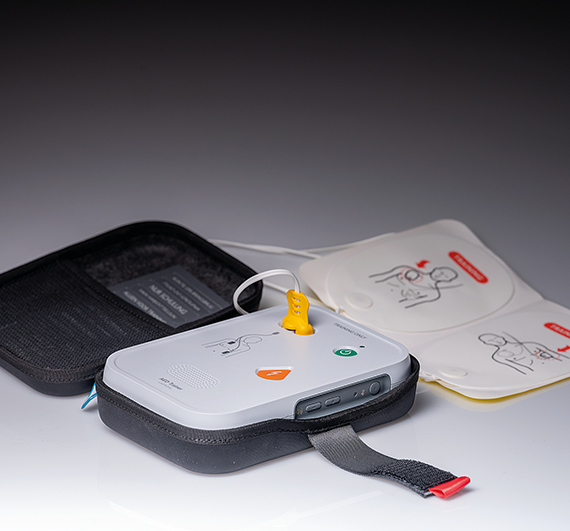
A new Laerdal AED Trainer, will be launched in 2023. As a generic AED trainer, it allows customers to buy one training model instead of multiple versions. This, together with the use of recycled material, has resulted in a estimated carbon reduction of us to 70% compared with the previous model.
The ZeroAim Tool is a qualitative tool consisting of sustainability-related questions and tips on making the solution more sustainable.
The tool is divided into three different categories;
Within each category are questions designed for the respective use model of the product, with a tip for each question.
To complement the tool, we have a Sustainability Knowledge Library consisting of insight and guidelines for designing more sustainable solutions. The tool is being implemented by the teams throughout the product development process.
The Simplified LCA Tool is a quantitative tool with a calculator to measure CO2e emissions from products and logistics.
We are implementing the tool to be used to compare one material type to another in the product development process and conduct a complete LCA for a product.
By combining the ZeroAim Tool and the Simplified LCA Tool, we ensure that the teams get guidelines on how to design for more sustainable solutions and use the LCA tool to check and ensure that the design choices lead to minimized product emissions.
The Sustainability Business Case Model is a tool used to ensure sustainability is integrated into the commercial Business Case Model. The Sustainability Business Case Model uses input from the Simplified LCA Tool and illustrates the CO2e emission against the monetary cost.
We are working on implementing an internal shadow price for carbon in the Business Case Model.