Saltar al contenido

How to Help Learners Overcome Emotional Barriers to Bystander CPR


A Guide for Instructors

;

If you’re a bystander CPR instructor, you know that teaching the steps is only part of the job. Knowledge alone doesn’t guarantee action. In real emergencies, laypeople often freeze, even if they’ve completed a class.  

Studies show that panic, lack of confidence, and fear of causing harm are major emotional barriers that stop people from starting CPR.1 Understanding these barriers is the first step in helping your learners act when it counts. Knowing how to act isn’t always enough; what matters most is whether they can act when it counts.

In this article, we provide practical strategies you can use to help learners overcome the emotional barriers that prevent them from performing bystander CPR. 

Emotional Barriers to Performing Bystander CPR 


Only 41.7 percent of out-of-hospital cardiac arrests receive bystander CPR.2


Emotional barriers like panic, lack of confidence, fear of causing injury, and perceptions of futility are key reasons many trained people hesitate to perform bystander CPR.3


Panic and feeling overwhelmed


One study found that panic and hysteria occurred in 20% of emergency calls, presenting a major barrier to dispatcher-assisted CPR in bystander-witnessed cardiac arrests.4 

In a sudden cardiac arrest, fear can spike instantly. Heart rate climbs, thinking slows, and even someone who has recently learned CPR may struggle to remember steps. Panic creates hesitation, which can cost precious seconds.


Lack of confidence

Many learners doubt their own ability. Will they place their hands properly? Will they compress deeply enough, and at the right pace? Even minor uncertainty can prevent action. Without confidence, learners may wait for someone else to intervene.


Fear of causing injury

Some learners worry that they might hurt the person. Concerns about breaking ribs, using too much force, or making things worse are common. Even if they understand intellectually that doing nothing is riskier than acting, fear can paralyze them.


Perceived futility of the situation

Some learners hesitate because they believe CPR won’t make a difference. They may think the situation is hopeless if the victim appears older, frail, or unresponsive. This perception of futility can stop action before it begins, even when intervention could save a life. 
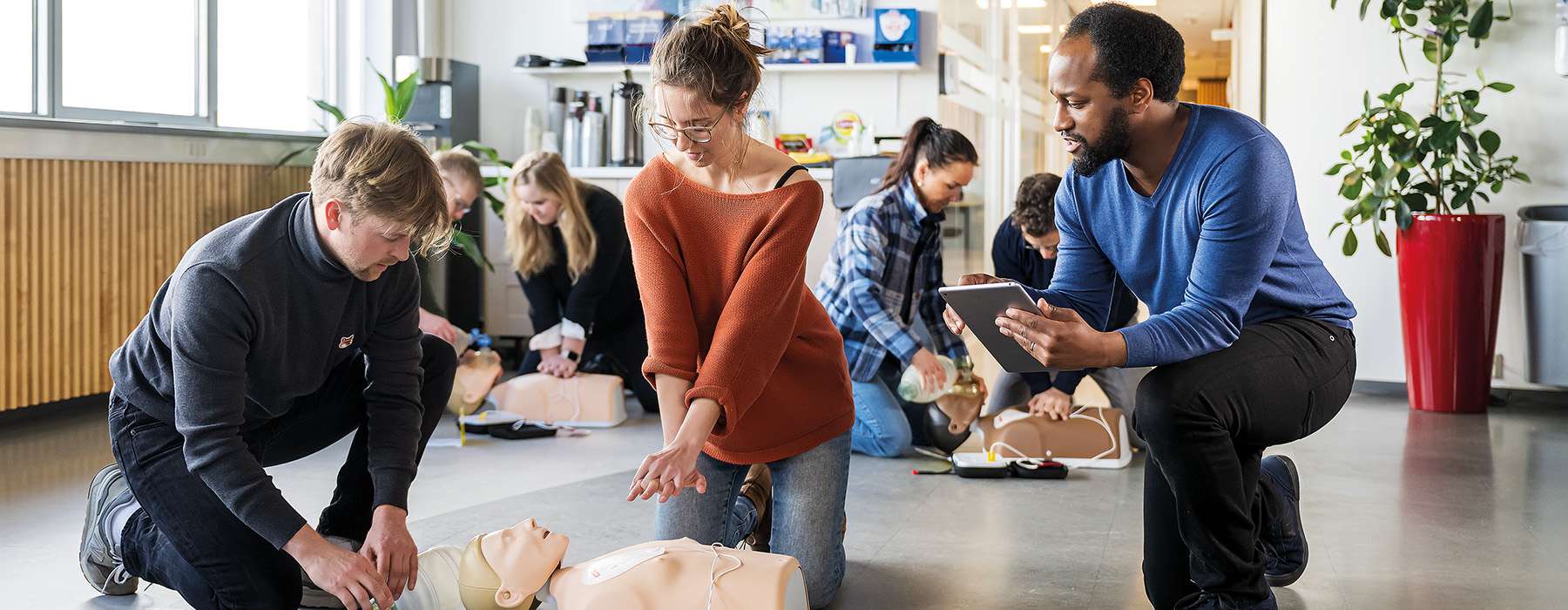
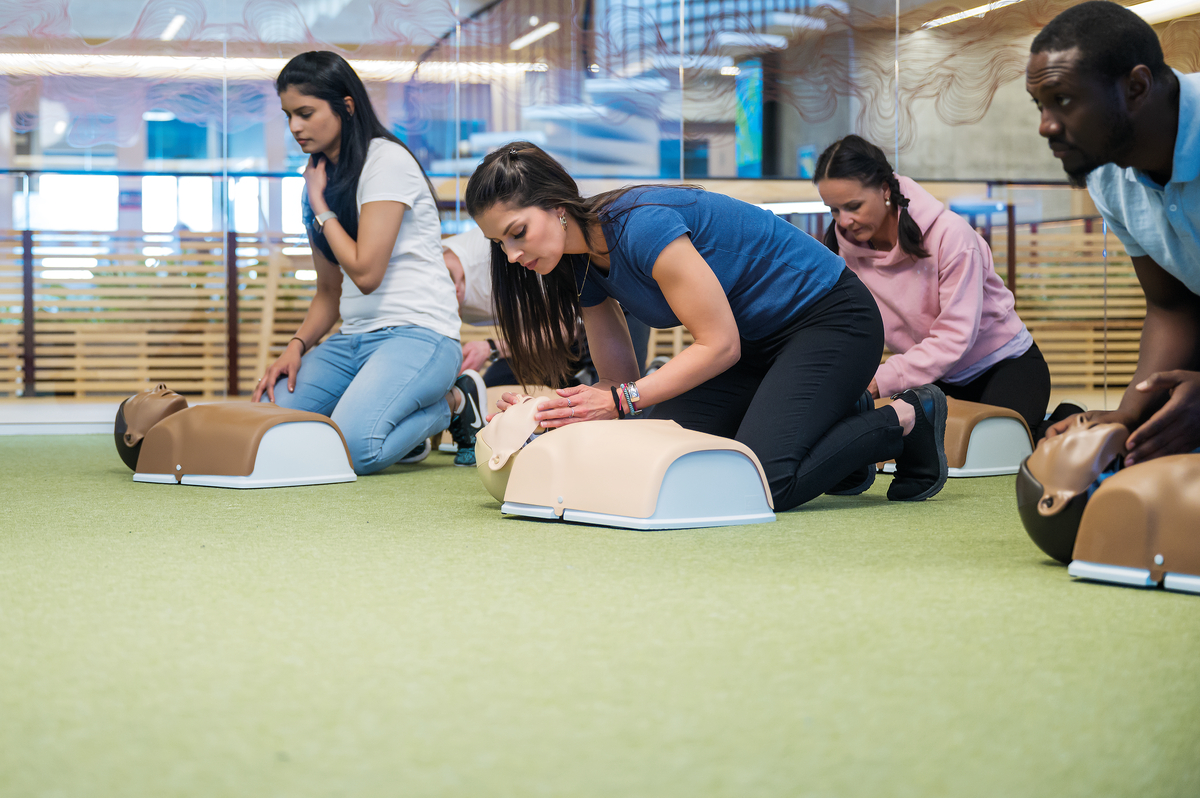
Several people in a bright, modern office environment practicing emergency medical procedures on various simulators under supervision.

Strategies to Build Emotional Readiness

You can play a critical role in helping learners manage these emotions. Here are a few practical strategies to try: 
 

  1. Introduce small, controlled stressors.

    What to try: Simulate mild stress to help learners practice responding under pressure. For example, add background noise, set brief time limits for skill practice, or present a slightly more dynamic or unexpected scenario.  
    Why it helps: Experiencing mild stress in a safe environment helps learners stay focused in real emergencies and counters panic.

  2. Use quick guided reflection.

    What to try: After hands-on practice, take a minute to ask learners how it felt to perform compressions or use an AED.  
    Why it helps: Questions like “What was challenging?” or “What felt easier than expected?” help learners process emotional responses. Reflection normalizes panic, builds confidence, and counters perceptions of futility by highlighting progress.

  3. Encourage peer observation and feedback.

    What to try: Watching peers perform CPR helps normalize mistakes and reduce fear.
    Why it helps: Positive peer feedback reinforces confidence and demonstrates that action—even imperfect action—can make a difference, directly challenging the belief that CPR is futile.

  4. Normalize imperfection.

    What to try: “Some CPR is better than no CPR.” Emphasize to your learners that even imperfect compressions improve survival. Help them understand that in cardiac arrest, the victim’s heart has already stopped—and that CPR can’t cause harm, but it can restore life.
    Why it helps: This reassurance addresses fear of injury and encourages learners to act despite doubts about outcomes.

  5. Include a mental rehearsal.

    What to try: Before hands-on practice, have learners close their eyes and visualize themselves performing CPR.  
    Why it helps: Mental rehearsal primes the brain for action and reinforces the idea that their intervention is meaningful, countering perceived futility. 

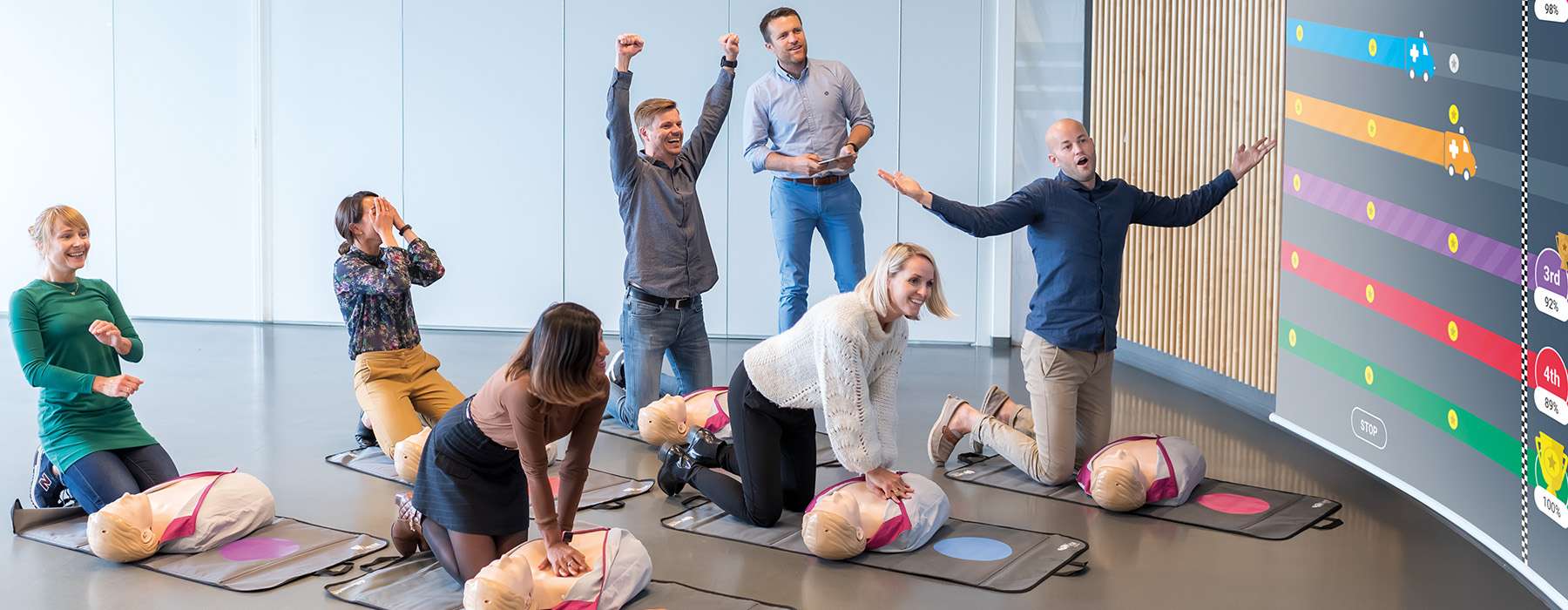
A group of people cheering while practicing CPR on simulators, with a leaderboard displayed on a large screen in the background.

Tools to Support Emotional Readiness

  1. Use QCPR feedback to teach the key parameters of high-quality CPR.

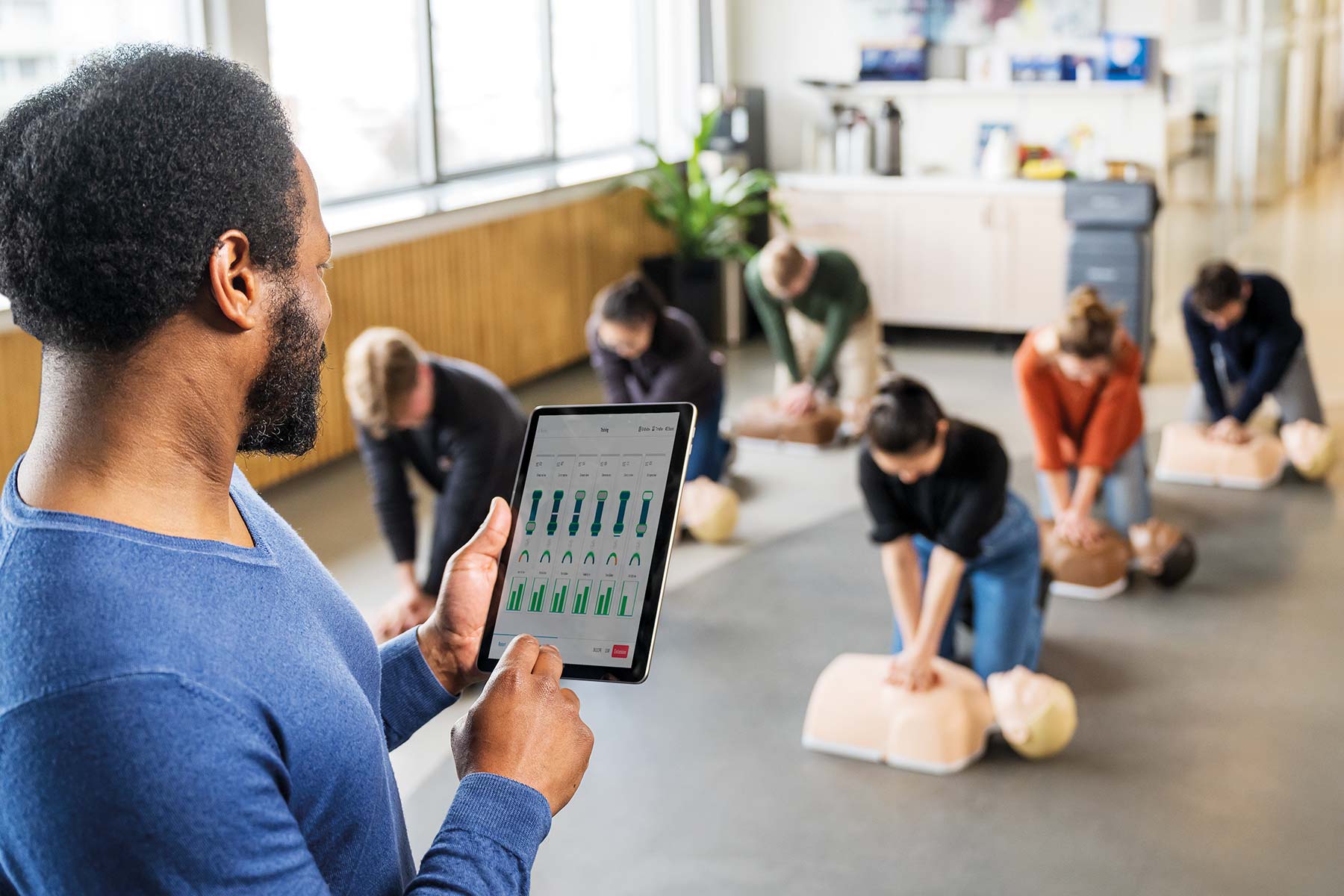
    Feedback is essential to help learners learn high-quality CPR. The QCPR app provides real-time data on compression depth, rate, and recoil, allowing learners to adjust their technique as they practice. This feedback builds confidence, reinforces proper technique, and shows learners that their actions are effective.

  2. Build muscle memory through repeated practice. 

    Have learners perform multiple cycles of compressions to develop confidence. Practicing on a manikin like Little Anne gives them the tactile feel of a real chest, helping learners internalize correct hand placement and compression depth while reducing hesitation in stressful situations.

  3. Demystify AED use. 

    Integrate an AED Trainer in every scenario to give learners repeated hands-on experience. Allow them to hear prompts, place pads, and follow step-by-step instructions. Repeated exposure helps reduce fear, build confidence, and normalize AED use alongside CPR.

  4. Motivate and engage learners with gamification. 

    Incorporate the QCPR app’s gamification features to make practice fun and engaging. Using the app’s exciting Race Mode allows learners to compete against each other to get the best score. This motivates learners to practice more, reinforces correct technique, and counters perceptions of futility by showing that their actions have real impact. 

Two individuals reviewing performance data on a tablet while one practices chest compressions on a medical mannequin.

Your Role as an Instructor

Your impact goes beyond teaching steps. You help learners manage emotions, build confidence, and see the meaningful effect of their actions. By combining strategies like controlled stress exposure, reflection, peer observation, and mental rehearsal with supportive tools, you give learners the best chance of moving from hesitation to action.

Even if learners don’t remember every slide, they will remember how CPR felt in their hands and the confidence they gained. Thoughtful instruction paired with realistic practice helps them overcome fear, doubt, and perceptions of futility, preparing them to step in when it matters most. 
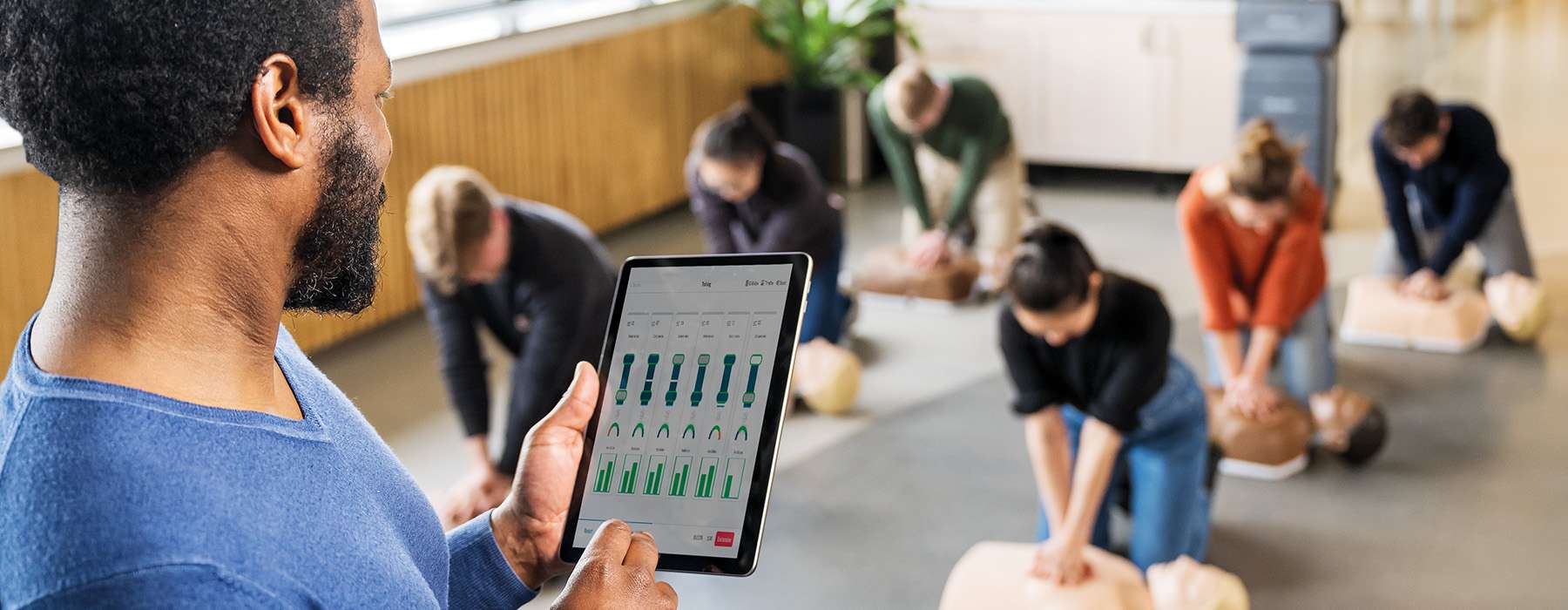
Over-the-shoulder view of an instructor holding a tablet showing performance metrics for multiple learners practicing CPR in a large room.

Key Takeaways to Help Your Learners Overcome Emotional Barriers to Bystander CPR


Emotions matter as much as technique. Panic, lack of confidence, fear of injury, and perceived futility can stop laypeople from acting. 

Instructor strategies make a difference. Small stressors, reflection, peer feedback, mental rehearsal, and normalization of imperfection build readiness. 

Hands-on practice is essential. Repeated skill cycles, AED familiarization, and tactile practice help learners internalize CPR. 

Feedback reinforces high-quality CPR. Real-time tools like the QCPR app give learners measurable guidance and boost confidence. 

Engagement enhances learning. Gamification and interactive practice motivate learners to improve and help them see the impact of their actions. 
Contact us about CPR Training and Certification

Trataremos sus datos con cuidado de acuerdo con la Política de Privacidad de Laerdal.

Trataremos sus datos con cuidado de acuerdo con la Política de Privacidad de Laerdal.

References

  1. Donoghue, A. J., Auerbach, M., Banerjee, A., Blewer, A. L., Cheng, A., Kadlec, K. D., Lin, Y., Diederich, E., Sawyer, T., Stallings, D. T., Toft, L. E. B., Torman, D., Wright, J. I., Schexnayder, S. M., & Dainty, K. N. (2025). Part 12: Resuscitation Education Science: 2025 American Heart Association Guidelines for Cardiopulmonary Resuscitation and Emergency Cardiovascular Care. Circulation, 152(16_suppl_2). https://doi.org/10.1161/cir.0000000000001374
  2. American Red Cross. (2024, October 2). Red cross training & certification, and store. Red Cross. https://www.redcross.org/take-a-class/resources/articles/cpr-facts-and-statistics
  3. Donoghue, A. J., Auerbach, M., Banerjee, A., Blewer, A. L., Cheng, A., Kadlec, K. D., Lin, Y., Diederich, E., Sawyer, T., Stallings, D. T., Toft, L. E. B., Torman, D., Wright, J. I., Schexnayder, S. M., & Dainty, K. N. (2025). See reference #1.
  4. Matsuyama, T., Scapigliati, A., Pellis, T., Greif, R., & Iwami, T. (2020). Willingness to Perform Bystander Cardiopulmonary resuscitation: a Scoping Review. Resuscitation Plus, 4, 100043. https://doi.org/10.1016/j.resplu.2020.100043