Sustainability goals and emissions update
Sustainability

Carbon Emissions
To achieve a 70% reduction in carbon emissions by 2030 across:
And to offset any residual emissions.
Circular Solutions
To adopt circular materials throughout the value chain:
Social Responsibility
To implement UNGP and OECD guidelines throughout our supply chain and cascade to the next level from the largest suppliers.
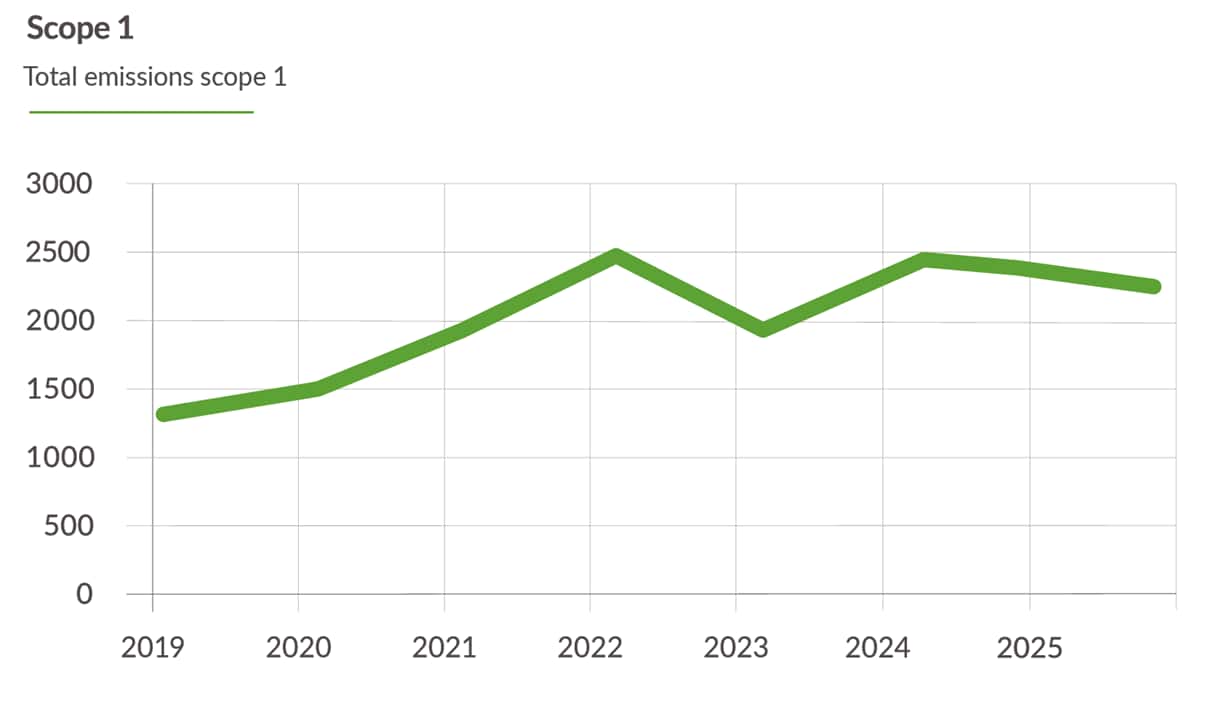
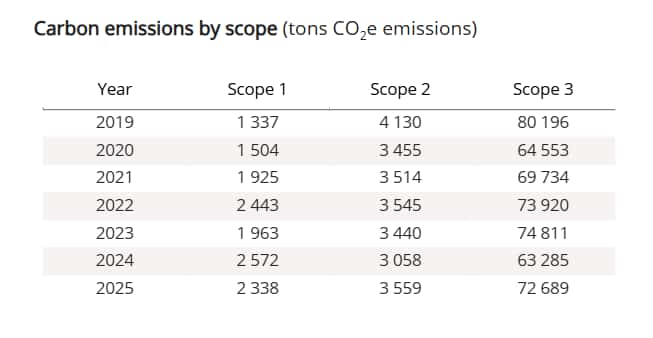
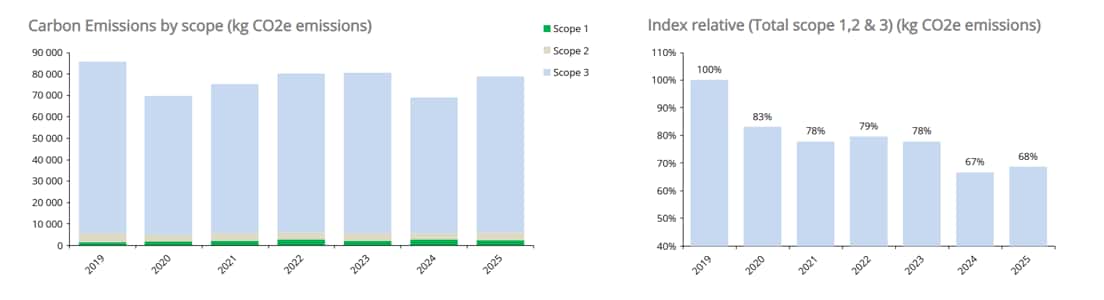
For scope 1, which accounts for under 3 % of our total emissions. We saw a 5% reduction in Co2e emissions from 2024 to 2025 due to decrease in usage of fossil fuel in production and in car usage.
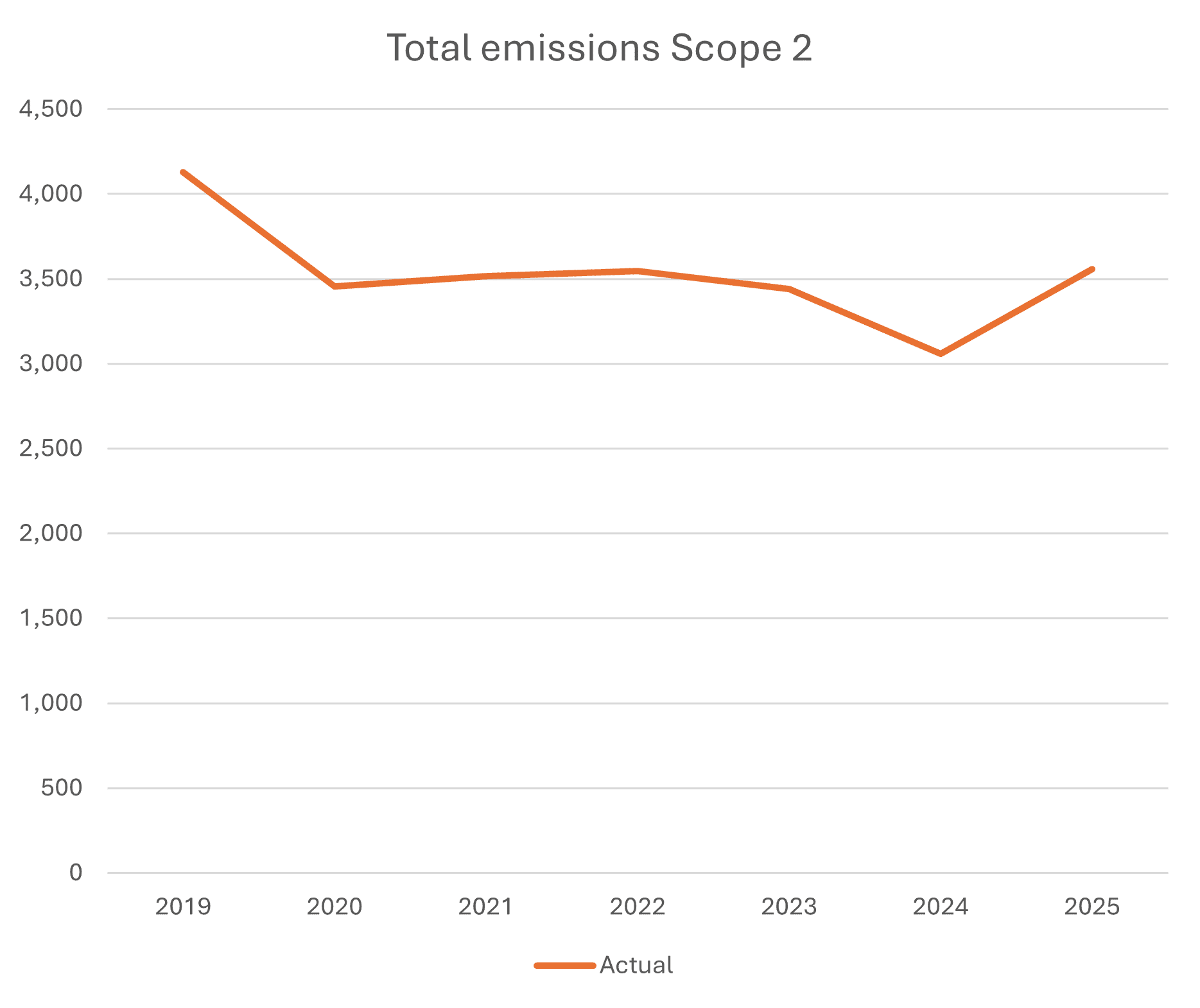
Scope 2 emissions account for less than 5% of our total emissions. From 2024 to 2025, emissions increased by 16% due to higher power usage across our facilities. However, compared to our 2019 baseline, total Scope 2 emissions have decreased by 14% by 2025.
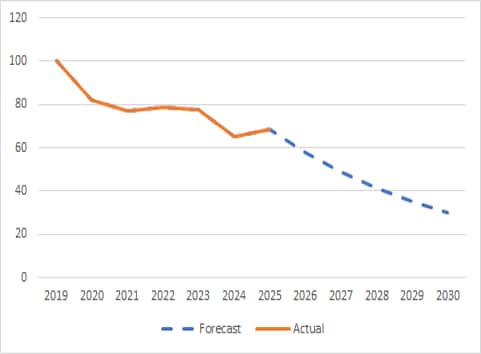
For Scope 3, which accounts for 93% of our total emissions, our target is measured based on emissions intensity. From 2019 to 2025, we reduced Scope 3 emissions by 30% relative to revenue.
Laerdal reports emissions at Group level across Scope 1, 2, and 3. Emissions are estimated using both spend-based and activity-based methodologies. More information about our approach can be found on our Measure to Improve page.
Scope 1 emissions are negligible and mainly consist of natural gas used in manufacturing processes and fuel for company cars. Scope 2 emissions relate to purchased energy used across our manufacturing and office locations and are reported using the market-based method.
Scope 3 represents the largest share of emissions at Laerdal Medical. To better understand and manage these emissions, we group them into four main categories: Travel, Logistics, Operations, and Products. Travel includes business travel by employees. Logistics covers both upstream and downstream transportation. Operations includes indirect emissions linked to activities such as IT equipment, cleaning services, and marketing. The Products category includes emissions from the raw materials and components used in manufacturing our products.
Scope 3 emissions from Travel are primarily linked to employee business air travel. Logistics emissions include transportation from suppliers to our manufacturing sites, shipments between Laerdal locations, and distribution to end customers. This category also includes emissions from third-party logistics warehouse operations.
The Operations category covers emissions from products and services used in the day-to-day running of the company, including facilities, IT and communication equipment, marketing activities, external consulting services, and assets.
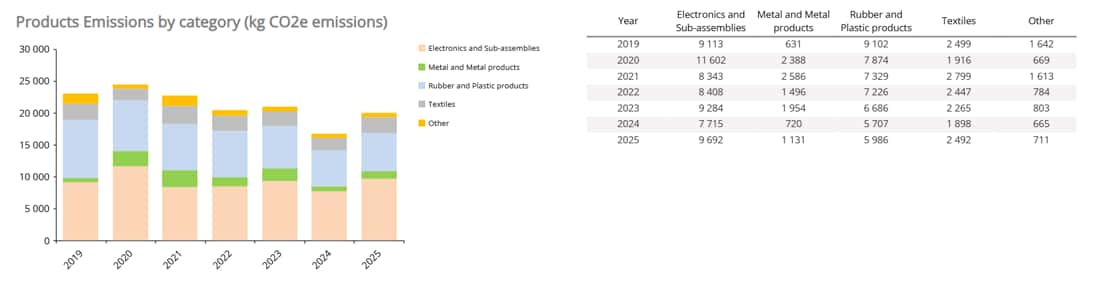
Products is the largest Scope 3 category and includes indirect emissions from the raw materials and components used in our manufacturing, as well as products purchased from external manufacturers and sold to our customers.
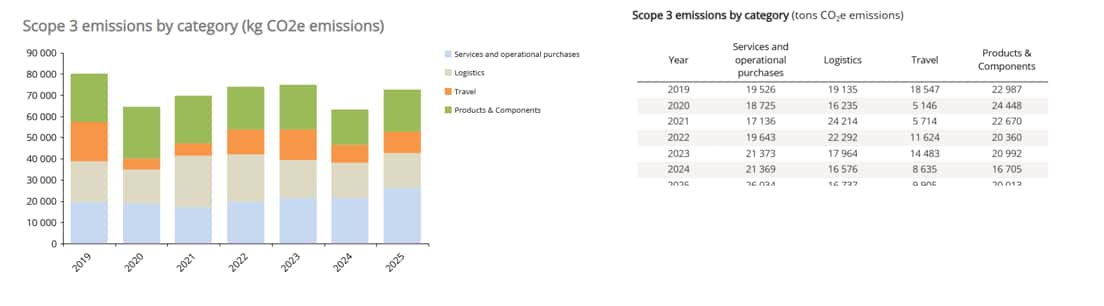
Services and operational purchases are our largest emissions contributor, accounting for 33% of total emissions. Products and components are the next largest category, representing 26% of total emissions. From 2019 to 2025, the carbon intensity of our products and components decreased by 13%. During this period, we tested and introduced new environmentally friendly and lower-CO₂ material options for selected products (see our Sustainability Report).
Although the overall impact is currently limited, this has been an important learning phase. We expect the effect to become more significant as we build on this experience and scale the use of more sustainable materials across a larger share of our portfolio in the years ahead.