How Can Simulation Drive Quality Improvement in Your Healthcare Setting?
Simulation isn’t just for educating and training individuals—it can expose system flaws, test solutions, and drive real improvements so providers in all fields of healthcare can deliver safer, better care.
Dr. Victoria Brazil
Director, Bond Translational Simulation Collaborative; Professor of Emergency Medicine and Director of Simulation, Bond University

When most healthcare teams think about simulation, they picture education and training—practicing infection control, managing codes, onboarding new staff and so on. But what if simulation could be more than a teaching tool? What if it could actively improve the systems that make up patient care?
Hospitals are complex, adaptive systems. Even in the hands of top-tier clinical talent, small breakdowns in workflow, handoffs, or the use of technology can result in patient harm. These breakdowns often remain hidden until it's too late—unless we design ways to test the system itself.
That’s where simulation, when integrated into Quality Improvement (QI) efforts, makes a big impact.
When simulation is used for training and education, it is being used to create experts. When it is used for QI, it is about optimizing the world in which experts can succeed. QI is about proactively designing safer, smarter systems. Simulation supports this by allowing healthcare teams to understand how care is actually delivered in their real environments and to identify what needs to change.
- Dr. Andrew Petrosoniak MSc (Med Ed), FRCPC,
Emergency Physician and Trauma Team Leader at St. Michael’s Hospital in Toronto, Canada

Here are just a few examples:
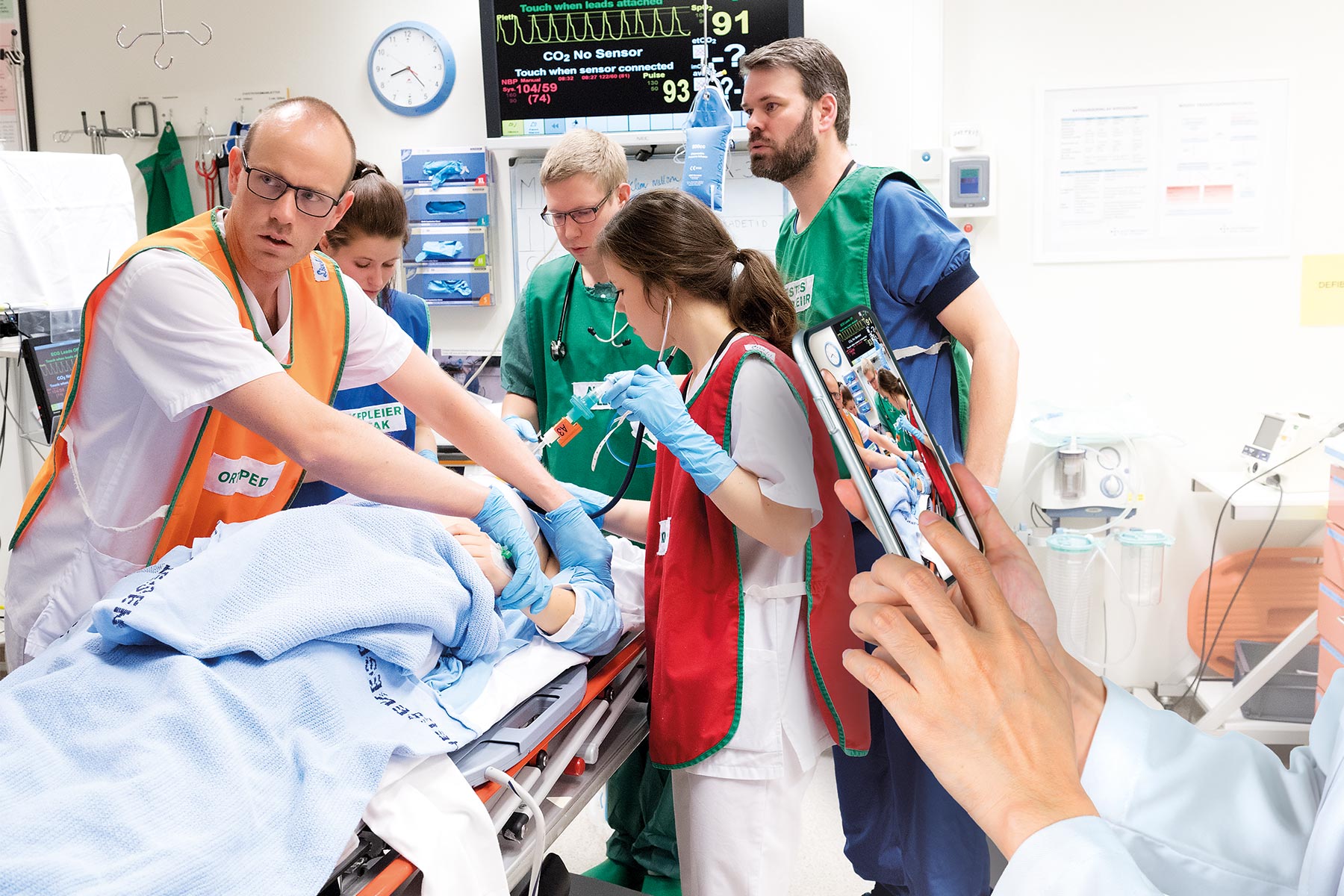
Simulation allows teams to examine how care unfolds across time, teams, and departments. It exposes mismatches between policy and practice—helping identify what are often called latent safety threats (LSTs).
Dr. Andrew Petrosoniak, trauma physician and simulation lead at St. Michael’s Hospital in Toronto, shares:
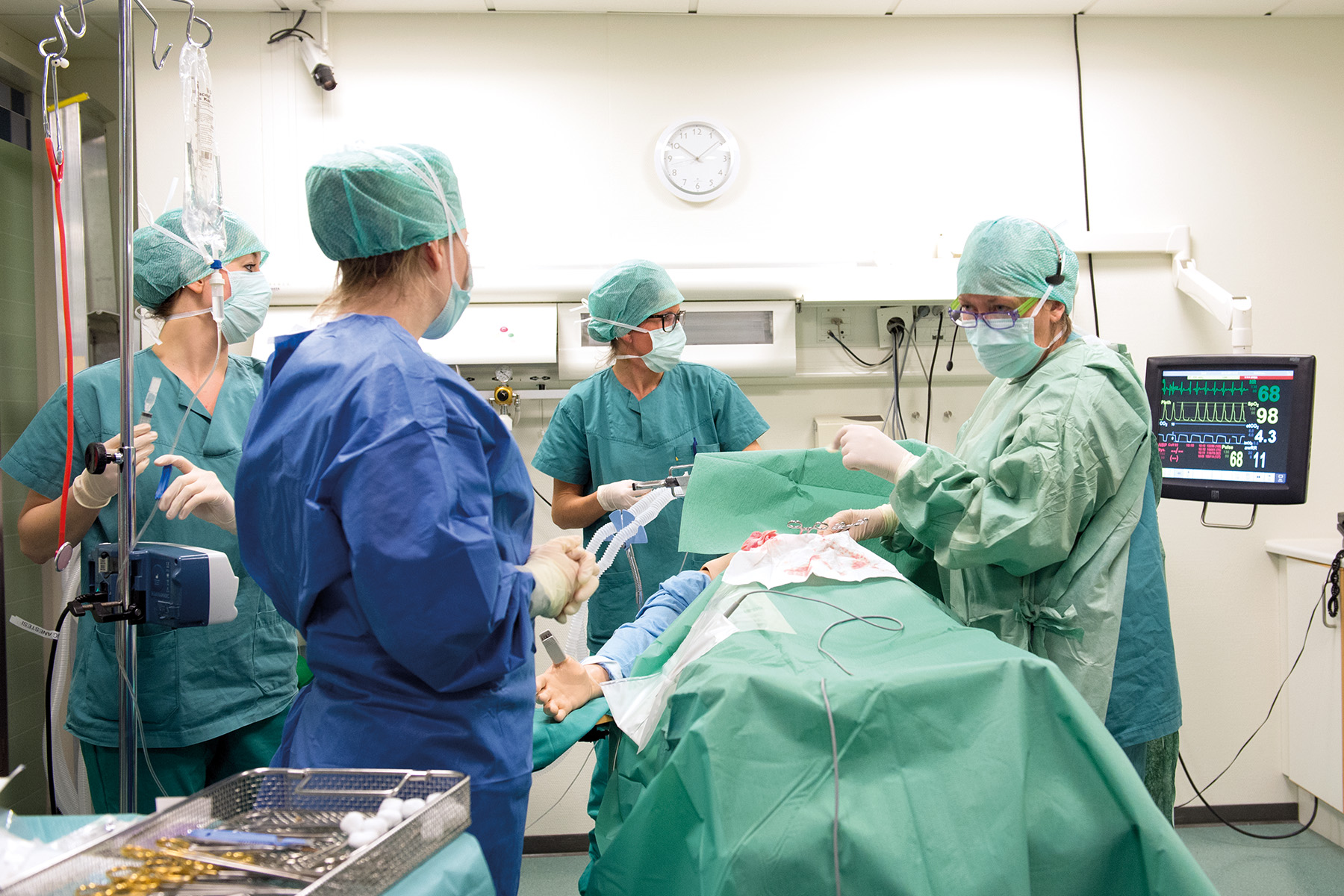
“We used in situ simulation as a novel and iterative quality improvement technique to reduce the mean time between massive hemorrhage protocol activation and blood administration during actual trauma resuscitations.”3
Simulation offers a risk-free way to test changes—before they’re rolled out hospital-wide.
Dr. Petrosoniak describes one such project.
“We believe that we should simulate scenarios as a means to test the equipment and the space, ensuring that it works as we imagine it will”, he explains. “We do this so that by the time we open for patient care, we’ll know that all systems are a go.”4
New workflows and protocols only work if teams adopt them. Simulation allows organizations to embed new practices by helping teams rehears and adjust them under realistic conditions.
In her work, Dr. Brazil emphasizes this embedding function through repeat practice.
“Simulation offers a safe place to practice procedural skills, decision-making and teamwork without placing patients at risk …”, she writes. She then goes on to explain, “[While] reliance on educational paradigms may fail to realize the full potential of simulation to contribute to quality and safety in healthcare.”5
Simulation in the quality improvement arena helps to ensure contextual fit and staff adoption.
Healthcare leaders, risk managers, and simulation professionals are beginning to collaborate in new ways — using simulation not only to identify risk but also to co-create solutions with frontline staff and patients.
Dr. Brazil describes simulation as an opportunity for: “Problem-solving and co-design, channeling the perspectives of staff and patients into system improvement.”6
This collaborative approach is powerful in high-risk areas like:

Emergency Department trauma handovers

Neonatal code blue response

Obstetric hemorrhage protocols
ICU ventilator management during rapid case surges
By gathering different perspectives and simulating together, hospitals can build systems that reflect the realities of care delivery—not just policies on paper.
Ready to expand your simulation program beyond training?
Here are a few first steps:
Simulation isn’t there just to create competent staff—it’s a design tool. Use it to see how your system actually works, test new solutions, and embed safer practices so that your competent staff can deliver the best care possible.