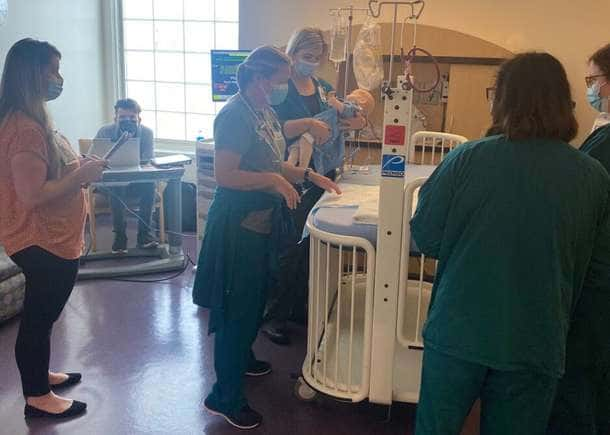
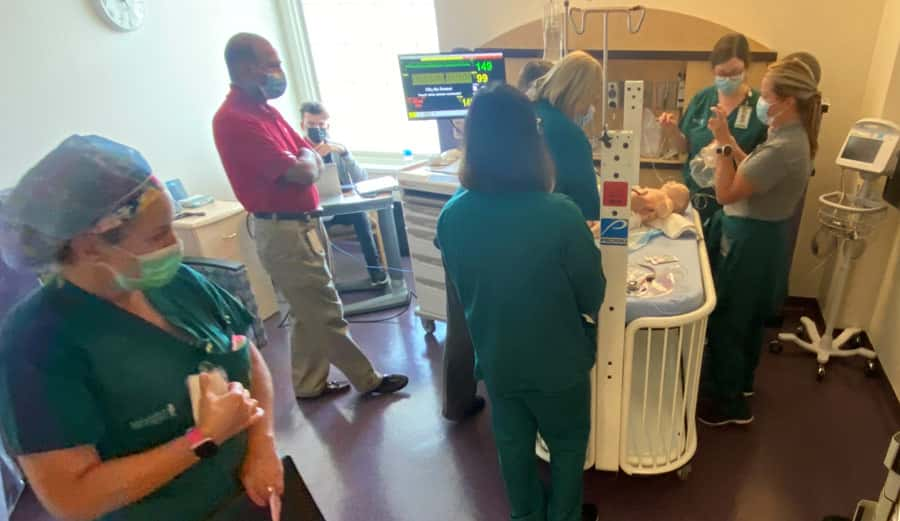
Faced with struggles of budget, space, lack of staff, and staff hesitance, Karen and Dr. Mysore decided to try a different approach. In 2021, they decided to partner with Laerdal, who could help them overcome these barriers through a Managed Services approach.
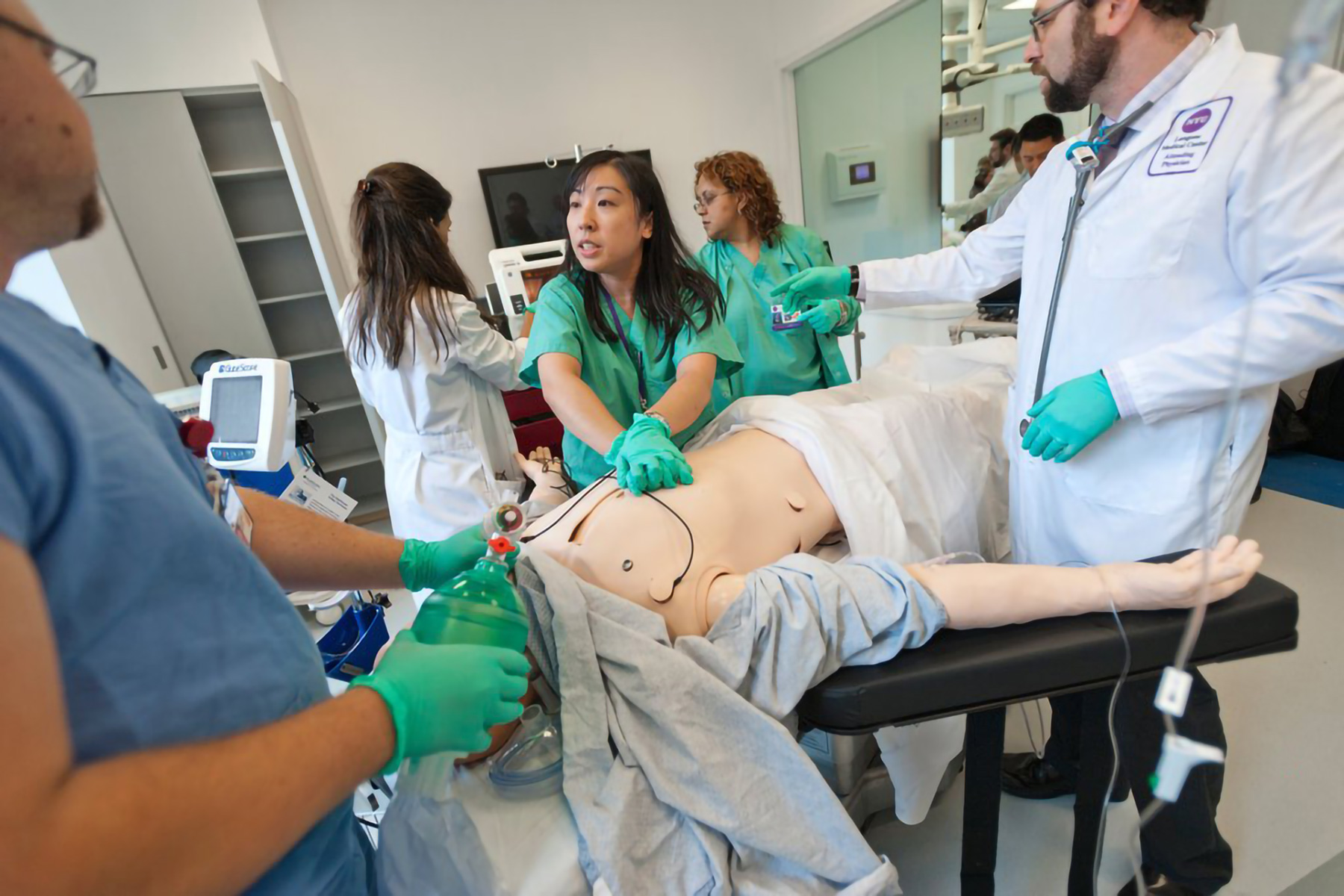
As part of its Managed Services program, a Laerdal team would come to BTNRH and bring the simulators and operators needed to conduct the specific scenarios that Karen and Dr. Mysore wished to run. The team would take care of setting up and breaking down the equipment, allowing Karen and Dr. Mysore to focus completely on education.
Using the Managed Services program, Karen and Dr. Mysore were able to successfully surpass the hurdles they were experiencing and move forward with pursuing their simulation training goals.
Ultimately, utilizing Laerdal’s Managed Services allowed them to:
- Expose hesitant staff to simulation to illustrate its value in preparing staff for pediatric emergencies
- Eliminate the need for space at their facility for storing and maintaining equipment
- Avoid the need for any capital outlay for simulation equipment
- Avoid the need to train staff to program and operate simulators, allowing their educators to focus on facilitating and debriefing
"Having [the Laerdal] team come in … to execute [the scenarios] so that we can free up our educators or physicians that are helping moderate these engagements to really focus on the team instead of focusing on the equipment and manikins. … that was just something that was very beneficial to being a growing program in a smaller facility."
- Karen Conboy, BSN, RN, CCRN
Director of the PICU, Boys Town National Research Hospital
Additionally, choosing Managed Services allowed them significant flexibility in tailoring their in-situ simulations throughout the hospital. The additional support allowed them to more easily modify scenarios and learning objectives in areas from med-surg to the PICU and surgery center.
Since the initial engagement in 2021, Laerdal has returned to BTNRH for a series of trainings focused on areas/scenarios including anaphylaxis, septic shock, respiratory distress/failure, and malignant hyperthermia.