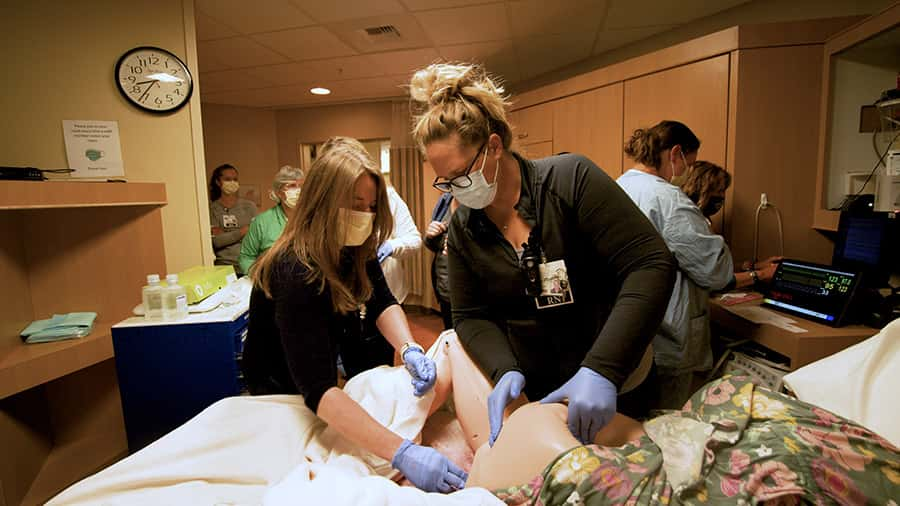
“It was extremely well received,” Amber shares. “The physicians, the nurses, RT, pharmacy – everybody involved was absolutely, completely impressed.”
“I sat in, observed, and was just totally impressed with our staff and our physicians being able to really focus on what would you do in an emergency situation like this,” adds Jeannie.
The performance data from the postpartum hemorrhage simulation scenario uncovered that there was room for improvement in the amount of time it was taking to get blood from the blood bank. This is an issue that exists in many hospitals.
“We were pretty unaware of why this was happening,” Amber tells us. But having objective data specific to their hospital gave them pathways to focus on in their Quality Assurance and Performance Improvement (QAPI) program. Using the data, they were able to set goals, make improvements, and then have Laerdal return for another Accelerate session to help them measure their progress a few months later.
The results were remarkable.
"Six months later, when we did a pediatric trauma [sim] and needed to order blood, the difference of how quickly we were getting the blood was amazing to see. And it was because of that sim, and those process changes we made, that made the difference."
- Amber Roberts, MSN, RN
Hospital Education Coordinator, Pullman Regional Hospital
Their training efforts in obstetrics had transferred to pediatrics – indicating that the positive improvements were spreading across multiple areas of the hospital.
Having access to benchmarking data from before and after their quality improvement efforts served as tangible evidence of the ROI they’d gotten out of the Accelerate program.