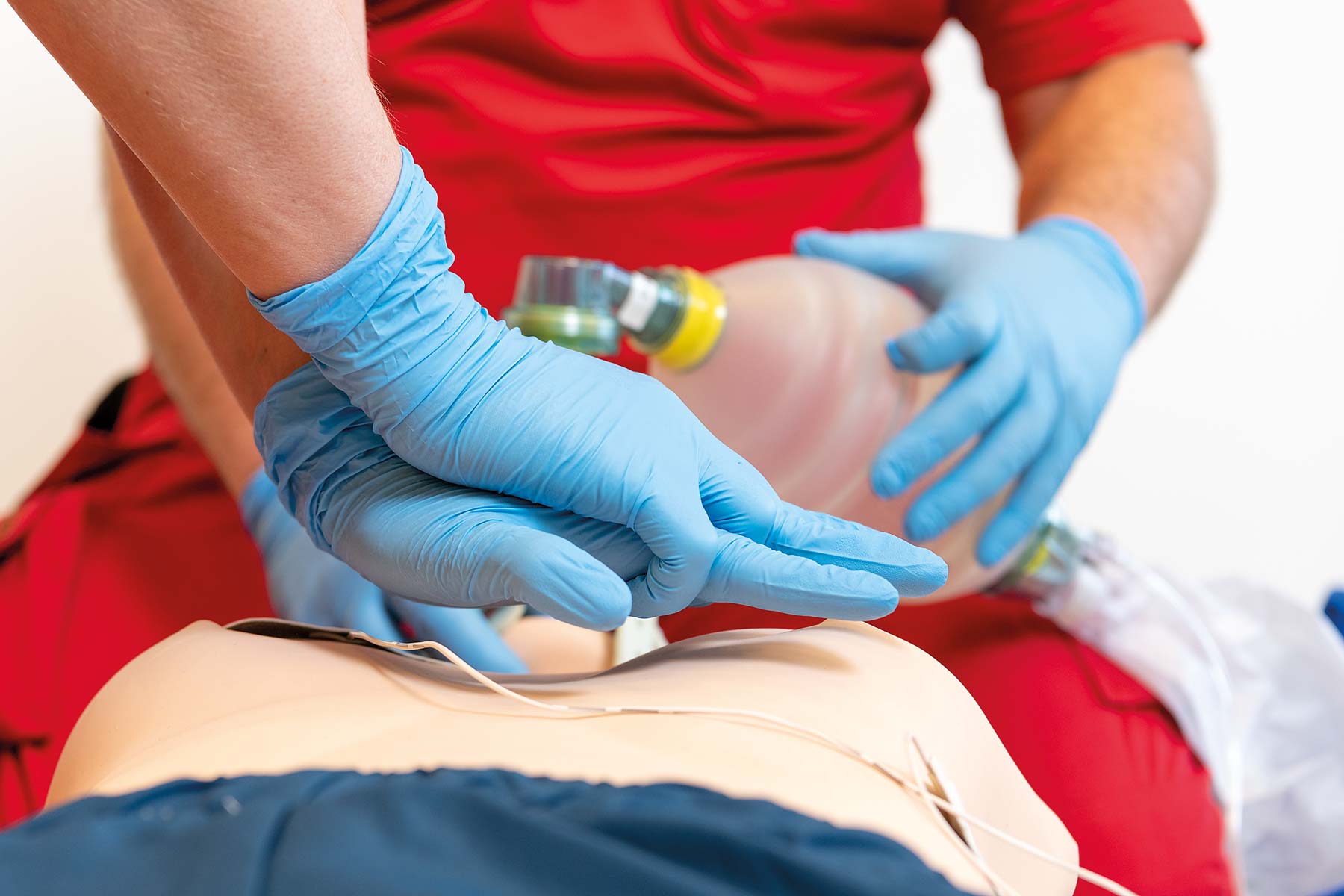
Skip to content

5 Things That Happen When You Train with the CPR Bralette

When every second counts, hesitation matters

Studies suggest that women are less likely to receive bystander CPR and early defibrillation, with uncertainty around female chest anatomy and clothing contributing to delays in care.1 2 3 

The CPR Training Bralette helps instructors bring these realities into the classroom. Below are five things instructors consistently notice when they introduce a bralette into training. 

1. Learners start asking better questions

One of the first things that happens when a bralette is added to a manikin is silence—followed quickly by questions:

  • Should I remove it?
  • Do I cut it?
  • Do I move it out of the way?
  • How fast should I expose the chest? 

These questions often don't surface in traditional CPR training. Learners may not realize they are uncertain until they encounter a realistic scenario.

That moment is valuable. It gives instructors an opportunity to address real-world concerns before they become barriers to action. 


Instructor tip:

Instead of answering immediately, ask:

"What would you do if this happened in real life?"

The discussion often teaches more than the answer.

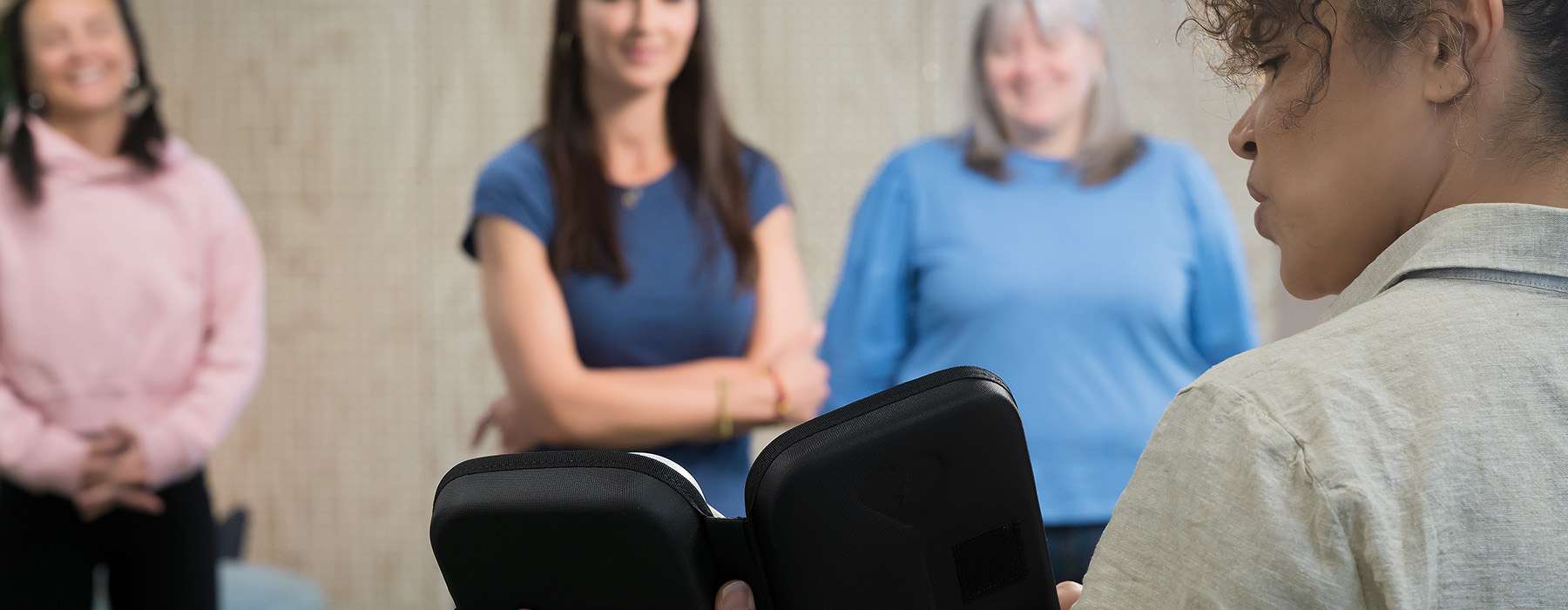
A CPR instructor showing AED pads to a class.

2. Learners experience an “aha” moment

Many learners leave CPR training believing they would act without hesitation. Introducing realistic clothing often reveals a gap between confidence and preparedness.

The “aha” moment happens when learners recognize:

“I didn’t realize I wasn’t sure what to do.”

That moment is valuable.

It gives instructors an opportunity to identify knowledge gaps, address misconceptions, and guide learners through real-world decisions before they encounter them in an emergency. 


Instructor tip


One of the most common reactions isn't fear—it's surprise. Learners often don't realize they have questions until the scenario makes them visible.  Use these moments to pause, encourage discussion, and address misconceptions while they're top of mind

3. AED pad placement becomes more realistic and guideline‑aligned

The 2025 AHA and ERC Guidelines continue to emphasize the importance of rapid AED pad placement on bare skin, with minimal interruption to CPR. Clothing that interferes with correct pad placement must be addressed quickly and appropriately. 4 5 6 7

The CPR Training Bralette helps instructors demonstrate:

  • When the chest needs to be exposed
  • How to ensure pads are placed on bare skin
  • How to avoid unnecessary delays 


Practical instructor takeaway


Current guideline direction emphasizes:

  • AED pads should be placed on bare skin
  • If the bra can be adjusted and pads can still be placed correctly, removal may not be necessary
  • If it interferes with pad placement, pad contact, or compressions – remove it  
  • Focus on minimizing delays and maintaining high-quality CPR 


Instructor discussion: 

"What's the priority right now—removing the bra or getting AED pads onto bare skin?"  

Use this opportunity to discuss the balance between correct pad placement and minimizing delays to defibrillation. 

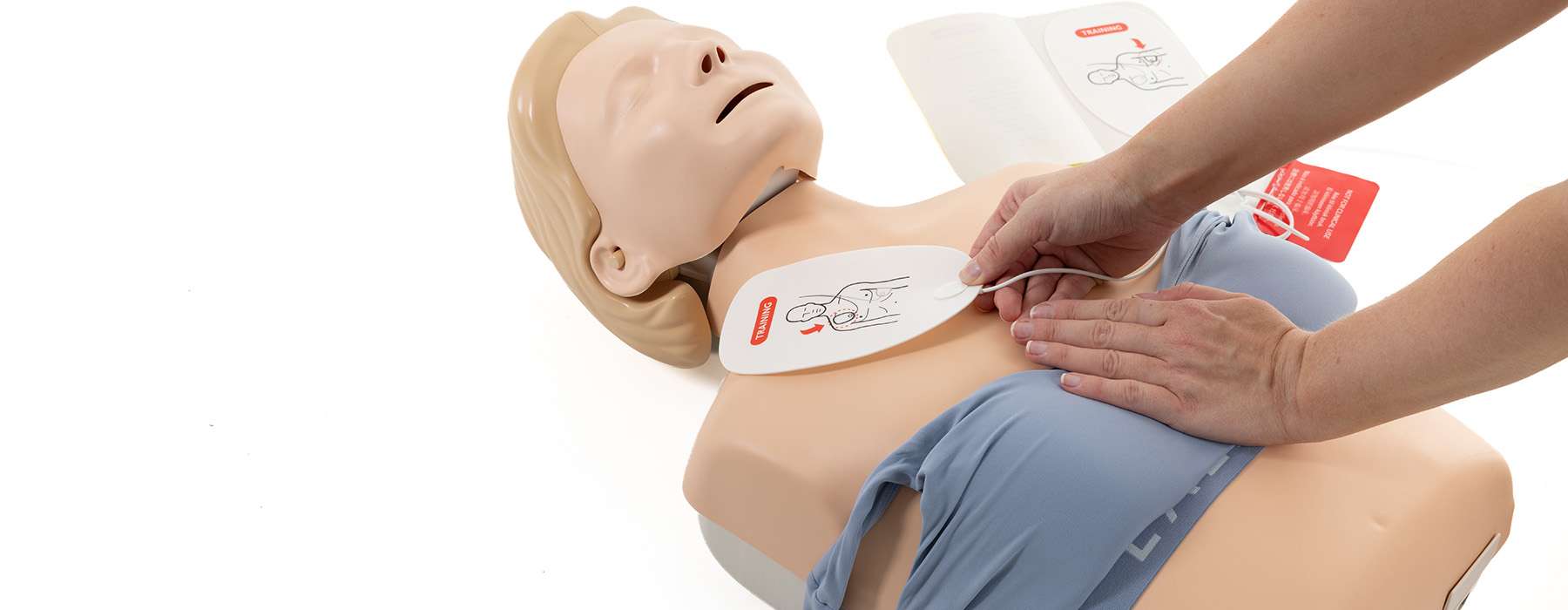
pad placement on manikin using the Laerdal Training Bralette

Potential discussion points:

  • When is adjusting or moving a bra sufficient, and when should it be removed? 
  • How can responders avoid placing pads over breast tissue while still acting quickly?
  • What techniques can be used to lift or move breast tissue to support correct pad placement?
  • How do we maintain focus on high-quality CPR and rapid defibrillation while managing these real-world considerations? 

The goal is not simply bra removal, but ensuring effective pad-to-skin contact, correct pad placement, and high-quality CPR with minimal interruption. 

4. Instructors can address hesitation before it matters

Research shows that fear of doing the wrong thing, concerns about dignity, and uncertainty around touching or exposing the chest contribute to delayed or absent bystander action for women. 2 3 8

Training with the CPR Training Bralette allows instructors to:

  • Discuss speed versus modesty 
  • Reinforce respectful actions
  • Practice decision-making under pressure 

These conversations can be difficult to introduce abstractly. They become much easier—and more effective—when learners are working through a realistic scenario. 


Instructor dialogue 


"How can we preserve dignity while still acting quickly and effectively?"

There is no perfect answer. The value is in the discussion. 

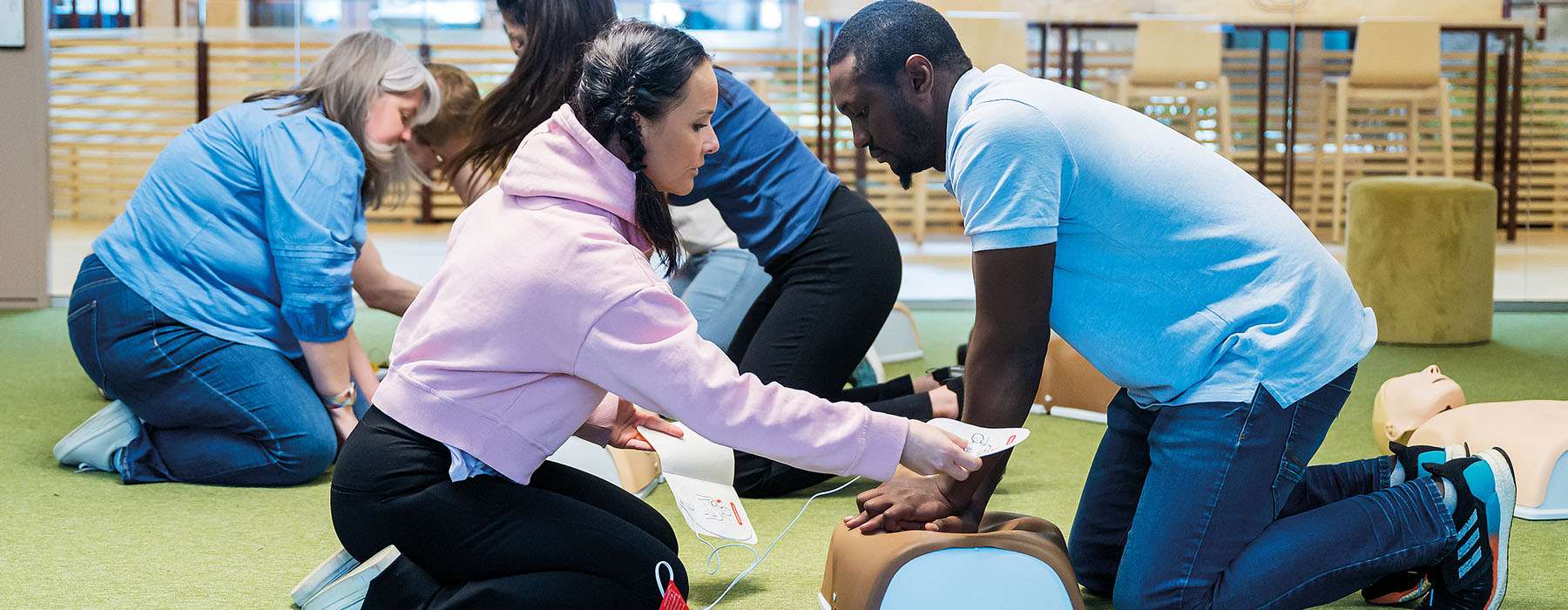
Group of people attending a CPR training session, using manikins to practice CPR

5. Training becomes more inclusive—and more realistic

Real patients do not look like unclothed manikins. They have different bodies, clothing, ages, and circumstances.

Inclusive training means better representing the patients responders are likely to encounter.

Adding realistic clothing:

  • Encourages discussion of female anatomy and dignity
  • Normalizes responding confidently to women in cardiac arrest
  • Helps reduce discomfort and hesitation through practice

While simple in design, the CPR Training Bralette creates meaningful learning moments that can elevate the quality of training across community, EMS, and healthcare education programs.


Instructor tip


Use the bralette to facilitate a hands-on discussion about patient dignity. Ask learners how they can expose the chest quickly enough for effective treatment while still treating the patient with respect – and then let them try it with the manikin.  

This helps prepare learners for the realities of emergency care.
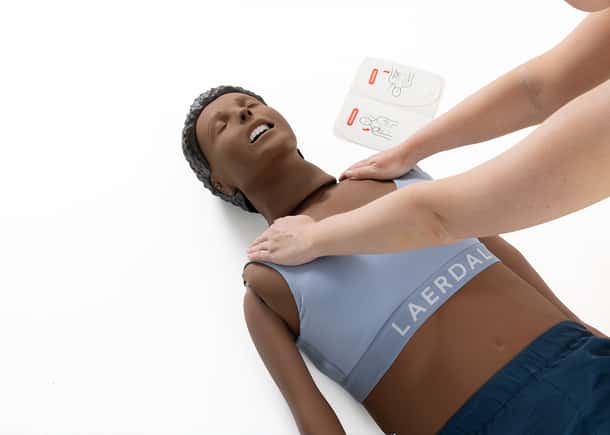
From hesitation to confident action

A simple piece of fabric shouldn't cost lives...

And that is where realistic training has the greatest impact: helping responders move from hesitation to action when every second counts.

The CPR Training Bralette isn't about changing how a manikin looks—it's about helping learners practice the decisions that can determine whether they act quickly in an emergency.

By introducing realistic scenarios involving clothing, chest exposure, and AED pad placement, instructors can turn moments of uncertainty into learning opportunities and build confidence before those situations happen in real life.

Because when hesitation becomes practice, practice becomes confidence—and confidence helps save lives. 


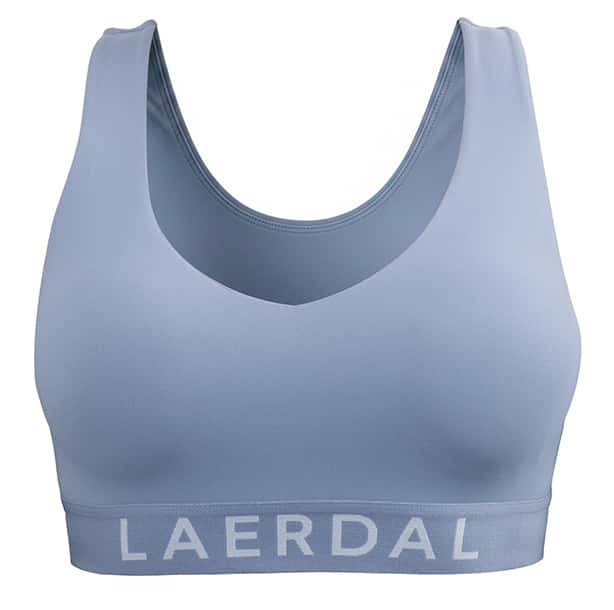
1-pack Laerdal training bralette

Key takeaways


  • The CPR Training Bralette helps bring real-world scenarios into CPR training.
  • Learners gain confidence by practicing clothing management and AED preparation.
  • A bra may be adjusted or removed to enable correct AED pad placement.
  • Effective training focuses on bare-skin pad placement and minimizing delays. 
  • Realistic practice helps turn uncertainty into action when every second counts. 

Frequently asked questions

Why train with a CPR Training Bralette?

The CPR Training Bralette helps create more realistic CPR and AED training scenarios. It gives learners an opportunity to practice decisions they may encounter in real life, including clothing management, chest exposure, and AED pad placement. 

Do current guidelines require a bra to be removed before AED pad placement?

No. Current guidelines emphasize placing AED pads directly on bare skin, ensuring correct pad placement, and minimizing delays to defibrillation. The 2025 AHA Guidelines note that it may be reasonable to adjust the position of a bra instead of removing it, provided the pads can be placed correctly. Similarly, ILCOR and ERC guidance focus on achieving proper pad-to-skin contact and minimizing interruptions rather than requiring routine bra removal. If a bra can be adjusted so pads can be placed correctly on bare skin and do not interfere with CPR, removal may not be necessary. If it interferes with pad placement, pad contact, or high-quality CPR, it should be moved or removed as quickly as possible 

How does the CPR Training Bralette improve CPR training?

It helps instructors facilitate discussions around patient dignity, hesitation, chest exposure, and AED pad placement while creating more realistic training experiences. 

Is the CPR Training Bralette suitable for both CPR and AED training?

Yes. It can be used to support training scenarios involving both CPR and AED use, helping learners practice the steps required before effective defibrillation can occur. 

What do instructors notice when using the CPR Training Bralette?

Instructors often report that learners ask more questions, uncover areas of uncertainty, engage in deeper discussions, and become more comfortable with realistic emergency scenarios. 

Why is realistic training important?

Realistic training helps learners move from hesitation to action. By practicing real-world scenarios in a safe environment, learners can build the confidence needed to respond quickly and appropriately when faced with a cardiac arrest. 

You may also like...

Request More Information

How can we help you?
Consent

We will handle your personal contact details with care as outlined in Laerdal's Privacy Policy.

We will handle your personal contact details with care as outlined in Laerdal's Privacy Policy.

References

  1. Blewer, A. L., McGovern, S. K., Schmicker, R. H., May, S., Morrison, L. J., Aufderheide, T. P., Daya, M., Idris, A. H., Callaway, C. W., Kudenchuk, P. J., Vilke, G. M., Abella, B. S., & Resuscitation Outcomes Consortium (ROC) Investigators. (2018). Gender disparities among adult recipients of bystander cardiopulmonary resuscitation in the public. Circulation: Cardiovascular Quality and Outcomes, 11(8), e004710. https://doi.org/10.1161/CIRCOUTCOMES.118.004710
  2. Cruel, S. (2024, February 27). No matter where they live women are less likely to get bystander CPR. Duke University School of Medicine. https://medschool.duke.edu/news/no-matter-where-they-live-women-are-less-likely-get-bystander-cpr
  3. Cheng, W., Liu, J., Zhou, C., & Wang, X. (2025). Factors analysis of lower probability of receiving bystander CPR in females: A web-based survey. BMC Cardiovascular Disorders, 25, Article 270. https://doi.org/10.1186/s12872-025-04709-5  
  4. American Heart Association. (2025). 2025 American Heart Association Guidelines for CPR and ECC. https://cpr.heart.org/en/resuscitation-science/cpr-and-ecc-guidelines  
  5. Smyth, M. A., van Goor, S., Hansen, C. M., Fijačko, N., Nakagawa, N. K., Raffay, V., Ristagno, G., Rogers, J., Scquizzato, T., Smith, C. M., Spartinou, A., Wolfgang, K., Perkins, G. D., & ERC Adult Basic Life Support Collaborators. (2025). European Resuscitation Council Guidelines 2025 Adult Basic Life Support. Resuscitation, 215(Suppl. 1), 110771. https://doi.org/10.1016/j.resuscitation.2025.110771
  6. International Liaison Committee on Resuscitation. (2024, November 3). Removal of bra for pad placement and defibrillation: Scoping Review: BLS 2604 TF ScR. https://costr.ilcor.org/document/removal-of-bra-for-pad-placement-and-defibrillation-scoping-review-bls-2604-tf-scr  
  7. American Red Cross. (2025). Defibrillation. Red Cross Guidelines Database. https://guidelines.redcross.org/guidelines-database/defibrillation/  
  8. Printz, J. (2024, January 29). Women less likely to receive bystander defibrillation than men during a heart attack, Victorian study finds. ABC News. https://www.abc.net.au/news/2024-01-30/women-found-less-likely-to-receive-heart-attack-defibrillation/103383634