Chain of Survival explained
2:22


Bare ét svagt led i overlevelseskæden kan drastisk reducere chancen for overlevelse – og for et positivt resultat. Overlevelsesraten efter hjertestop er lav. Uacceptabelt lav. I gennemsnit overlever mindre end 10 %. Men nogle steder er overlevelsesraten næsten 30 %.
I årtier blev overlevelsesraten efter hjertestop ikke forbedret. Hvorfor? Fordi vi ikke vidste, hvad der kunne gøres for at øge overlevelsen. Nu ved vi det. Nogle steder implementerer ændringer baseret på denne viden – og de ser lovende resultater. Ved at hjælpe med at indføre best practice og programmer, der styrker overlevelseskæden, tror vi, at overlevelsen efter hjertestop kan øges med helt op til 50 %.

It has been found that survival can be improved with each link in the Chain of Survival contributing a different amount. In the first few minutes after a cardiac arrest, caller-dispatcher teamwork can improve survival by a factor of 4. In the next hour, EMS performance of quality CPR can contribute by a factor of 3, and in the following days hospital post-resuscitation care can contribute by a factor of 2. In total, there is the opportunity to increase survival from cardiac arrest by 24-fold.
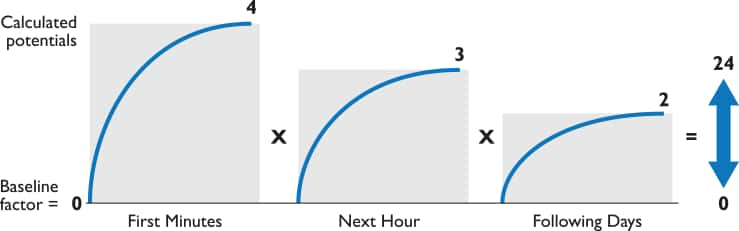
During the last decades, focus has been on the last two links in the chain -- EMS and hospital care. However, we have learned that survival can be improved dramatically by acting earlier. Early identification of cardiac arrest and better implementation of bystander CPR with dispatcher-assistance results in the greatest impact on survival.
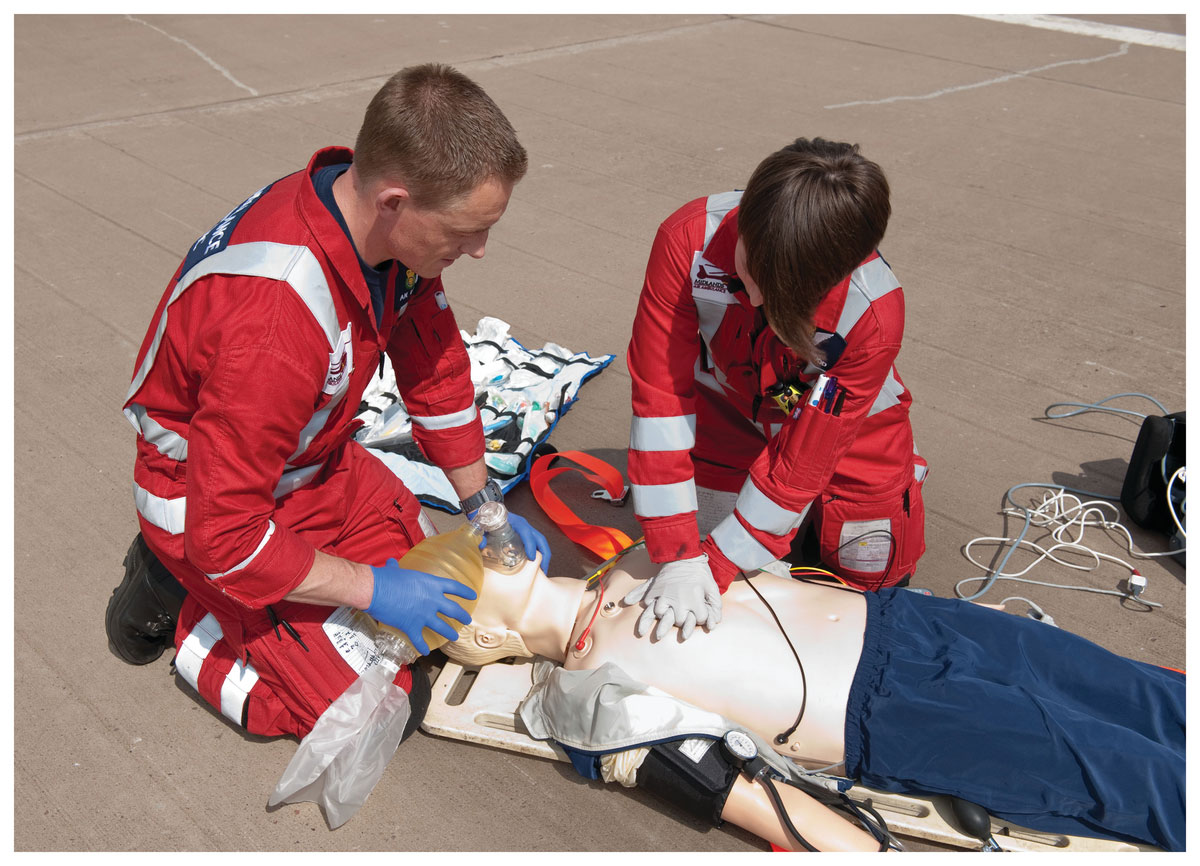
High Performance CPR is a concept that means each member of the team knows exactly what to do, when to do it, and how to do it.
Key elements include:
A carefully targeted CPR training curriculum that included real-time audiovisual feedback helped our EMS system significantly improve survival from cardiac arrest in just 18 months.

Dispatchers are critical in the first link in the Chain of Survival. Telephone CPR (T-CPR), also known as dispatcher-assisted CPR, optimises communication between the dispatcher and the bystander. With T-CPR, dispatchers are trained to recognize and identify cardiac arrest, and to instruct bystanders to initiate and perform high quality CPR. Telephone CPR can both increase the number of bystanders that start CPR and increase the quality of CPR performance.
Many emergency dispatch centers have protocols in place, however fail to offer T-CPR. Implementing a T-CPR program to train dispatchers and to provide ongoing quality assurance is an essential step for increasing survival from cardiac arrest.
In 2016, the Global Resuscitation Alliance (GRA) was established by renowned international organizations, emergency medical services, and resuscitation leaders. The goal of this global network is to identify and help implement best practices to increase survival from sudden cardiac arrest by 50 percent. The GRA is a significant step towards a global effort to help save more lives -- together.
Strengthening the Chain of Survival is one of the most important and impactful ways we further our mission of helping save lives. From helping to implement the widespread CPR training of bystanders, to facilitating high quality CPR for first responders, our solutions are designed to increase survival from cardiac arrest.