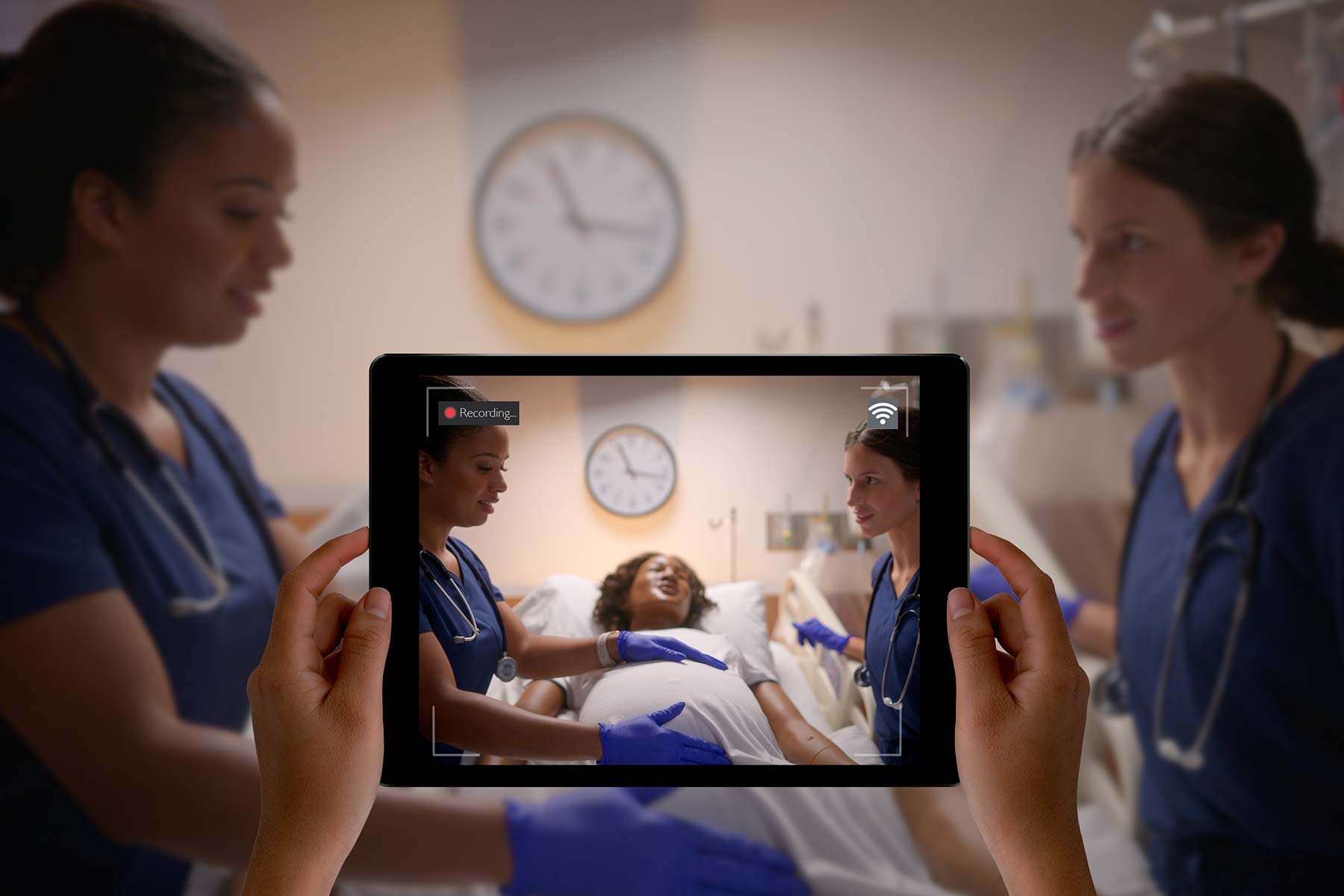
MamaAnne
MamaAnne is a maternal and birthing simulator for high-fidelity simulation training in critical obstetric emergencies.
Learn MoreFrom training requirements to safer maternal outcomes

Simulation is not separate from NHS strategy — it is a practical way to deliver it.
NHS maternity requirements are raising expectations for how Trusts prepare teams, test readiness, and improve the systems that support safe care. National reviews continue to highlight challenges in maternity safety, with many services requiring improvement and ongoing concerns around care quality and consistency.1
Maternity services across the UK are facing increasing pressure to improve safety, reduce variation in outcomes, and address persistent health inequalities. For NHS Trusts, the challenge is not only to meet training and compliance requirements — but to translate them into meaningful improvements in care for mothers, babies, and families.
"Every system is perfectly designed to get the results it gets."
Paul Batalden, Medical Director, Senior Fellow
Institute for Healthcare Improvement (IHI)
Simulation training is one of the most evidence-based interventions to reduce preventable harm — for mothers, babies, and the teams caring for them.
Laerdal helps maternity departments use simulation as a practical pathway from training to competence, from competence to systems improvement, and from systems improvement to safer systems of care.
We work with NHS trusts, integrated care boards, and training hubs to design simulation programmes aligned to your specific maternity safety priorities and funding routes.
Simulation doesn't sit outside NHS strategy—it supports the goals at the heart of it. By helping teams prepare together, strengthen systems, and build confidence in practice, simulation turns national priorities into safer care for mothers and babies.
Maternity safety initiatives that are fit for the future
The 10-year plan identifies maternity safety as a national priority, with simulation-based training supporting workforce development, reducing variation, and improving team performance across integrated care systems. Simulation helps Trusts develop confident teams that are prepared to deliver consistently safe care.
Reducing perinatal mortality
The Safer Births Bundle of Care focuses on neonatal stabilisation, resuscitation readiness, and effective handovers. Simulation prepares maternity, neonatal, and paediatric teams to work together with confidence during the moments that matter most.
Five core elements, practised under pressure
The Maternity Care Bundle requires evidence of team training across five high-risk maternity emergencies. Simulation enables Trusts to rehearse, evaluate, and continuously strengthen team performance when it matters most.
Supporting maternity safety
The NHS Resolution's Maternity Incentive Scheme (MIS) requires trusts to demonstrate multidisciplinary emergency training and continuous improvement. Simulation helps transform these requirements into a sustainable programme that builds readiness while supporting safer systems of care.
Maternity teams are working to improve care in a complex system. Simulation helps translate challenges into practical action.

Variation in safety outcomes
Standardised team training to improve consistency in care

Workforce pressures and limited training time
Scalable, repeatable programmes aligned to real clinical needs

Health inequalities in maternity outcomes
Training that strengthens communication, escalation, and culturally responsive care

Meeting regulatory and safety requirements
Evidence-based programmes aligned to MIS and national frameworks
Full-immersion simulation allows maternity teams to move beyond compliance and toward measurable improvement.
Prepared Clinicians
Develop the skills needed for high-quality care

Confident Teams
Build competency through immersive multidisciplinary practice
Safer Maternity Care
Strengthen systems that improve safety for mothers and babies
Teams can:
By creating a safe environment to practise complex scenarios, simulation supports continuous learning and safer systems of care.

Full immersion simulation replicates real clinical environments, enabling teams to practise complex maternal scenarios with realism and repeatability.
Solutions such as MamaAnne® support:
MamaAnne is designed specifically for high-fidelity full immersion obstetric simulation, enabling teams to build competence and confidence in critical situations.
The most effective maternity training programmes go beyond participation.
They enable NHS Trusts to:
This is where simulation becomes not just a training tool — but a strategic enabler of safer maternity systems.
NHS Trusts can fund simulation training through Integrated Care Board transformation budgets, the Maternity Incentive Scheme, and Health Education England training funds. These routes support both capital investment and education-based simulation programmes.
NHS England / ICB Transformation Funding
Integrated Care Boards hold dedicated transformation budgets for maternity service improvement. Simulation solutions can qualify as capital or education investments within many current ICB funding plans.
CNST Maternity Incentive Scheme (MIS)
Trusts that achieve all MIS safety actions are eligible for CNST premium discounts. Investment in simulation that supports MIS compliance can contribute to measurable financial return through reduced litigation risk and improved safety performance.
Health Education England (HEE) & NHS Training Budgets
Regional training hubs and education budgets support simulation-based learning programmes. Where simulation is linked to postgraduate medical or midwifery curricula, funding can often be accessed through education tariff routes.
Maternity simulation training uses realistic clinical scenarios to help multidisciplinary teams practise emergency situations, improve communication, and strengthen decision-making in obstetric care.
Evidence shows that simulation-based training:
Simulation has been shown to improve both technical and non-technical skills and can contribute to better patient outcomes when integrated into safety programmes
Simulation training improves safety by enabling teams to practise emergencies, strengthen communication, and identify risks before they affect patients.
From obstetric emergencies to neonatal resuscitation, high-fidelity simulation enables maternity teams to rehearse, debrief, and improve performance in the scenarios that matter most.
Postpartum Haemorrhage (PPH) Response
Postpartum haemorrhage remains a leading cause of maternal mortality. Simulation allows teams to practise recognition, escalation pathways, drug administration, and surgical decision-making under realistic pressure—before a real emergency occurs.
Shoulder Dystocia & Obstetric Emergency
Simulation enables hands-on practice of techniques such as the McRoberts manoeuvre, suprapubic pressure, and rotational delivery. This builds critical muscle memory and team coordination in time-sensitive emergencies.
Neonatal Resuscitation & NLS
Neonatal resuscitation requires rapid, coordinated action. Simulation allows multidisciplinary teams to practise NLS algorithms, communication, and escalation repeatedly in a safe environment—improving readiness when seconds matter.
Eclampsia & Maternal Collapse
Rare but life-threatening events such as eclamptic seizures or maternal collapse require precise, coordinated response. Simulation enables teams to rehearse magnesium management, escalation protocols, and decision-making under pressure.
Cord Prolapse Management
Simulation enables teams to rehearse the full pathway—from diagnosis to theatre transfer—under realistic time constraints. Debriefing helps identify delays and improve response efficiency.
Multidisciplinary Team Performance
Many serious incidents are linked to communication and teamwork rather than clinical knowledge alone. Simulation enables teams to practise the behaviours that underpin safe, reliable care, including:
Simulation has become an increasingly important part of NHS maternity strategy because improving outcomes requires more than individual clinical knowledge. It enables multidisciplinary teams to practise together, identify system risks, and continuously improve the delivery of safe maternity care.
Key challenges include variation in safety outcomes, workforce pressures, and inequalities affecting women from ethnic minority and deprived communities.
MamaAnne is used for high-fidelity obstetric simulation, allowing teams to practise complex maternal scenarios safely and repeatedly.
Whether your Trust is expanding multidisciplinary simulation, strengthening compliance with national programmes, or advancing quality improvement, we're here to help you build a programme that supports safer care today—and continues to improve it tomorrow.