Evidencia demuestra que la simulación traslacional mejora los resultados de los pacientes y el rendimiento organizacional
Esta página ha sido traducida automáticamente mediante IA y puede contener errores. Para obtener información precisa, consulte la versión original en inglés o contáctenos.
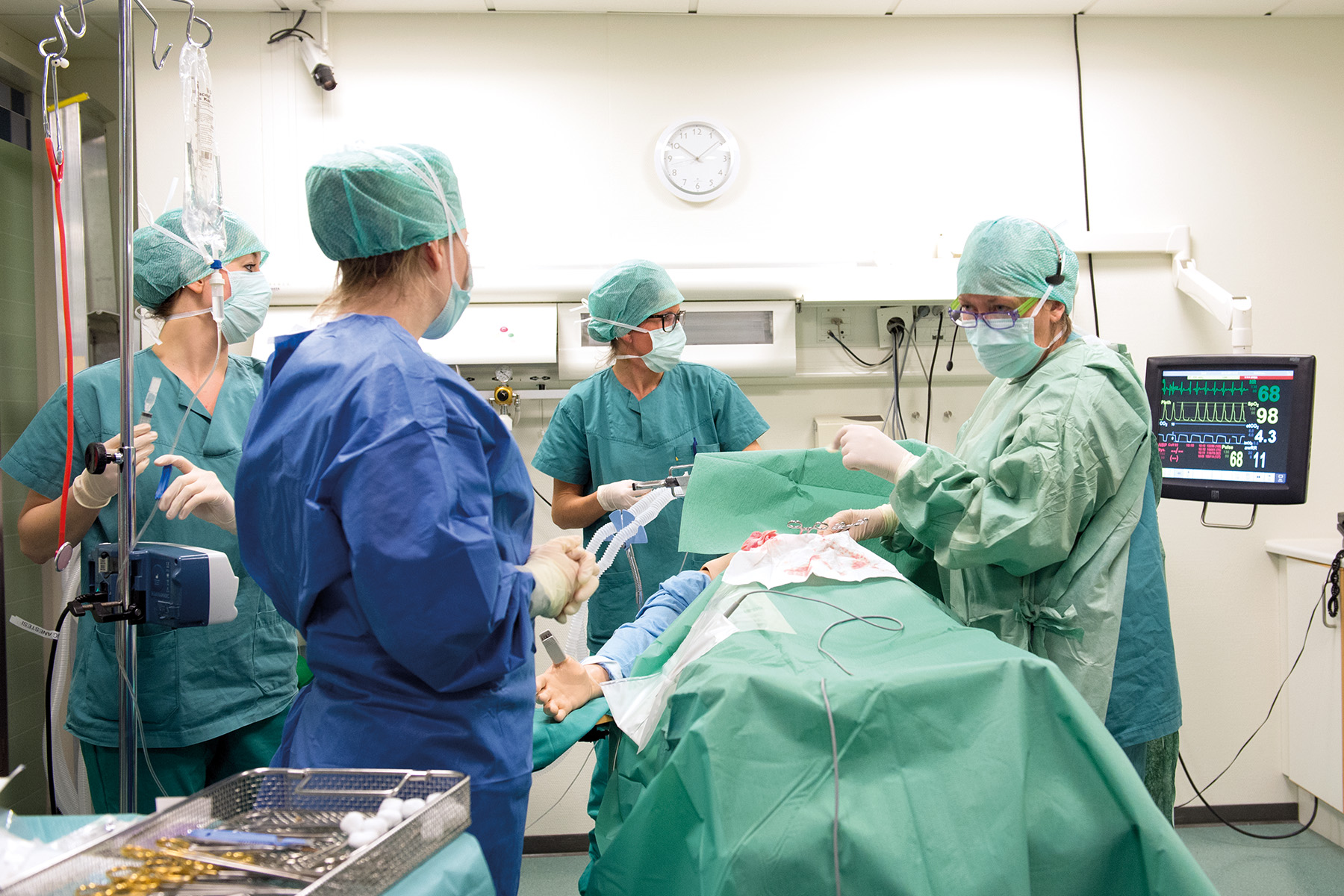
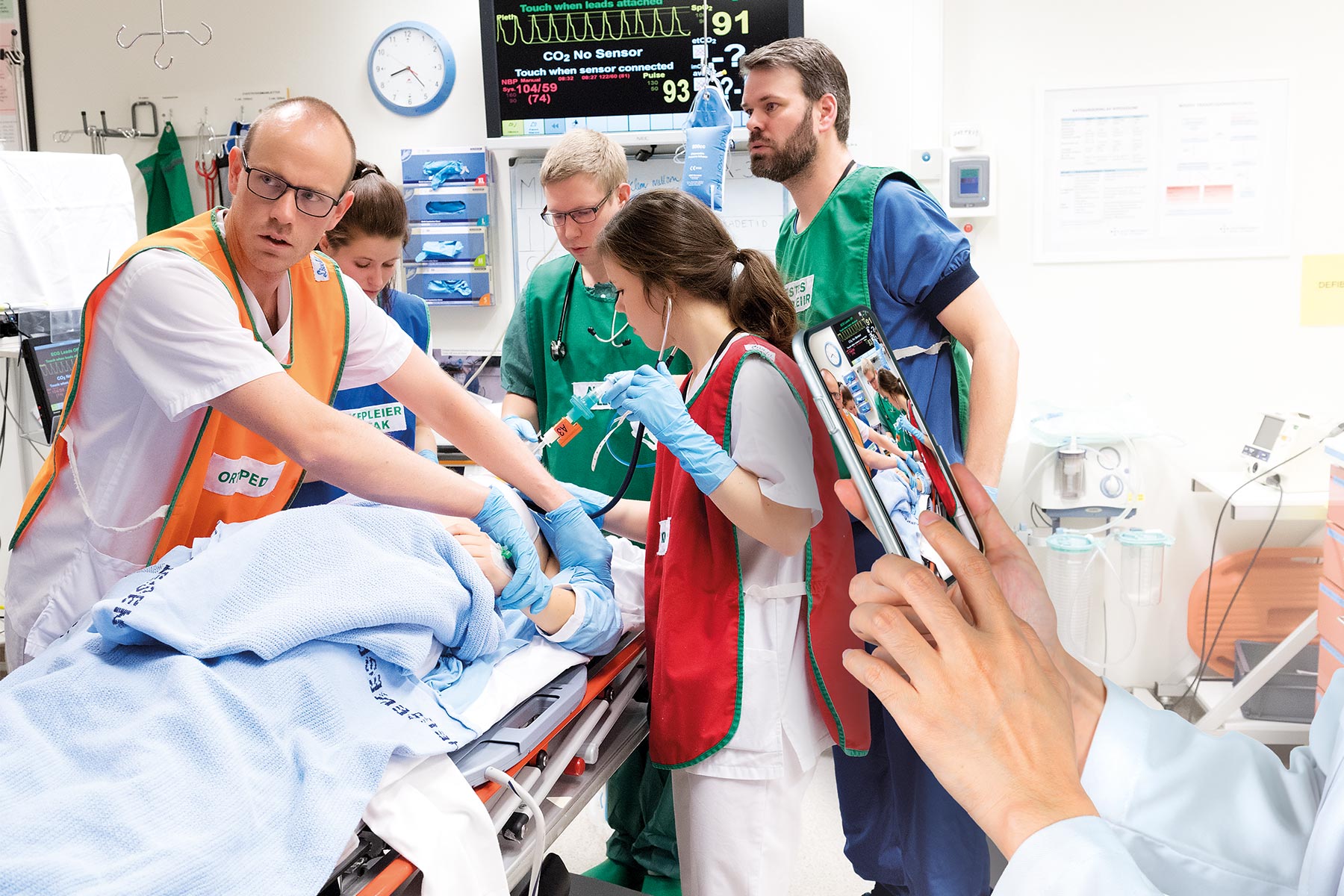
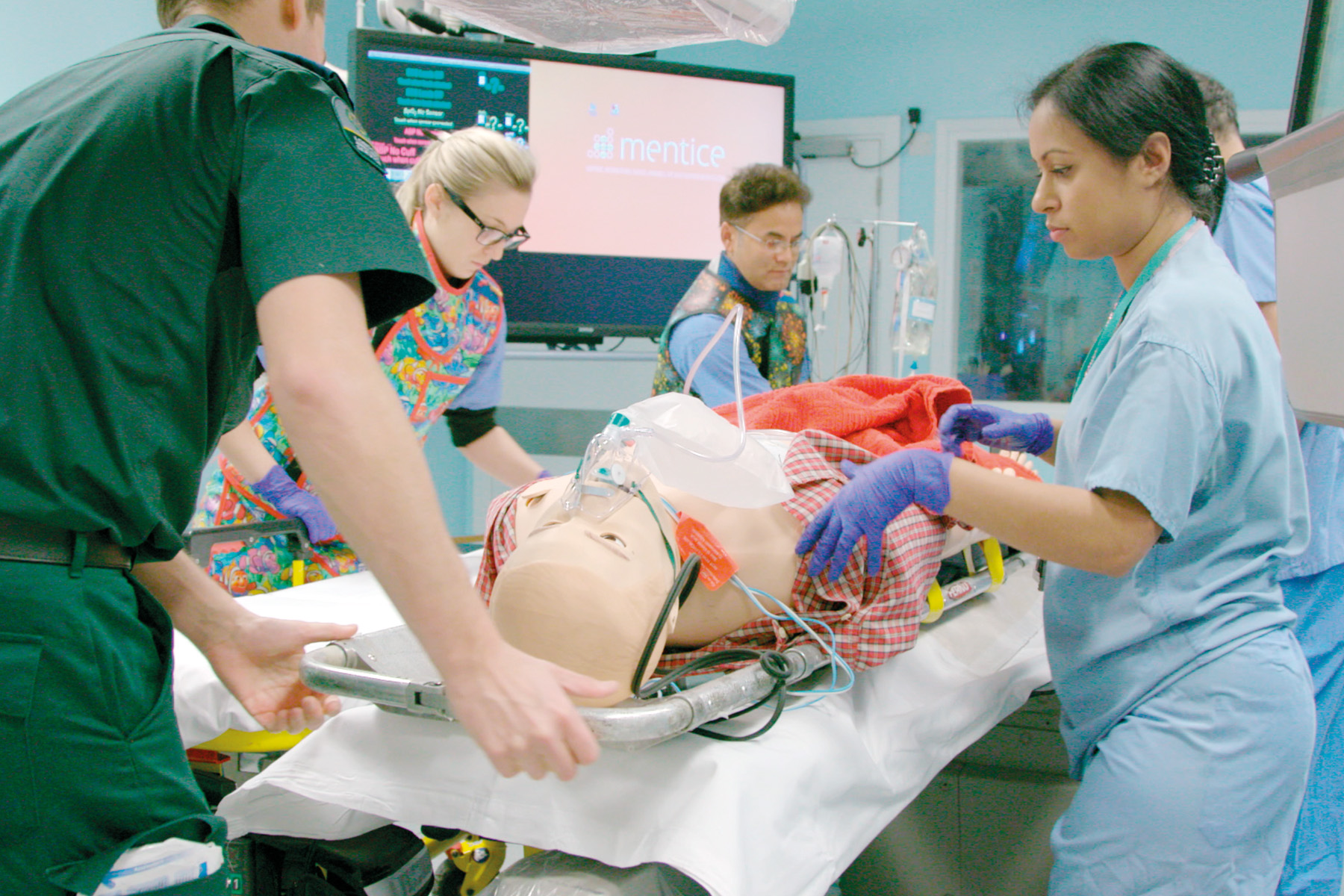
La simulación traslacional va más allá de la educación y la formación de competencias—mejora directamente el rendimiento clínico y refuerza los sistemas sanitarios. Respaldada por crecientes evidencias en múltiples entornos de atención, empodera a los equipos de primera línea para identificar, probar y perfeccionar procesos que conducen a mejoras medibles en la seguridad del paciente y los resultados organizativos.
“No podemos ‘legislar’ nuestro camino hacia la excelencia. Demasiado a menudo, las organizaciones sanitarias responden a los desafíos añadiendo más políticas y normas. Pero la excelencia no proviene de archivadores llenos de procedimientos. En cambio, proviene del personal de primera línea que brinda atención.”1
- Dr. Andrew Petrosoniak MSc (Med Ed), FRCPC, Médico de emergencias y líder del equipo de trauma en el Hospital St. Michael en Toronto, Canadá
Conectando la simulación con los resultados
La simulación traslacional no se trata solo de practicar habilidades. Está diseñada para analizar, perfeccionar y mejorar los sistemas de atención, impulsando en última instancia mejores resultados para los pacientes. Pero, ¿qué evidencia existe realmente? Un cuerpo creciente de literatura está demostrando que estas intervenciones basadas en simulación pueden ofrecer beneficios medibles en los resultados—tanto a nivel del paciente como organizativo.
Pruebas de la Investigación de Simulación Traslacional
Ciencia de la Simulación: De la Habilidad al Sistema
Una revisión integral realizada por McGaghie y colegas rastreó la progresión de la educación médica basada en simulación (SBME) desde el aprendizaje en laboratorio, pasando por la mejora en la prestación de atención, hasta llegar a mejoras en los resultados de la salud de los pacientes y la salud pública. Encontraron que la ciencia traslacional estructurada y continua en SBME produce mejoras concretas y downstream, además de un retorno positivo de la inversión.2
Definición Funcional y Marco de Práctica
Los expertos en Simulación Traslacional Dr. Chris Nickson y Dra. Victoria Brazil definen la simulación traslacional como aquella impulsada por el diagnóstico de problemas de seguridad y la implementación de soluciones dentro de sistemas reales. Su marco—utilizado en más de 1.000 actividades en Australia y Canadá—refuerza cómo la simulación cumple roles de diagnóstico, intervención y mejora integrada.3
¿Qué ha conseguido la simulación traslacional hasta ahora?
Los estudios en el mundo real revelan varios resultados concretos que hablan por sí mismos en un entorno donde las políticas y reglas han sido a menudo el recurso principal para lograr cambios:
Mejora en la supervivencia tras un paro cardíaco (hospitalario, pediátrico) Se demostró una clara asociación entre la frecuencia de códigos simulados in situ y las tasas de supervivencia mejoradas en paros cardíacos pediátricos hospitalarios. Los hospitales con una mayor participación en los códigos simulados transformaron sus esfuerzos en resultados significativamente mejores al estar más familiarizados con los sistemas en los que tenían que actuar.4
Reducción de los retrasos en el tratamiento del ictus La revisión de protocolos liderada por simulación en un centro de ictus en Noruega redujo drásticamente los tiempos puerta-aguja para la trombólisis, mejorando la efectividad de la atención al ictus. Los trabajadores de primera línea utilizaron la simulación para identificar los cambios necesarios y llevarlos a la práctica.5
Entrega más rápida de atención en traumatismos Los estudios de simulación traslacional muestran que los pacientes con traumatismos reciben transfusiones de sangre más rápido, pasan menos tiempo en la sala de emergencia antes de la tomografía computarizada y se benefician de tasas más altas de finalización de tareas y un mejor trabajo en equipo. En lugar de centrarse en las habilidades individuales, los trabajadores de primera línea utilizaron la simulación para identificar deficiencias en el sistema y luego probar e implementar mejoras en el mismo.6
Mejor seguridad en las vías respiratorias pediátricas En cuidados críticos pediátricos, las intervenciones mediante simulación llevaron a un mejor manejo de vías respiratorias, con un mayor cumplimiento del paquete de seguridad del Registro Nacional de Emergencias de Vías Respiratorias para Niños (NEAR4KIDS) en la UCIP. Una vez más, el personal de primera línea utilizó la simulación como una herramienta para el perfeccionamiento de los sistemas.7
Rediseño de sistemas y planificación de espacios La simulación traslacional ha sido utilizada por el personal de primera línea para identificar amenazas latentes para la seguridad, probar soluciones y orientar al personal durante la apertura de nuevos espacios clínicos, como hospitales, unidades obstétricas, servicios de urgencias y equipos de respuesta a emergencias, garantizando un inicio más fluido y operaciones más seguras.8
Transformación cultural y sistémica La investigación cualitativa destaca que la simulación traslacional fomenta una mejora en la cultura hospitalaria, incluyendo una mejor comunicación, metas compartidas y respeto mutuo. Esto describe un desempeño organizativo más fuerte, no solo una competencia individual. Y es el avance que muchos en la dirección hospitalaria están buscando.9
Transformación rápida de los servicios de salud (respuesta al COVID-19) Durante la pandemia de COVID-19, la simulación traslacional desempeñó un papel crucial en la transformación de procedimientos a nivel hospitalario y del sistema, particularmente en los servicios de maternidad y la preparación ante pandemias, ayudando a los equipos a adaptarse de forma más rápida y segura. Esto se logró no mediante reglas e imposiciones, sino a través de esfuerzos de simulación en el terreno.10
“Cualquiera que esté involucrado en la atención sanitaria sabe que, por muy buenos que sean nuestros individuos o incluso nuestros equipos, en última instancia fracasamos o triunfamos al nivel de nuestros sistemas. …No simulamos solo para ver si las personas pueden hacer algo; simulamos para ver qué en el sistema les impide hacerlo.”11
Dra. Victoria Brazil
Directora, Bond Translational Simulation Collaborative; Profesora de Medicina de Emergencia y Directora de Simulación, Bond University
Qué Significa Esto para los Líderes Sanitarios
Aspectos Clave
✓
La simulación traslacional mueve el aprendizaje del saber al hacer—y a mejorar—como un sistema.
✓Ha demostrado mejoras en las tasas de supervivencia, reducción de tiempos de tratamiento, coordinación del equipo y atención, todo mientras es lo suficientemente flexible para guiar transformaciones rápidas.
✓También contribuye al cambio cultural—haciendo visible, sistémico y sostenible el aprendizaje.
Implementación de la Simulación Traslacional
Si bien recomendamos adoptar un enfoque informado y formal hacia la simulación traslacional, eso no debería impedirte que tomes algunos pasos básicos para comenzar.
1
Define Objetivos Claros Enfoca los resultados del cuidado en el mundo real (como supervivencia, puntualidad, seguridad).
2
Usa Modelos Basados en Evidencias Aplica marcos como ciclos de simulación diagnóstica, de intervención o integrada, y consulta con nosotros en Laerdal para orientación.
3
Establece Métricas de Rendimiento Monitorea tiempos de respuesta, cumplimiento de protocolos o resultados—no solo la finalización de la simulación.
4
Involucra a los Interesados Incluye a clínicos, equipos de calidad y responsables de seguridad desde el principio.
5
Itera y Escala Utiliza los conocimientos obtenidos para refinar sistemas, políticas o espacios y luego prueba nuevamente a través de simulaciones.
Conclusión Clave
La simulación traslacional no se trata solo de aprender, sino de mejorar los sistemas de atención. La evidencia demuestra que aporta beneficios clínicos tangibles, mejora sistémica y transformación cultural. Es la diferencia entre saber qué hacer y tener un sistema diseñado para respaldar el hacerlo bien.
La simulación traslacional consiste en proporcionar a los expertos de su equipo las herramientas para crear un entorno experto en el que puedan desempeñarse. Las políticas y normas son convenientes, pero rara vez igualan la eficacia de utilizar la simulación como una herramienta de mejora de la calidad. Empiece a usarla para rediseñar la atención que funcione mejor para los pacientes y los equipos que los atienden.
¿Listo para replantearte tu próxima iniciativa de mejora de calidad? Contáctanos para explorar cómo puedes empezar con la simulación.
McGaghie, W. C., Draycott, T. J., Dunn, W. F., Lopez, C. M., & Stefanidis, D. (2011). Evaluación del impacto de la simulación en los resultados de los pacientes traslacionales. Simulation in Healthcare: The Journal of the Society for Simulation in Healthcare, 6(7), S42–S47. https://doi.org/10.1097/sih.0b013e318222fde9
Nickson, C. P., Petrosoniak, A., Barwick, S., & Brazil, V. (2021). Simulación traslacional: de la descripción a la acción. Advances in Simulation, 6(1). https://doi.org/10.1186/s41077-021-00160-6
Josey, K., Smith, M. L., Kayani, A. S., Young, G., Kasperski, M. D., Farrer, P., Gerkin, R., Theodorou, A., & Raschke, R. A. (2018). Los hospitales con mayor participación activa en la realización de simulacros estandarizados in-situ muestran una mejor supervivencia tras paros cardiopulmonares intrahospitalarios. Resuscitation, 133, 47–52. https://doi.org/10.1016/j.resuscitation.2018.09.020
Sautter, M. & Egeland, B. (Anfitriones) (2023, 20 de enero). ¿Se puede usar la simulación de pacientes para la mejora continua? (No. 2) [Episodio de pódcast en audio]. En One Million Lives Podcast. Laerdal Medical. https://laerdal.com/us/information/one-million-lives-podcast/