Hvordan kan simulering drive kvalitetsforbedring i ditt helsevesen?
Simulering er ikke bare for å utdanne og trene enkeltpersoner—det kan avdekke systemfeil, teste løsninger og drive reelle forbedringer slik at helsepersonell innen alle felt kan levere tryggere og bedre omsorg.
Dr. Victoria Brazil
Direktør, Bond Translational Simulation Collaborative; Professor i akuttmedisin og direktør for simulering, Bond University

Når de fleste helseteam tenker på simulering, ser de for seg utdanning og opplæring—øve på infeksjonskontroll, håndtering av akutte hendelser, opplæring av nytt personale og så videre. Men hva om simulering kunne være mer enn et undervisningsverktøy? Hva om det aktivt kunne forbedre systemene som utgjør pasientbehandlingen?
Sykehus er komplekse, adaptive systemer. Selv i hendene på klinisk ekspertise på toppnivå, kan små brudd i arbeidsflyt, overleveringer eller bruk av teknologi føre til pasientskader. Disse bruddene forblir ofte skjulte til det er for sent—med mindre vi utvikler måter å teste selve systemet på.
Det er her simulering, når det integreres i kvalitetsforbedringsarbeid (QI), har stor innvirkning.
Når simulering brukes til opplæring og utdanning, brukes det for å skape eksperter. Når det brukes til kvalitetsforbedring (QI), handler det om å optimalisere verden hvor ekspertene kan lykkes. QI handler om å proaktivt designe tryggere og smartere systemer. Simulering støtter dette ved å la helseteam forstå hvordan pleien faktisk gis i deres virkelige miljøer og identifisere hva som må endres.
- Dr. Andrew Petrosoniak MSc (Med Ed), FRCPC,
Akuttlege og leder for traumateamet ved St. Michael’s Hospital i Toronto, Canada

Her er noen få eksempler:
Simulering lar team undersøke hvordan pleie utfolder seg over tid, team og avdelinger. Det avdekker feil mellom retningslinjer og praksis—og hjelper med å identifisere det som ofte kalles latente sikkerhetstrusler (LST-er).
Dr. Andrew Petrosoniak, traumeleger og simuleringsleder ved St. Michael’s Hospital i Toronto, deler:
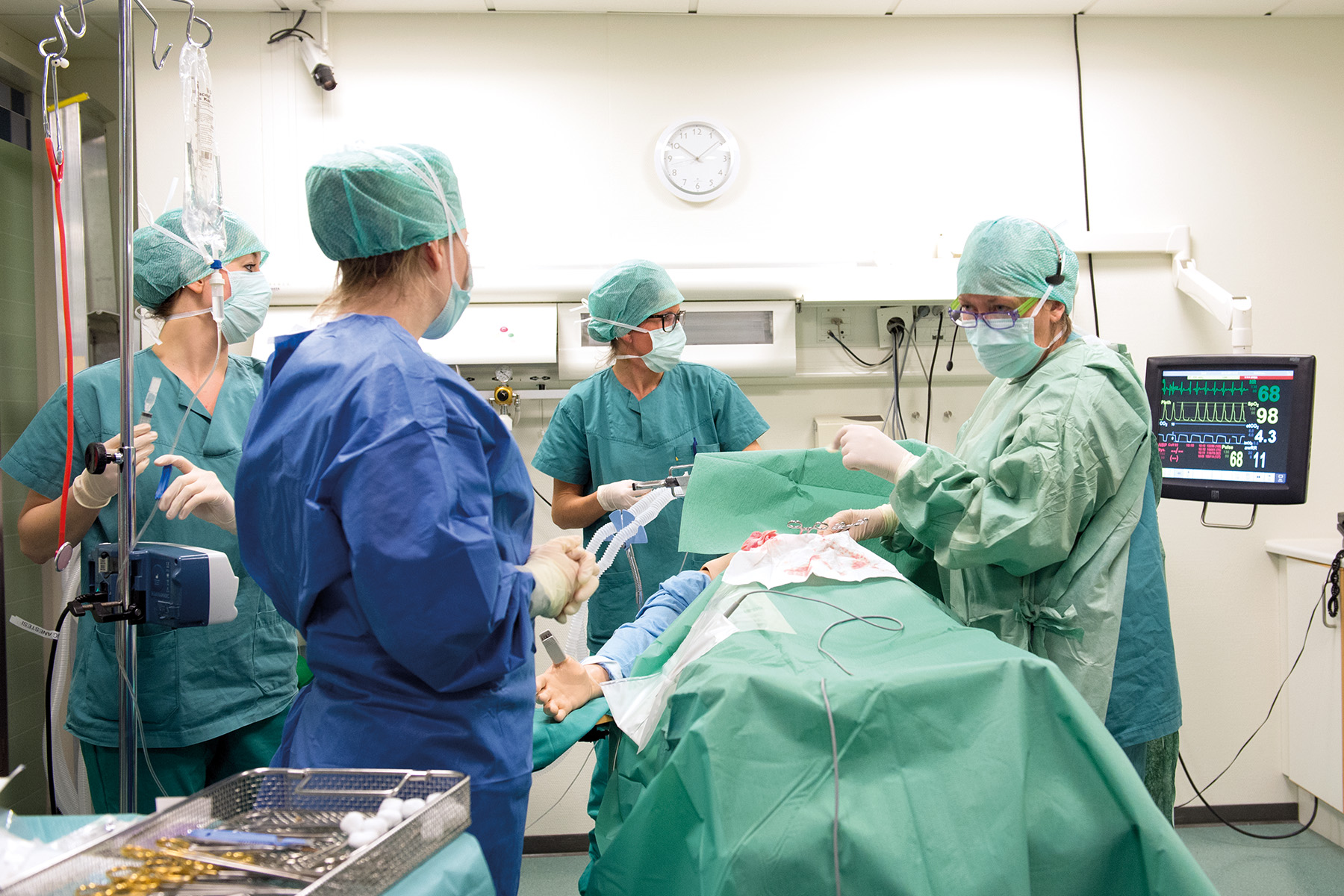
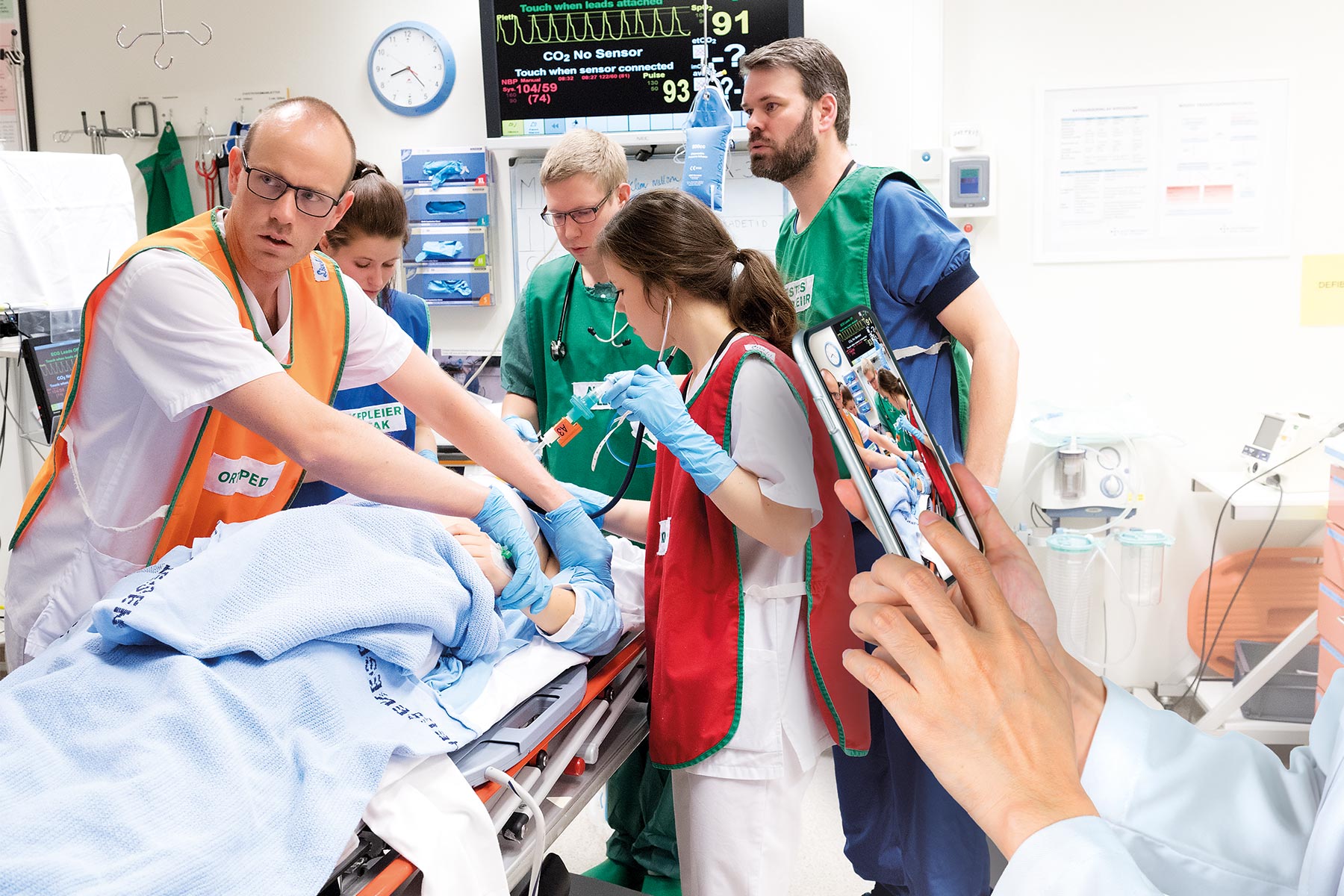
“Vi brukte in situ-simulering som en ny og iterativ kvalitetsforbedringsteknikk for å redusere gjennomsnittlig tid mellom aktivering av massiv blødningsprotokoll og blodadministrasjon under faktiske traumegjenopplivinger.”3
Simulering tilbyr en risikofri måte å teste endringer—før de rulles ut på sykehuset.
Dr. Petrosoniak beskriver et slikt prosjekt.
“Vi tror at vi bør simulere scenarier som en metode for å teste utstyr og rom, og sikre at det fungerer slik vi forestiller oss”, forklarer han. “Vi gjør dette slik at vi, når vi åpner for pasientbehandling, vet at alle systemene fungerer som de skal.”4
Nye arbeidsflyter og protokoller fungerer bare hvis team tar dem i bruk. Simulering lar organisasjoner innføre nye praksiser ved å hjelpe team med å øve og tilpasse seg under realistiske forhold.
I sitt arbeid understreker Dr. Brazil denne innføringsfunksjonen gjennom gjentatt praksis.
“Simulering tilbyr et trygt sted å øve prosedyrekunnskaper, beslutningstaking og teamarbeid uten å sette pasienter i fare …”, skriver hun. Hun går deretter videre til å forklare, “[Mens] avhengighet til utdanningsparadigmer kan mislykkes med å realisere simulerings fulle potensial til å bidra til kvalitet og sikkerhet i helsevesenet.”5
Simulering innen kvalitetsforbedringsområdet hjelper med å sikre kontekstuell tilpasning og ansattes aksept.
Helseledere, risikostyrere og simuleringsspesialister begynner å samarbeide på nye måter — ved å bruke simulering ikke bare for å identifisere risiko, men også for å samskape løsninger med ansatte i frontlinjen og pasienter.
Dr. Brazil beskriver simulering som en mulighet for: “Problemløsning og samskapning, som kanaliserer perspektivene til ansatte og pasienter inn i systemforbedring.”6
Denne samarbeidsmetoden er kraftfull i høyrisikoområder som:

Traumemeldinger på akuttmottak

Neonatal kode blå respons
Protokoller for obstetrisk blødning
Håndtering av intensivventilatorer under raske tilfeller av økning
Ved å samle ulike perspektiver og simulere sammen, kan sykehus bygge systemer som gjenspeiler virkeligheten i pleieleveransen—ikke bare retningslinjer på papiret.
Klar til å utvide simuleringsprogrammet ditt utover opplæring?
Her er noen første steg:
Simulering er ikke bare der for å skape kompetent personale—det er et designverktøy. Bruk det til å se hvordan systemet ditt faktisk fungerer, teste nye løsninger og innarbeide sikrere praksiser, slik at ditt kompetente personale kan levere best mulig omsorg.