Skip to content

From Evaluation to Impact: Using Data to Prepare Practice-Ready Nurses


Customer story

Learn how the University of Tennessee Knoxville used nursing student performance data to improve assessment, strengthen curriculum decisions, and better prepare practice-ready nurses.


Tennessee University nursing logo

About

The University of Tennessee Knoxville's College of Nursing provides innovative simulation experiences to train psychomotor skills, physical assessment, and clinical care applied in practice. Simulation is included into every clinical course within the undergraduate and graduate programs.

Dr. Susan Hébert

PhD, RN, CHSE
Assistant Dean of Simulation for the College of Nursing 
University of Tennessee Knoxville

The challenge:  

Incomplete data and limited visibility 

Dr. Susan Hébert and her team at the University of Tennessee Knoxville knew they didn’t have the complete, reliable data they needed to fully understand student progression toward competence.


Manual workflows and paper-based checklists meant:

  • Data had to be entered into Excel spreadsheets by hand. “It was very old school,” Dr. Hébert said.
  • Some evaluations were incomplete or missing.
  • Results often lacked the detail needed to analyze performance at a deeper level. 


They had a sense of where students struggled—but without consistent, detailed data, those insights were difficult to confirm or act on. 
 

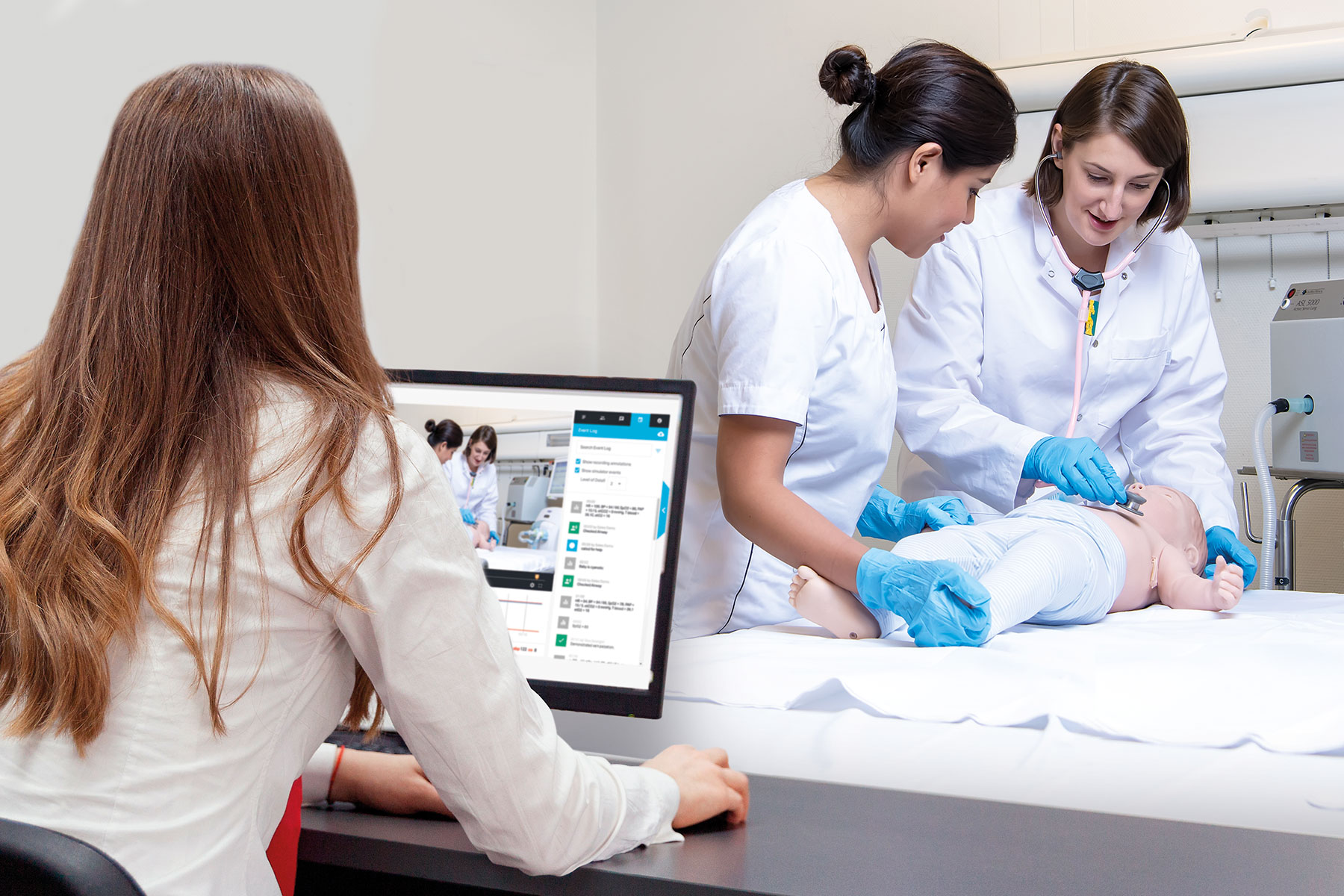
Side view of a woman reviewing stats on a laptop

The solution: 

Building a more efficient system for evaluation 

The team knew they needed an efficient, unified system to capture and analyze performance data that could help inform how students are prepared for practice.

They began using SimCapture, a simulation management system that would help them manage performance data more efficiently. They started with the data from their simulation scenarios. Later, they expanded into skills lab evaluation using SimCapture for Skills, bringing both environments into one system.  

To support faculty during the change, they created a transition path. Some faculty continued using laminated checklists before entering data digitally, while others adapted more quickly to real-time entry.  

The flexibility helped the program move forward together and ultimately reach consistent adoption, ensuring more consistent data capture. 

Close-up back view of a woman reviewing stats on a large computer screen

Supporting faculty through better access to data 

The shift made evaluation data easier to capture and access. Dr. Hébert shared that previously, data required manual entry and management by support staff.  

“It used to be that a Master’s-prepared evaluation specialist and her assistants entered all the data into a spreadsheet. SimCapture has taken a ton of work off that group of people.” 

With SimCapture, data is captured at the point of evaluation and can be accessed or exported as needed.  

“What happens now is once the courses are completed, I download all the mastery learning and the scenario evaluation data that we’re gathering for program outcomes,” she says. “I can quickly download those into spreadsheets.”

This allowed faculty and staff to spend less time managing data and more time reviewing and using it to support student development. 

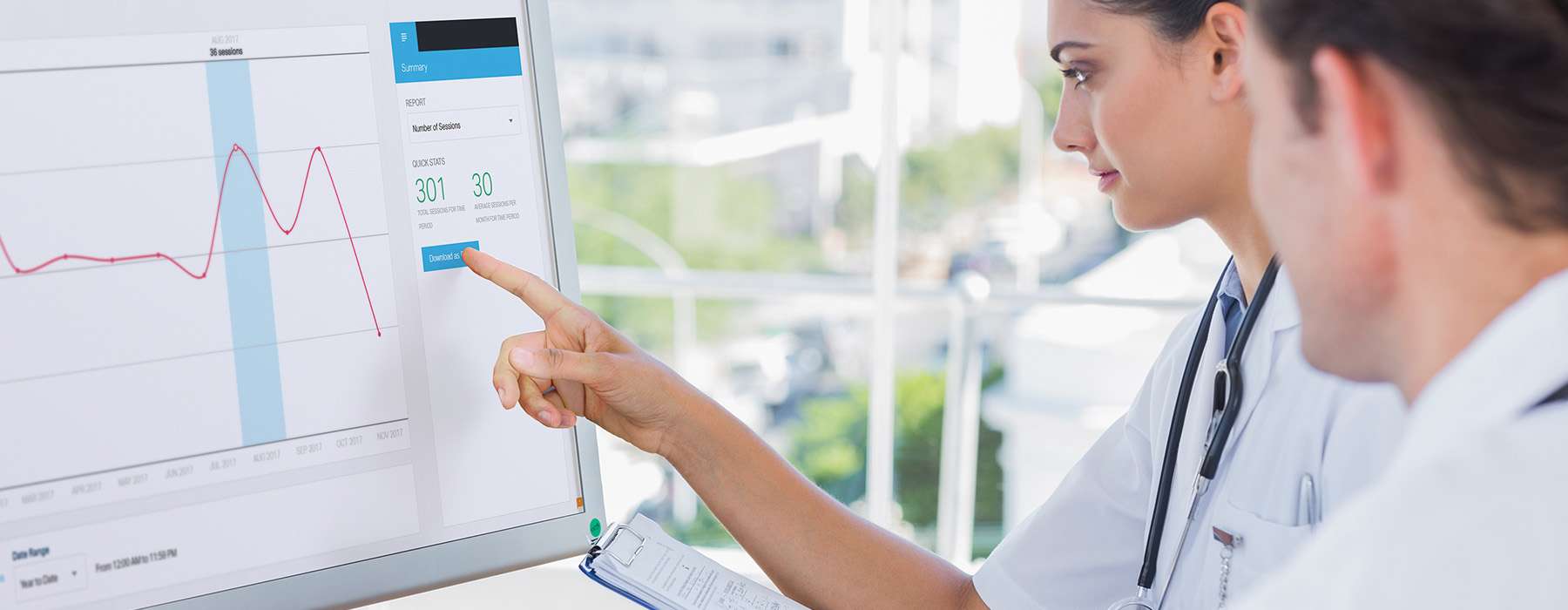
Two people working together on a large computer screen. A woman is pointing  at the screen.

Ensuring complete data 

One of the earliest breakthroughs came from improving data completeness. With structured evaluations, faculty could no longer submit partially completed checklists. This reduced missing data and improved the overall reliability of evaluation results.  

This shift meant the data they were reviewing became more accurate and usable. For the program, this marked a turning point. Evaluation data could now be used with confidence to better understand student performance. 

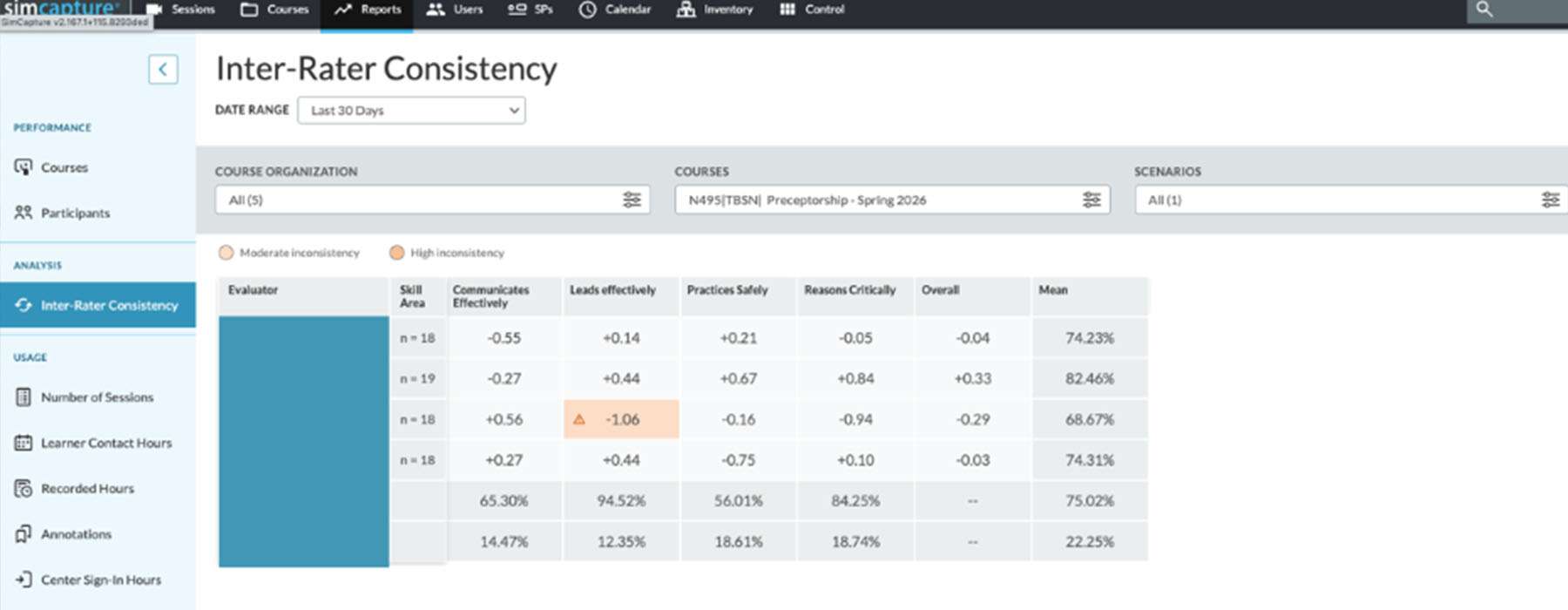
Table showing inter-rater consistency

From data collection to decision-making

Once data became reliable, Dr. Hébert and her team were able to use it in more meaningful ways.


They could analyze data including:

  • Performance of individual checklist steps. “One of my favorite things that SimCapture can gather for us is that … I can show which percentage of students has done each step correctly.”
  • Trends across student cohorts. “I can pull data to show, as a cohort, where our strengths and weaknesses lie.”
  • Consistency among evaluators. “If someone asks for the inter-rater reliability for a course or evaluation, I can go into SimCapture and grab it within 5 minutes. I think it’s the best feature of what we’ve been able to do.”


Instead of relying on manual spreadsheets or external support, they could quickly access the information needed to evaluate performance.

This level of analysis allowed the program to move beyond recording results to identifying patterns in performance that inform teaching and learning.

This ability to analyze performance at a deeper level would lead directly to changes in the curriculum. 


Turning insight into curriculum change 

The real impact came when the data revealed clear patterns.

Across cohorts, if students consistently underperformed in a specific concept within a key scenario, Dr. Hébert and the team were able to address this concern immediately.  

“We need to think about application of concepts and competencies within care, because that’s what most practicing RNs at the bedside are doing,” she explains.  

“We knew there were areas we needed to focus on all along. But now that we have the data to show it, it’s been really nice.” 

She and her team can bring these findings to course leaders and curriculum committees. Faculty then respond by reinforcing the concepts students are having difficulty understanding to better align instruction with clinical practice.  

What once would have been a general concern can be confirmed using clear, data-supported improvement designed to strengthen how students apply skills in clinical settings.

“Some people are convinced by data,” she says. “I’m a quantitative person. That’s why it’s been so nice to have this quantitative data. It is really guiding [us] now.” 

“It’s informing our program needs better than we’ve ever been able to do before.” 
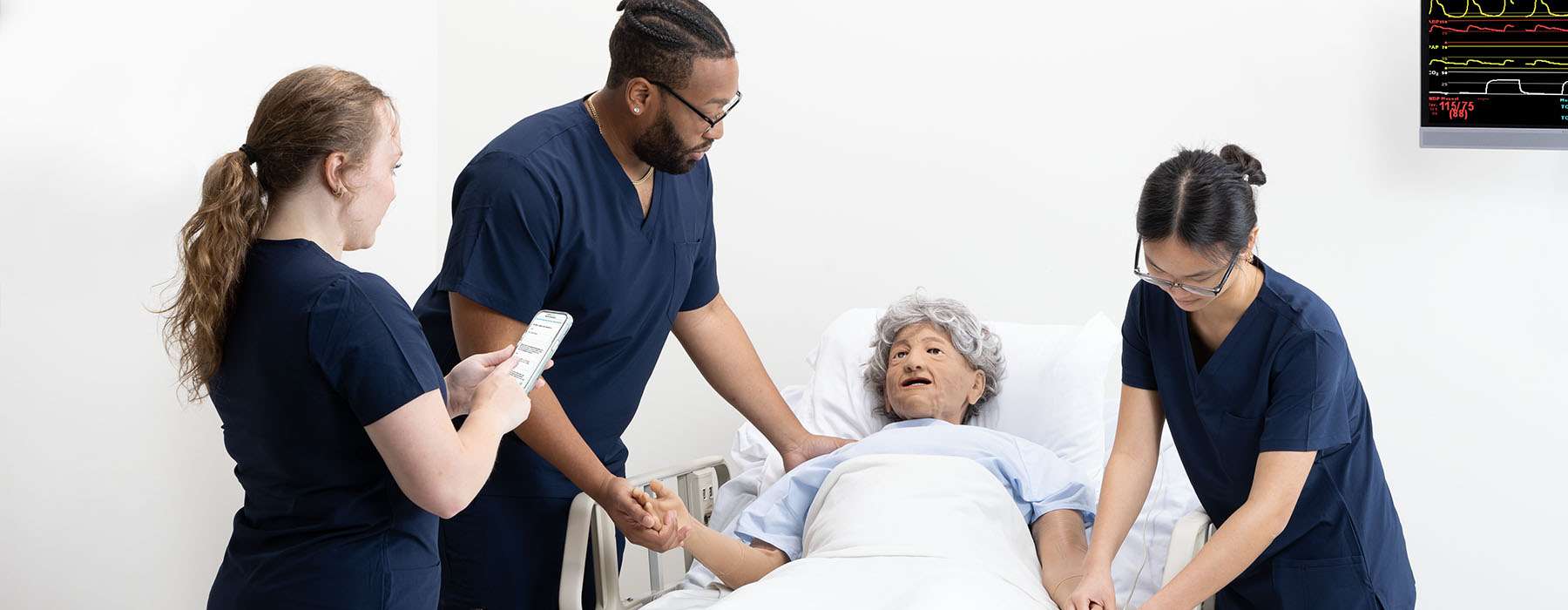
Three nurses in blue uniform performing simulation training on Nursing Anne Geriatric

Improving student readiness through deliberate practice

Alongside using data to inform program decisions, the team strengthened how student competence is developed and evaluated.


They implemented structured deliberate practice labs where students:

  • Practice skills before formal evaluation
  • Work independently while faculty provide support
  • Progress toward final check-offs when ready  


The program also captures multiple evaluation points, including repeat attempts when students need additional practice.  

SimCapture for Skills supports this by allowing performance to be documented across practice and evaluation activities and enabling different types of assessment during practice.

Within these deliberate practice labs, students also engage in peer-to-peer assessment by completing skills checklists with one another, while faculty remain present to observe performance and provide oversight when needed.

The results of the deliberate practice labs have been strong. Most students successfully complete check-offs on their first attempt.  

These structures help ensure students are prepared before reaching final assessment.


Leading through change

Dr. Hébert explains that meaningful change required persistence. “It took us two years to make it happen,” she shares. Adoption required time, support, and consistent leadership, especially as faculty adjusted to new workflows and expectations.

“It takes somebody to champion it and stay the course,” she says.  

By staying focused on the long-term goal, the program was able to establish consistent data practices across faculty. 

Key takeaways

  • Complete, structured evaluation data enables more accurate and actionable insights into student performance.
  • Centralizing simulation and skills data reduces administrative burden and improves faculty access to information.
  • Reliable data allows programs to identify performance trends and make targeted curriculum improvements.
  • Data-backed insights help align teaching with real-world clinical practice, supporting practice readiness.
  • Structured deliberate practice ensures students build competence before high-stakes evaluation. 

You may also like...

Contact us about Competency-based Education Solutions

We will handle your personal contact details with care as outlined in Laerdal's Privacy Policy.

We will handle your personal contact details with care as outlined in Laerdal's Privacy Policy.