Meteen naar de inhoud

How an NHS Resuscitation Service Delivers Measurable Competence at Scale
The challenge: Delivering high-quality resuscitation training at scale

When East Suffolk and North Essex NHS Foundation Trust (ESNEFT) in the United Kingdom was formed in 2018 through the merger of Colchester and Ipswich hospitals, it brought together more than 8,000 staff across acute and community settings, creating one of the largest NHS trusts in the country.

Growth presented an opportunity better to serve local communities with greater access to quality healthcare. This scale, however, also created a complex question for the ESNEFT Resuscitation Service:

How do you ensure every member of staff is competent and confident in delivering quality Basic Life Support (BLS)?

Several barriers stood in the way:

  • Training needed to reach large, diverse staff groups across rotas and locations
  • Face-to-face delivery required time, space, and coordination, limiting capacity
  • Missed sessions (DNAs) reduced efficiency and wasted instructor time
  • Ensuring consistent quality and assessment became harder at scale
  • Staff across sites experienced unequal access to training

At the same time, NHS priorities were shifting away from training as a requirement and toward competence, outcomes, and efficiency.

The approach: Shifting from training delivery to workforce capability

The ESNEFT team recognised that improving outcomes required more than increasing training volume, and lead the change that the trust needed.

The team set out to redesign BLS training with a clear focus on:

  • Bolstering competence alongside compliance
  • Flexibility over scheduling
  • Consistency at scale
  • Efficient use of clinical time


Their goal was simple:

Make it easier for staff to build and maintain life-saving skills - without taking them away from patient care.

Two women standing in front of Laerdal's "One Million Lives" text on a wall

The solution: Flexible, self-directed training enabled through partnership

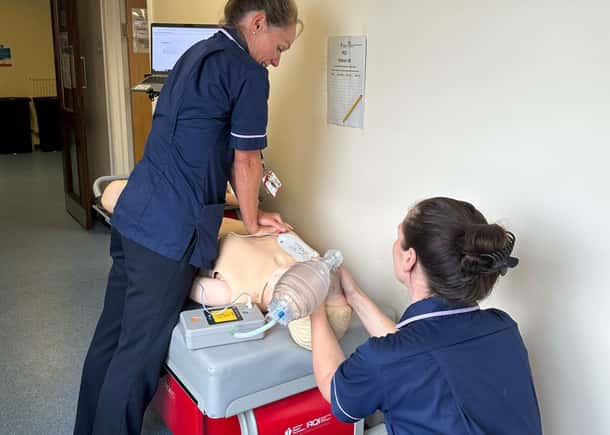
To achieve this, ESNEFT partnered with Laerdal to implement a self-directed, blended learning model through Resuscitation Quality Improvement (RQI).

This introduced a blended, competency-based model that allows staff to:

  • Train anytime, at the point of care
  • Receive real-time feedback to improve CPR performance
  • Access a consistent, standardised learning experience
  • Benefit from data-driven insights to support learning and compliance


"The flexibility of training was a huge draw, along with the low-dose, high-frequency model of skills training to keep skills current. Freeing up the resuscitation to deliver more ILS and PILS courses to upskill staff on the wards and in departments was also a very appealing option."

Katie Seal

Lead Resuscitation Officer


How it works in practice

  • Training that fits the workflow
    Skills stations across the Trust enable staff to complete training without booking sessions or travelling.

  • Consistent quality across all sites
    Standardised delivery ensures every learner receives the same feedback and assessment.

  • Reduced administrative burden 
    Automated tracking and reporting simplify compliance management.

  • More time for clinical priorities
    Resuscitation teams can focus on advanced training, service development, and patient care.


"I think it's the most objectively reliable BLS training I've had in my career."

Dr. Ashley Parker

Consultant Anaesthetist
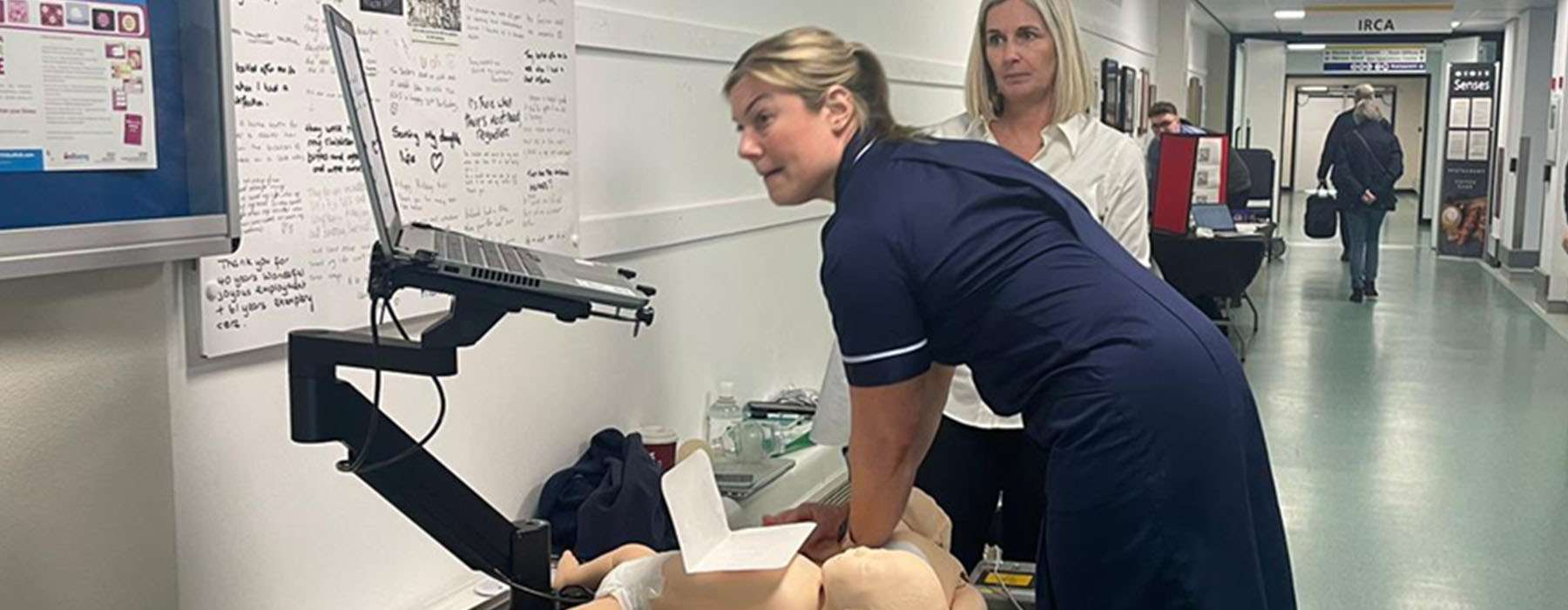
Medical staff performing CPR training.

How ESNEFT are adapting to NHS priorities

Building competence, improving outcomes, reducing burden

ESNEFT’s model aligns with the NHS shift toward outcomes-based training and workforce capability.

  • From compliance to competence
    Training focuses on what staff can do - not just what they attend:

    • Recognise patient deterioration
    • Conduct CPR confidently
    • Use an AED effectively
  • From time spent to value delivered
    Flexible, self-directed learning reduces time away from clinical care.

  • From variation to standardisation
    A consistent, data-driven approach ensures high-quality learning across all sites.

  • From training to system impact
    Training becomes part of a wider system focused on:
    • Reducing incidents
    • Improving patient safety
    • Building workforce confidence

The results: Improving reach, efficiency, and quality

ESNEFT’s transformation has delivered measurable impact:

  • 25% increase in BLS headcount, from 7024 in 2022 to 8764 in 2024.
  • Per year, it would take 877 in-person courses to complete an equivalent amount of compliance sessions as RQI.
  • RO's conducted 290% more ILS courses in 2023 (post-RQI) vs 2019 (pre-RQI)
  • RO staffing numbers have not decreased since implementation
  • 209,352 skills activities completed by staff in 2025


"I no longer need to correct basic skills during advanced resuscitation courses."

Joe Adams

Consultant Anesthetist and Chair of the ESNEFT Resuscitation Committee
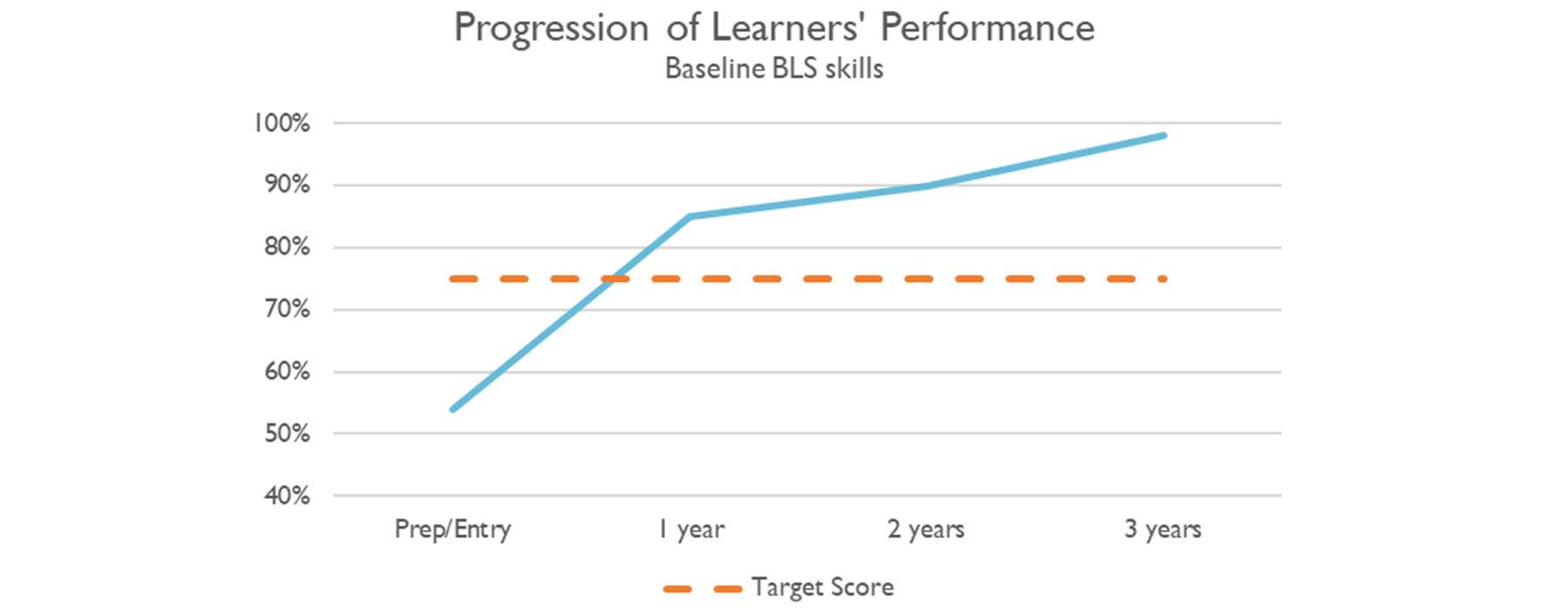
 

graph showing progression of learners' performance


Learner performance and competence in core, foundational BLS skills has improved, with a 44% improvement in baseline skills over 3 years.

Partnership for lasting change: Enabling sustainable change together

This transformation was not just about introducing a new solution—it was about working in partnership to deliver lasting change.

Success was driven by:

  • Close collaboration between ESNEFT and Laerdal teams
  • Strong alignment across clinical, IT, and operational teams
  • Supporting staff through change and building confidence
  • A shared focus on improving competence alongside compliance


"You can tell which staff have done their RQI training."

Consultant Anaesthetist & ALS Medical Director


Laerdal supports ESNEFT to this day, working together to:
  • Support change management efforts, collaborating on projects to further impact
  • Conduct data reviews, identifying areas for improvement and working together to ensure success
  • Collaborate on internal and external communication, promoting competence development within the trust and beyond
  • Implement, rollout, and maintain RQI systems

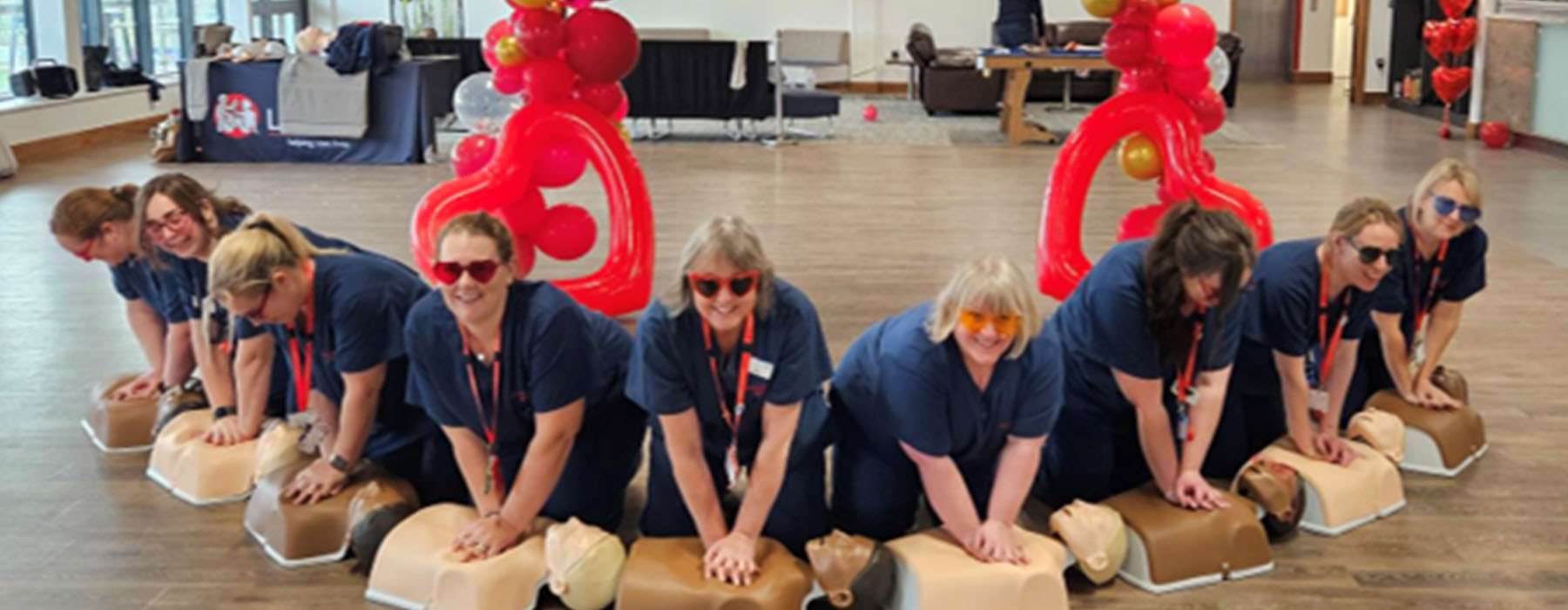
A team of medical staff in a half-circle in front of a red heart balloon structure, doing CPR training with manikins.

Looking ahead: A scalable model for the future of NHS training

As the NHS continues to redesign statutory and mandatory training, ESNEFT demonstrates how organisations can:


Deliver flexible, accessible learning at scale

Build competence and confidence across the workforce

Improve efficiency without compromising quality

Looking for more information?

Watch the video below to learn more about the collaboration between ESNEFT and Laerdal, or contact us to learn more about our products.

Learn more about RQI from our experts

We verwerken uw persoonlijke gegevens met zorg en zoals beschreven in Laerdals Privacyverklaring.

We verwerken uw persoonlijke gegevens met zorg en zoals beschreven in Laerdals Privacyverklaring.