American Heart Association CPR Guidelines 2025: 4 Key Highlights
Stay up-to-date with the latest science in resuscitation training.
Stay up-to-date with the latest science in resuscitation training.
If you’re a CPR educator, you may know that the American Heart Association recently released its 2025 Guidelines for Cardiopulmonary Resuscitation and Emergency Cardiovascular Care. The American Heart Association CPR Guidelines 2025 provide an in-depth review of evidence-based recommendations for CPR and ECC.
Below, we explore 4 key highlights from the Resuscitation Education Science section of the Heart Association CPR Guidelines 2025 that have our clients talking. And, we provide practical training tips to help you turn the recommendations into improved performance and outcomes.
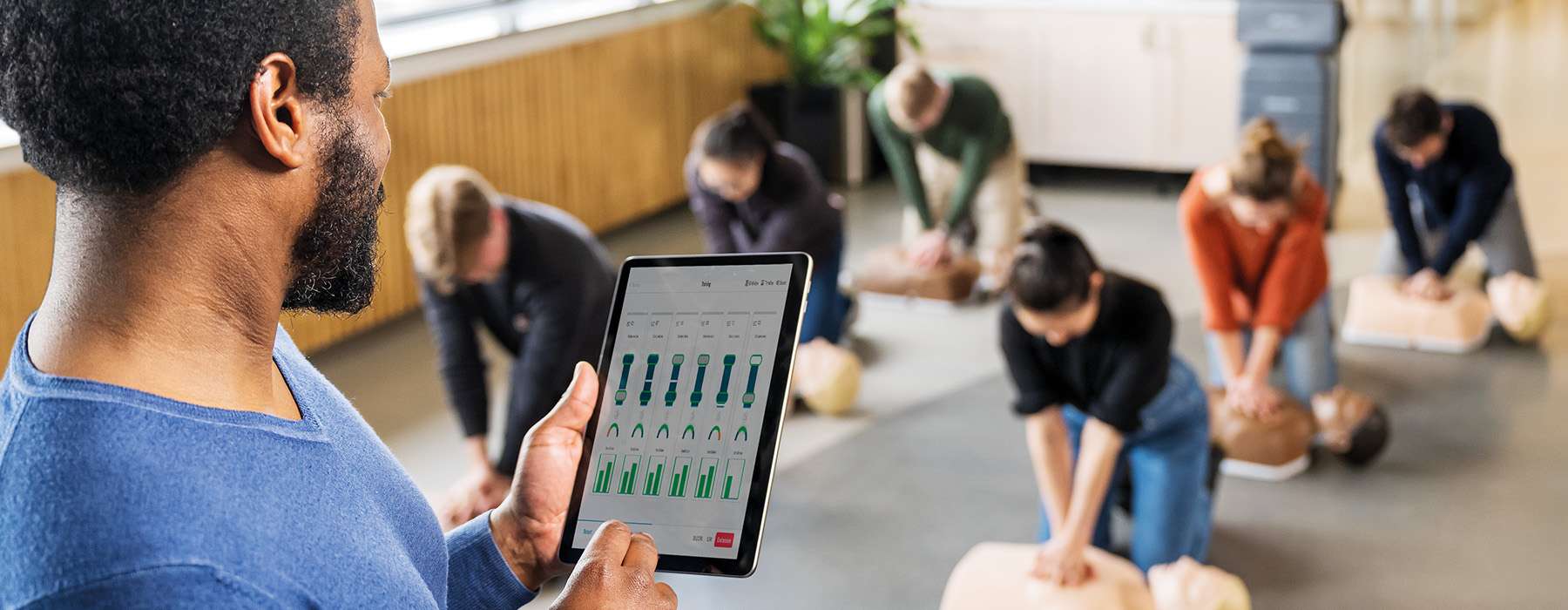
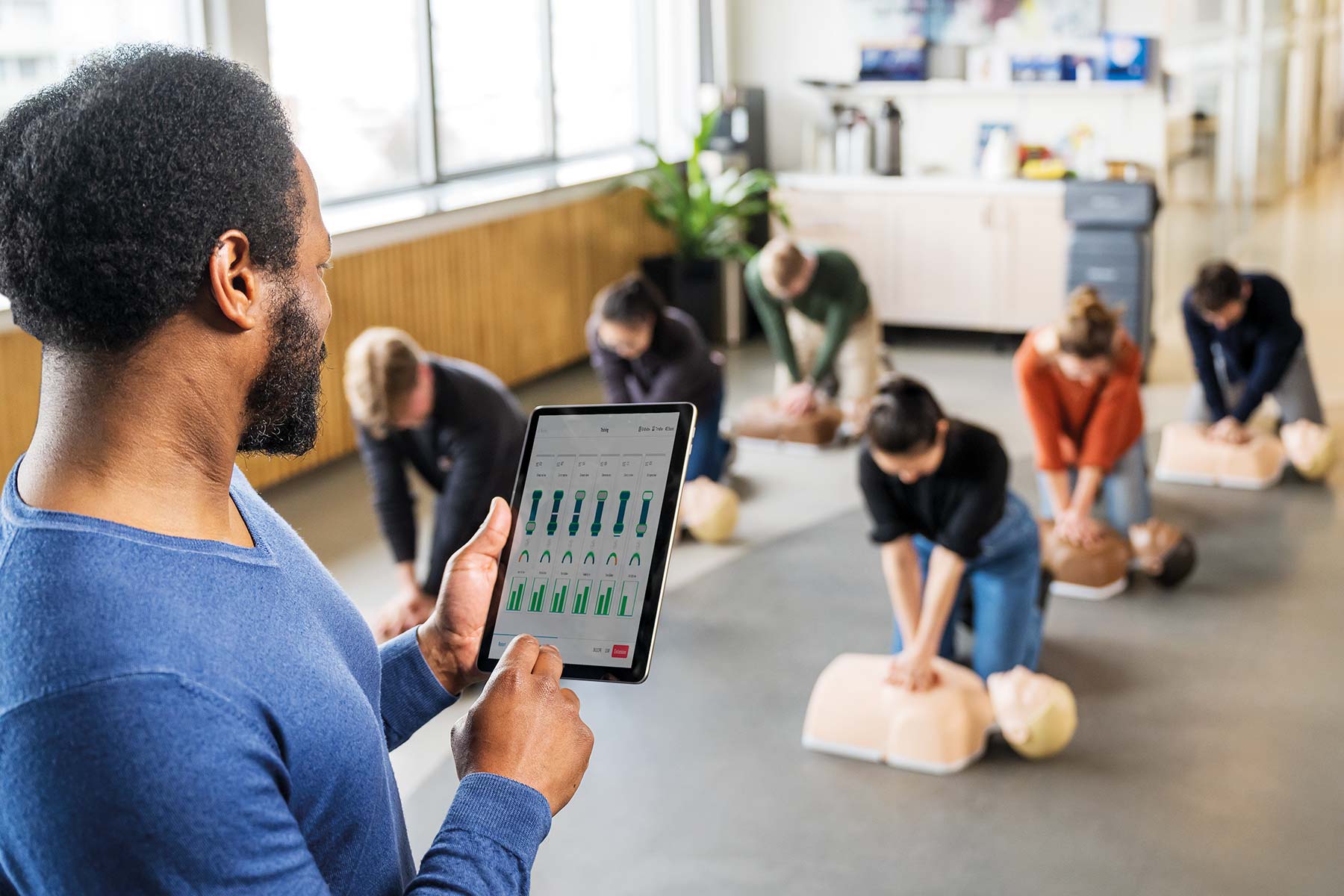
American Heart Association CPR Guidelines 2025 Recommendation: Feedback devices are recommended for use during CPR training for health care professionals and lay rescuers.1
Why this matters: “Visual assessment of CPR quality is often unreliable, making it challenging for instructors to consistently deliver accurate feedback during training,”2 the CPR Guidelines 2025 explain. “The use of feedback devices significantly increases mean compression depth, reduces deviations from the Guideline-compliant compression rate, and improves compression depth, rate, and recoil compliance.”3
David Weed, Community Services Officer for Woodinville Fire and Rescue in King County, WA
Laerdal’s training tip: Monitoring multiple learners’ performance at once can be a challenge. The QCPR app, recently enhanced with new pro features, delivers live and summative CPR feedback and reporting to your mobile device. This can help ensure that every learner is mastering high-quality CPR.
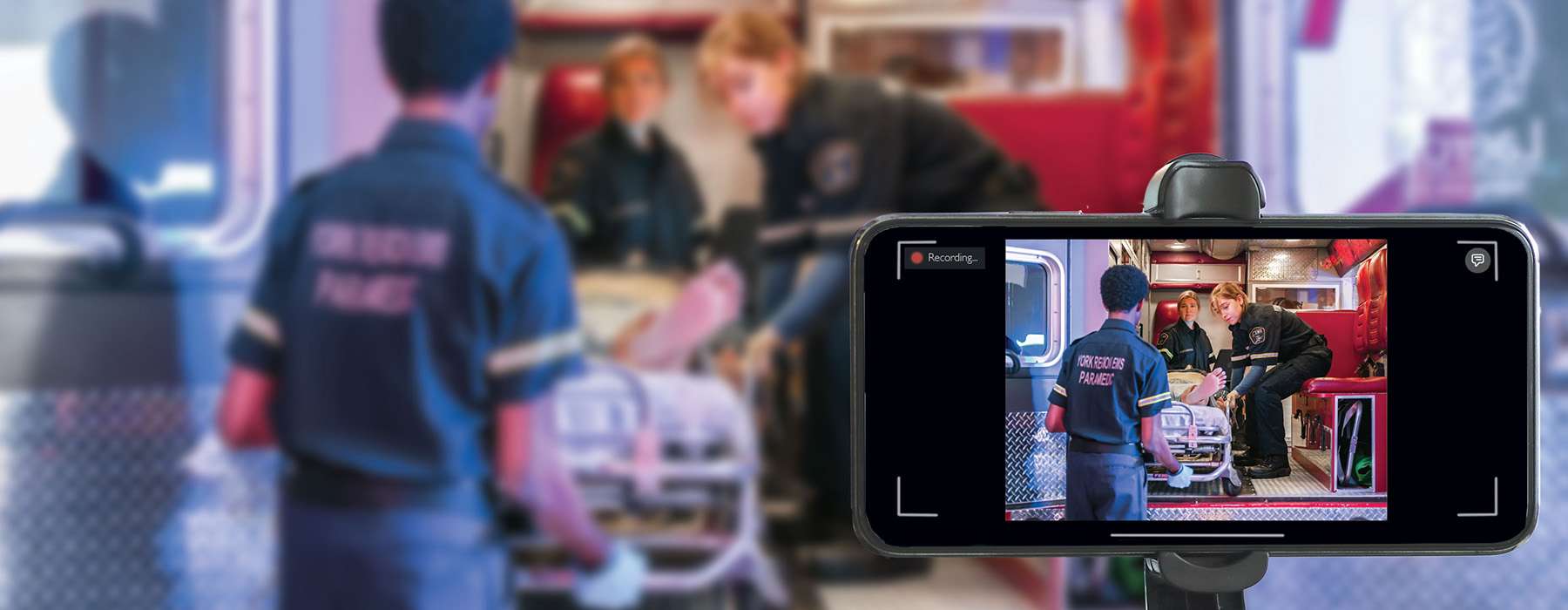
American Heart Association CPR Guidelines 2025 Recommendation: “It is reasonable to conduct in situ simulation-based resuscitation training in addition to traditional training. It may be reasonable to conduct in situ simulation-based resuscitation training in place of traditional training.”5
Why this matters: In situ simulation refers to simulation conducted in the actual care environment. “One distinct advantage of in situ training is that it provides learners with a more realistic training environment,”6 the Guidelines explain. “In situ training added to other educational strategies has a positive impact on learning outcomes, performance change in the real clinical environment, and patient outcomes.”7
Laerdal’s training tip: Consider recording your in situ simulations with a hardware-free solution like the SimCapture Mobile Camera app. Video review offers learners a “view of themselves from the outside,” driving self-reflection and improvement in both practical skills and body language.

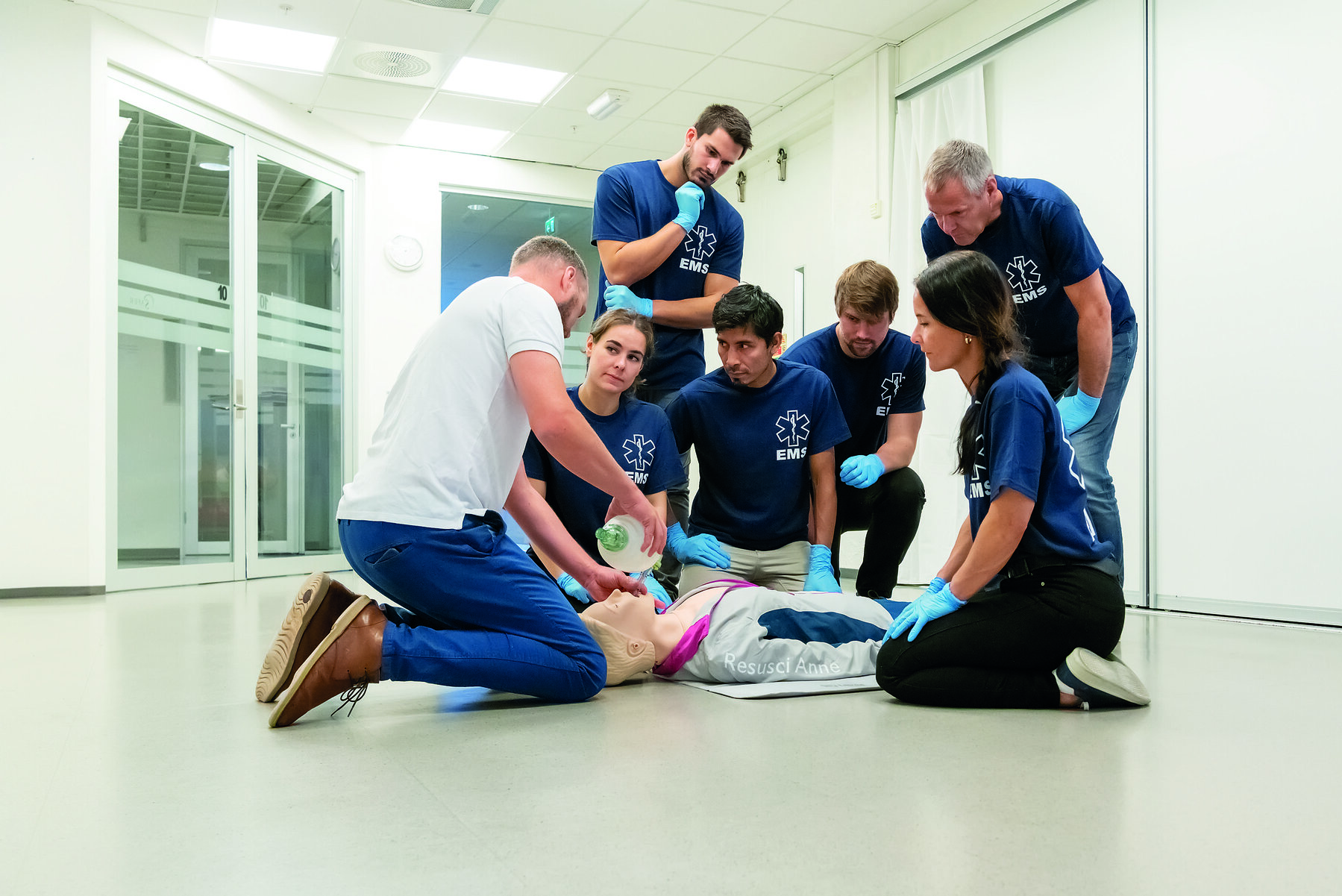
American Heart Association CPR Guidelines 2025 Recommendation: “It is recommended that life support training for health care professionals includes a specific emphasis on teamwork competencies.”8
Why this matters: “Lapses in teamwork are a major contributor to unintended harm across health care,”9 the Guidelines point out. “Cardiac arrest outcomes are dependent on effective teamwork, given the need for the simultaneous delivery of several time-sensitive interventions. The addition of teamwork training to life support courses may represent an opportunity to enhance patient safety.”10
Laerdal’s training tip: Allow your teams to train together and practice their roles repeatedly until the “choreography” feels like second nature. A manikin with anatomically accurate features, like Resusci Anne QCPR, can provide the realism needed to make teamwork training effective.
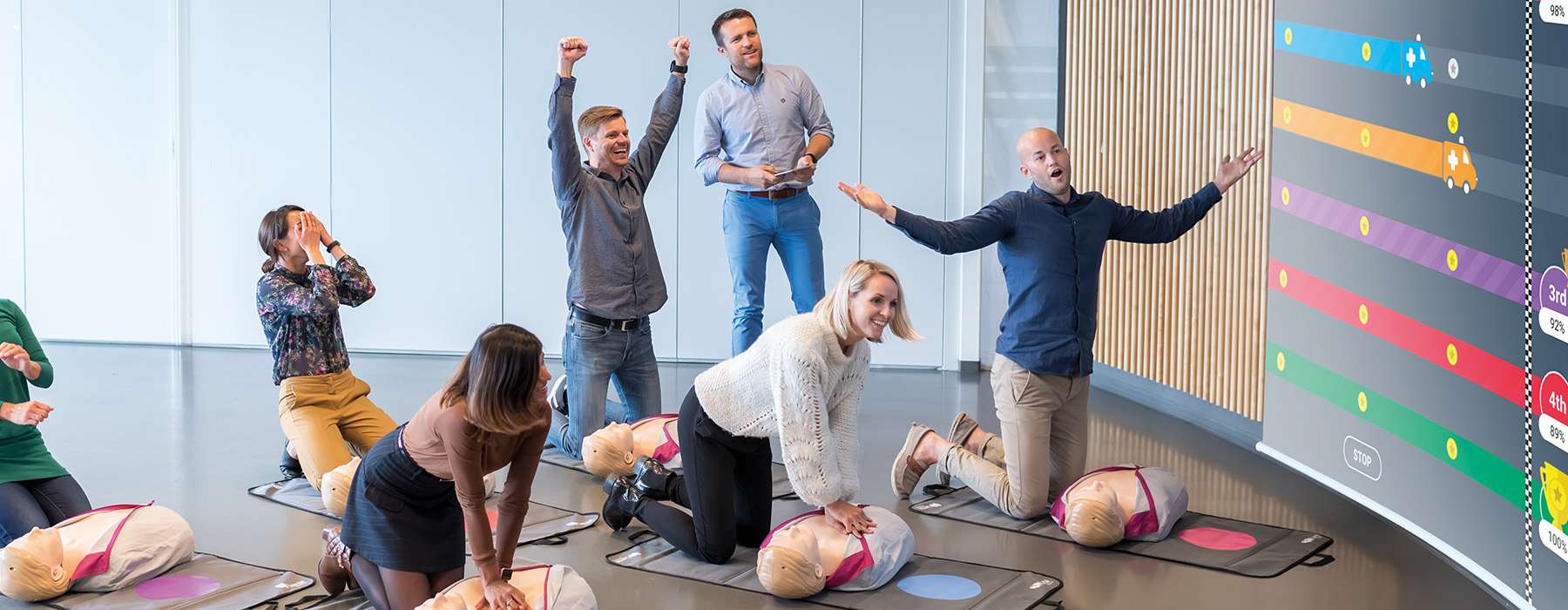
American Heart Association CPR Guidelines 2025 Recommendation: “It may be reasonable to use gamified learning elements as a component of resuscitation training for healthcare professionals [and] as a component of CPR instruction for lay rescuers.”11
Why this matters: “Gamified learning has been shown to increase learner engagement and enhance recall of content,”12 the Guidelines state. “Gamified learning elements … have been included in resuscitation training in an effort to create a greater degree of stimulation and engagement using active participation with and alongside peers, particularly for younger generations.”13
Brady McLaughlin, MS, NREMT, CEO and Founder, GoRescue
Laerdal’s training tip: Competition has been shown to encourage CPR practice and motivate learners to master their skills.15 Infuse some friendly competition into your training with the QCPR race game, located in the QCPR app. This can help drive engagement while also reinforcing the psychomotor skill of CPR.