Hvordan nå lokalsamfunn med obstetrisk simuleringsopplæring
Kundehistorie
Denne siden har blitt automatisk oversatt ved hjelp av AI og kan inneholde feil. For å sikre nøyaktig informasjon, se den originale engelske versjonen eller kontakt oss.
University Hospital in San Antonio
Texas, USA
About
University Hospital in San Antonio is a leading teaching hospital. The Perinatal Outreach Program supports community hospitals in the surrounding area of South Texas with multidisciplinary simulation training.
In recent years, there has been an increase in Maternal Mortality Rates in the United States. Texas is one of the states with cause for concern, with 28.1* deaths per 100,000 live births.
Access to quality, patient-centered healthcare wherever the mother is located is vital for quick recognition and treatment of childbirth emergencies.
"MamaBirthie has been absolutely perfect for our program, particularly the shoulder dystocia component."
The Solution
Making simulation simple and accessible
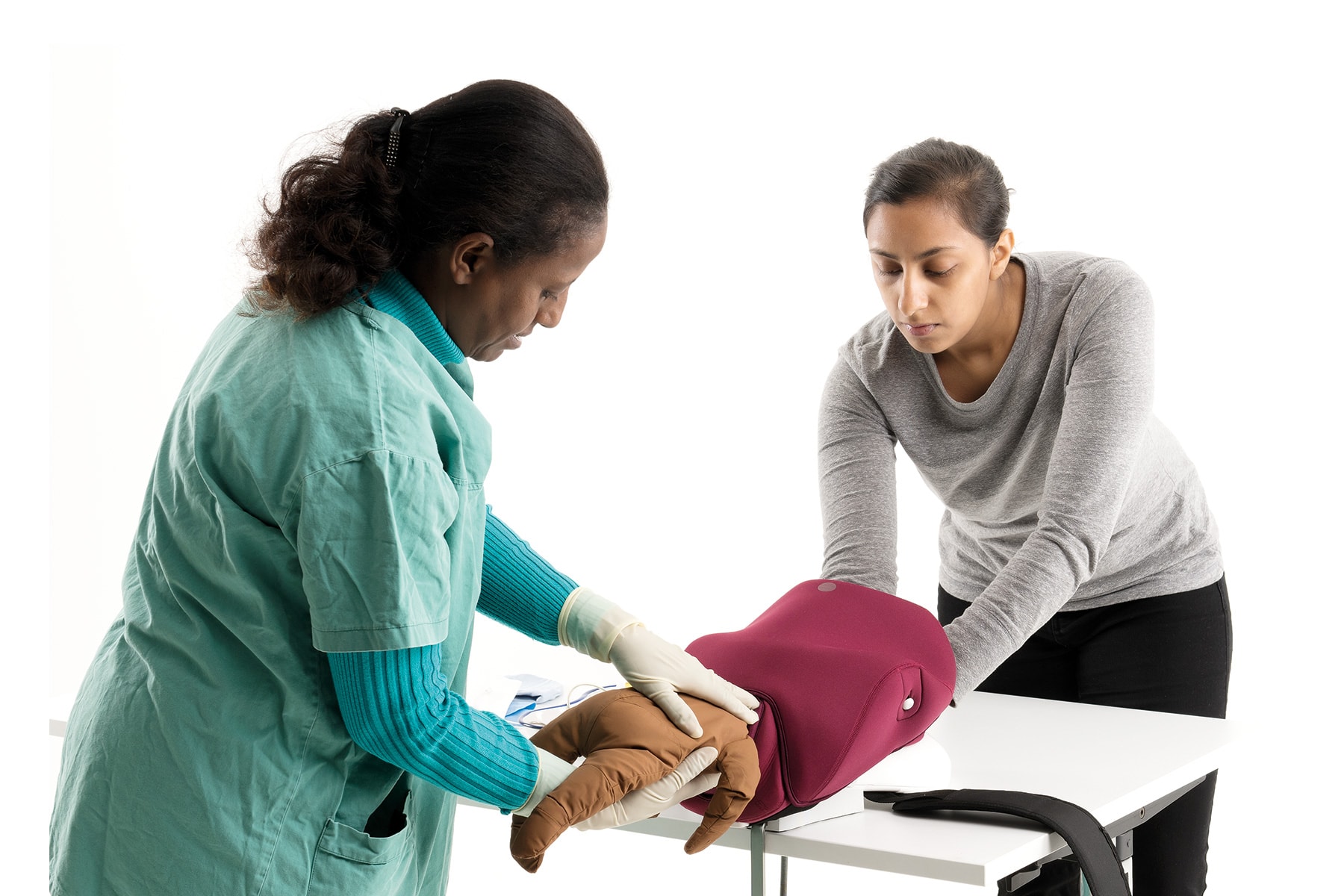
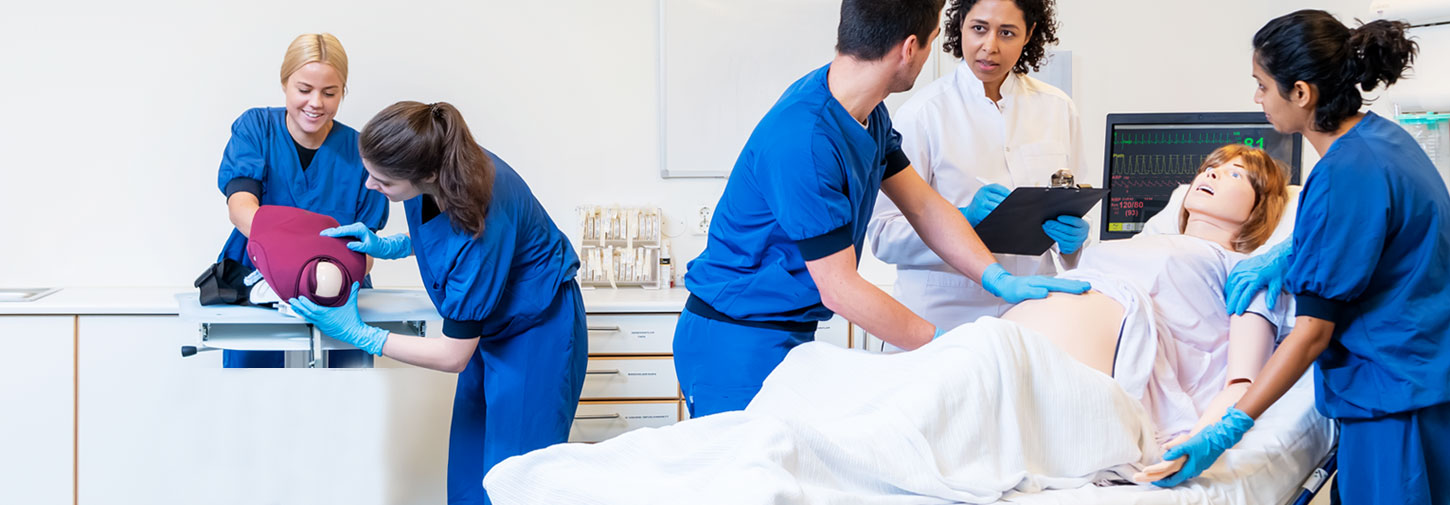
To train healthcare providers in rural community hospitals across South and Central Texas, the team at the University Hospital in San Antonio started a simulation outreach program. The Perinatal Outreach Program was developed to improve the quality and standardization of care, to practice skills in management of shoulder dystocia, PPH and pre-eclampsia, and to improve teamwork and communication. However, the solution needed had to be easy to use, easily portable, and cost effective.
Did You Know?
Shoulder dystocia happens in about 1 in every 200 births. It is often neither preventable nor predictable. It can deprive the baby of oxygen, leading to brain damage or death and can cause injuries including fractures of the baby's arm or shoulder or damage to the nerves resulting in a brachial plexus injury. Shoulder dystocia can also lead to complications for the mother, including tears or hemorrhage, so it is important that maternity teams can identify and manage it quickly and efficiently.
A perfect combination of skills and realism
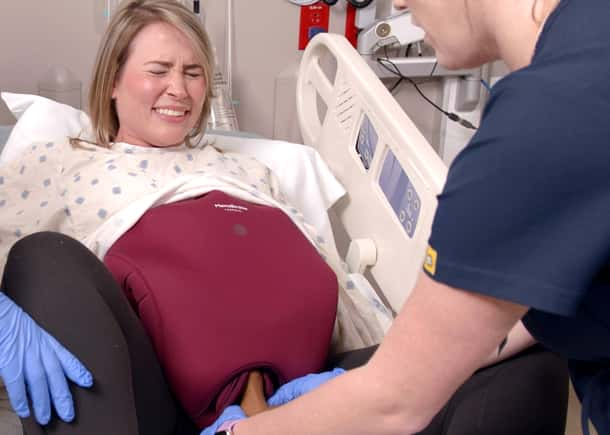
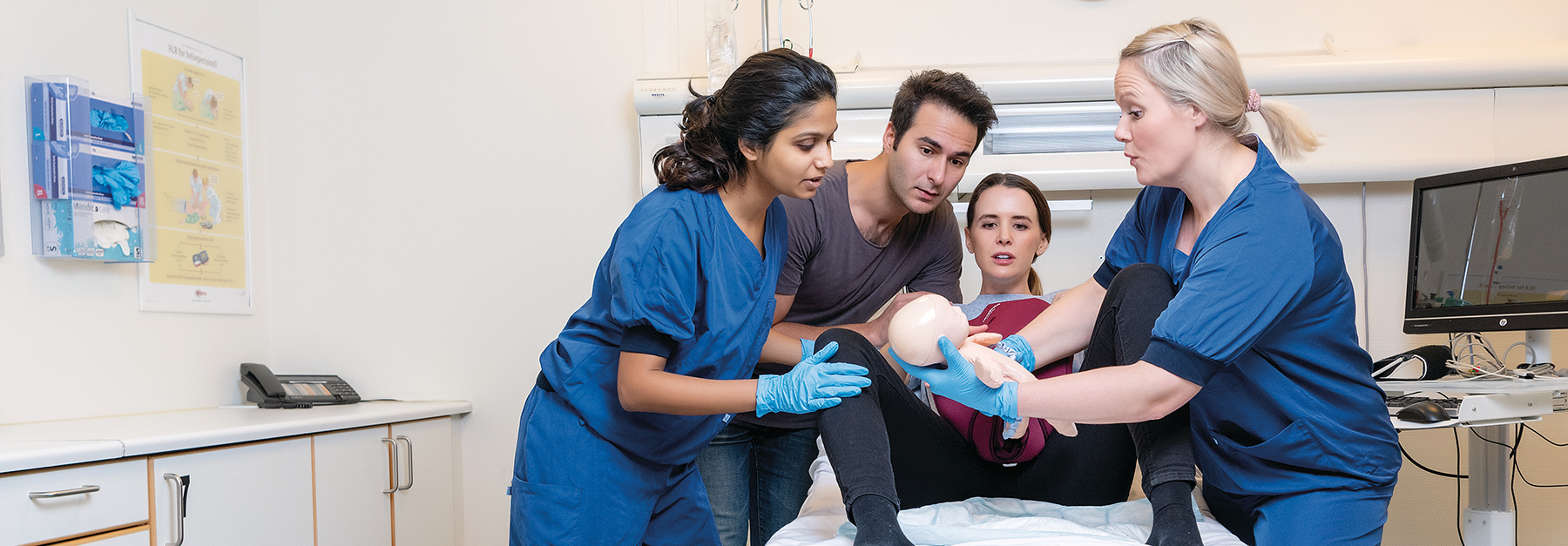
The goal was to create a highly realistic experience, at the same time, provide the opportunity to learn on an ongoing basis as the simulation progressed. Using MamaBirthie to train for skills together with a standardized patient to make the simulation feel realistic was an integral part of the program.
Keep the simulation simple with MamaBirthie and a standardized patient and practice the process, and your participants will get a lot out of it.
Because standardized patients can verbalize the symptoms they are experiencing, they are useful for gathering patient history and diagnosing symptoms. By using body language to convey information, healthcare professionals are required to be highly observant and hone their communication skills. In addition, this combined approach of using MamaBirthie with a standardized patient, enabled the patient to be moved into different positions to practice specialized maneuvers to manipulate the position of the baby such as McRoberts and Gaskin techniques.
Rapid Cycle Deliberate Practice – the methodology is the glue
Another essential part of the program was the use of Rapid Cycle Deliberate Practice (RCDP). This is a simulation strategy well-known in the world of CPR training. The simulation team provides the participants with instructions about the scenario and what to expect prior to executing the drill. During the drill, the participants are paused by their facilitators for an immediate debrief when something goes wrong, and then they start over again. This process is repeated until the participants can perform the drill perfectly.
"We have this opportunity where the participants get a chance to practice, to try again and ultimately to do it 100% correctly, and I think that gets hard-wired."
While the program is still in progress, initial results are positive. Data is being accumulated to measure outcomes, but some of the qualitative elements have been immediate. Participants have found the program incredibly engaging and realistic, especially with the use of a standardiazed patient actor together with MamaBirthie. Feedback on the RCDP methodology is also extremely positive, with participants enjoying the fact that they get to try again and again until they get it right.
There’s just this moment in there where they suddenly become completely engaged and when you get to the debriefing point you really see them being able to say they know what to do and they truly feel empowered and prepared.
Looking forward
Helping rural communities train themselves
Using a mobile, accessible, cost effective low-fidelity simulator like MamaBirthie together with a standardized patient and applying the RCDP methodology, enables simulation to be adaptable and available to all healthcare providers, wherever they are.
My dream is to have rural hospitals to have their own programs for obstetric simulations.
Key Takeaways
Practice makes perfect
RCDP method of learning enables participants to practice over and over
Create a realistic environment
Standardized patient adds realism and engagement
Choose the right tools
MamaBirthie meets the need for the education method and use with standardized patient
Rollen til lavfidelitetssimulering i fødsel og fødsel
Lavfidelitetssimulering kan gi elevene et vell av treningserfaring – til minimal kostnad. Lær tre måter du kan bruke lavfidelitetssimuleringstrening på for å redusere forebyggbar skade på mødre og nyfødte pasienter.
Tren på grunnleggende fødselsmanøvre kombinert med hensynsfull omsorg for mor.
Tren på grunnleggende fødselsmanøvre kombinert med hensynsfull omsorg for mor.
Få mest mulig ut av simuleringen ved å kombinere SimMom og MamaBirthie. Denne løsningen er satt sammen til ett...
Få mest mulig ut av simuleringen ved å kombinere SimMom og MamaBirthie. Denne løsningen er satt sammen til ett virkningsfullt simuleringsverktøysett og kan brukes i ulike stadier av læringssirkelen for å støtte en komplett læringsoppleve...