SimCapture for Nursing Education
Discover how simulation with SimCapture helps grow the competencies nursing students need for clinical practice.
Learn MoreTurning evidence into practice
If you’re a nurse educator, you likely know that it can be a struggle to create consistent, scalable teaching and assessment opportunities for psychomotor skills in nursing education. And, you might be unsure of which psychomotor skills to prioritize.
In our recent webinar, From Evidence to Practice: Validating Essential Skills in Nursing Education, three experts in nursing education shared new research they’ve conducted on psychomotor skills in nursing education.
They also explored strategies such as scaffolding, simulation-based mastery learning, and data‑informed assessment to help nursing educators ensure learner competence.
In this article, we share some key highlights from the webinar.
– Beth Hallmark, PhD, RN, CHSE-A, ANEF, FAAN
Professor for the Inman College of Nursing
Belmont University

Despite the widely-known reality that psychomotor skills are critical, programs vary significantly in which skills they prioritize and how they teach and assess these skills.
Dr. Beth Hallmark, Professor for the Inman College of Nursing at Belmont University, explained that national accrediting bodies emphasize outcomes and behaviors, but they rarely specify which psychomotor skills are actually essential. “There’s really no agreed-upon psychomotor skill list,” Dr. Hallmark pointed out.
As a result, programs are left to make their own decisions about which skills matter most, where those skills should be taught, and how competence should be evaluated. This has led to wide variation in curriculum design and assessment practices.
The presenters conducted a Delphi study focused on essential psychomotor skills for pre‑licensure nurses. They reviewed seven current nursing textbooks and engaged academic and clinical educators in multiple rounds of expert review.
Most of the 95 essential skills fall within four domains:
The study also clarified the areas where programs might focus on formal evaluation. Just under half of the essential skills were recommended for formal competence evaluation in pre-licensure programs.
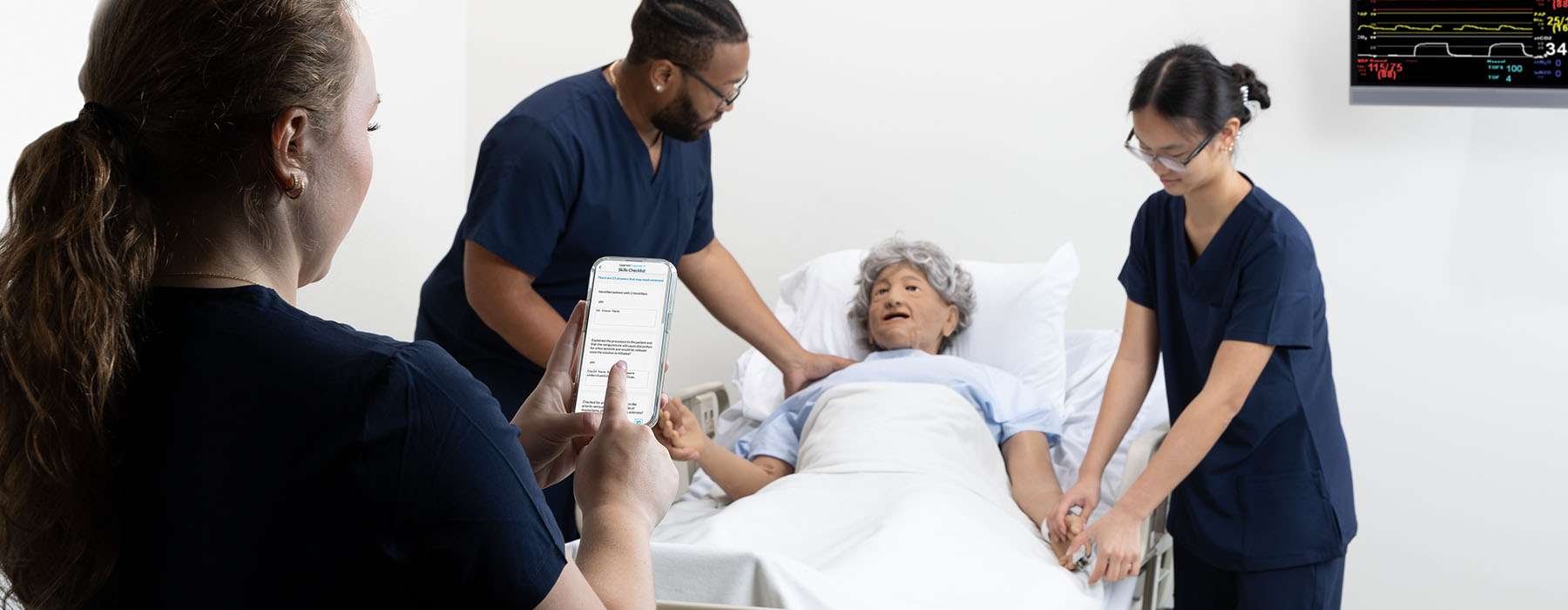
“Experts overwhelmingly identified that lab and simulation were the preferred setting for teaching essential psychomotor skills,” shared Dr. Fara Bowler, DNP, APRN, CHSE-A, Associate Professor and Assistant Dean of Clinical Simulation Science at the University of Colorado College of Nursing.
This result reflects a major shift in how nursing education views simulation. Programs no longer reserve simulation solely for reinforcement. Instead, they increasingly rely on labs and simulation as primary learning environments.
“We found this interesting because 15 years ago, simulation was just evolving as a teaching pedagogy and would not have been considered a primary teaching environment,” Dr. Bowler said.
Read the full study, published in the Journal of Nursing Education: Essential Prelicensure Psychomotor Nursing Skills: A Delphi Study
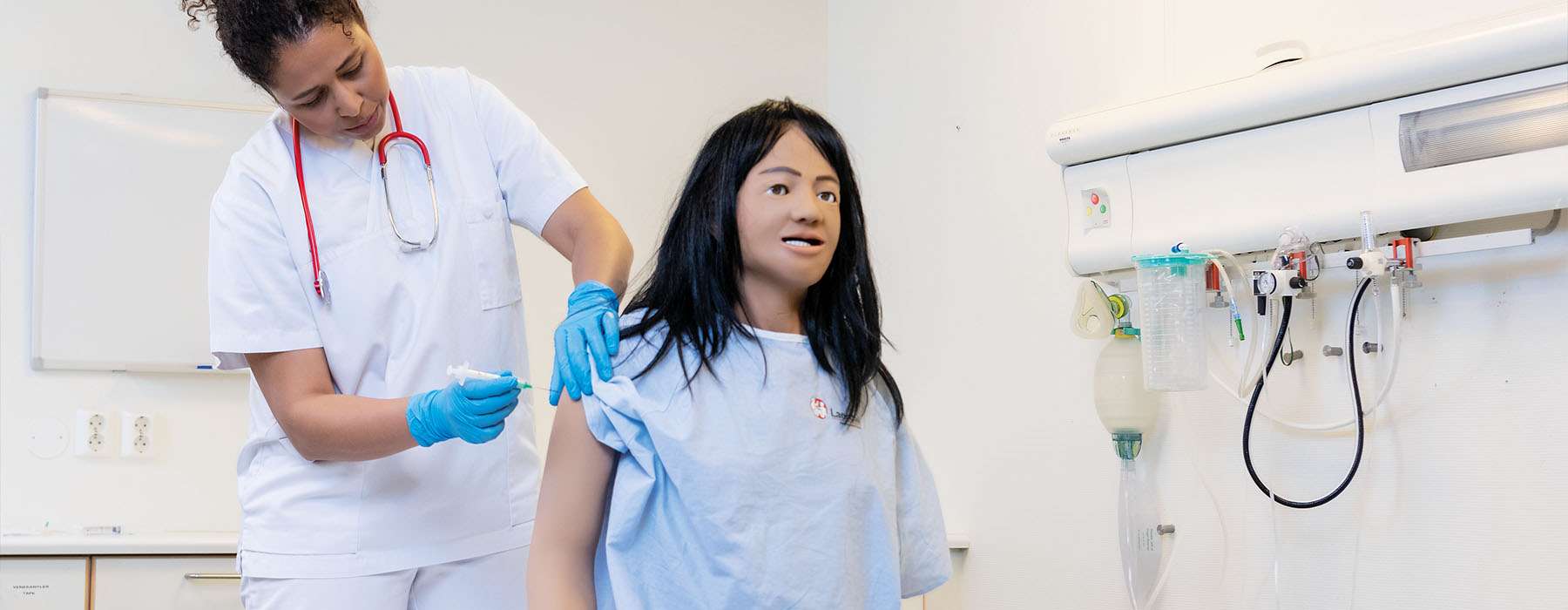
Students often perform multiple tasks simultaneously during skills execution, including motor coordination, sequencing, reasoning, communication, and documentation. This cognitive demand can exceed learners’ capacity.
“Even the most capable student will struggle when cognitive demand exceeds the working memory capacity,” Dr. Bowler explained.
To address this challenge, the presenters emphasized scaffolding. Scaffolding structures learning so students build competence progressively rather than all at once.
Dr. Bowler walked through the following steps for effective scaffolding:
– Fara Bowler, DNP, APRN, CHSE-A
Associate Professor, Assistant Dean of Clinical Simulation Science University of Colorado College of Nursing

Susan Hébert, PhD, RN, CHSE, Assistant Dean of Simulation for the College of Nursing at the University of Tennessee, Knoxville, honed in on one theory-based approach to competence development: simulation-based mastery learning.
“Simulation-based mastery learning is a competency-based educational approach allowing learners to develop through deliberate practice,” she explained.
Dr. Hébert shared that the features of deliberate practice within mastery learning include:
This approach shifts progression from time‑based practice to demonstrated competence.

Dr. Hébert described how the University of Tennessee Knoxville uses SimCapture and SimCapture for Skills to support practice and assessment of psychomotor skills.
“We began using SimCapture to start managing not only what we’re doing in our high-fidelity environment to record and evaluate scenario-based performance, but we’re also now starting to use it in what we’re doing in the skills lab space,” she shared.
Some of the ways Dr. Hébert is using SimCapture include:
“One of my favorite things that SimCapture can gather for us is that, if I want to look at how a group of students is doing in performance of one specific skill, I can go pull that data ... and I can show which percentage of students for each step has done that correctly,” she said.
“We can take this back to our course coordinators and our curriculum committees to inform where we need to reinforce the learning that the group as a cohort are maybe weak in,” she added.
At the end of the webinar, Dr. Hébert shared the key learnings that she, Dr. Bowler, and Dr. Hallmark want nursing educators to take away from their session.

PhD, RN, CHSE
Assistant Dean of Simulation for the College of Nursing
University of Tennessee Knoxville
Through a combination of research insights and practical examples, the session highlights how skills can be taught, practiced, and evaluated in ways that support learner development, faculty efficiency, and program-level consistency.