Gå til innhold

Creating an Engaging Skills Lab for Competency-Based Education

An Interview with Alyssa Zweifel, PhD, RN, CHSE 

We sat down with Alyssa Zweifel, PhD, RN, CHSE, Director of the Healthcare Simulation Center and Assistant Professor at South Dakota State University.  

In this interview, Dr. Zweifel discusses the challenges of keeping students engaged in skills lab and how peer feedback and deliberate practice play a role in a competency‑based nursing curriculum. Watch the video or read the transcript. 


Alyssa Zweifel, PhD, RN, CHSE 

Director of the Healthcare Simulation Center 
Assistant Professor, South Dakota State University  


Tell us about yourself.

Dr. Zweifel: “I’m Alyssa Zweifel. I’m an assistant professor at South Dakota State University. I am also the Healthcare Simulation Center Director.” 

What challenge in nursing skills education were you trying to address by creating a more engaging competency-based skills lab experience?

Dr. Zweifel: “We actually started our research pilot in 2024. So that was pre- competency-based education for us. We were concept-based, so we were teaching across the curriculum but really focused on concepts. We wanted to pilot before we started our true competency-based education, and we started that in fall of 2025.

We’re two semesters into it now. Our original pilot study [was prior to] our whole curriculum going to competency-based.”


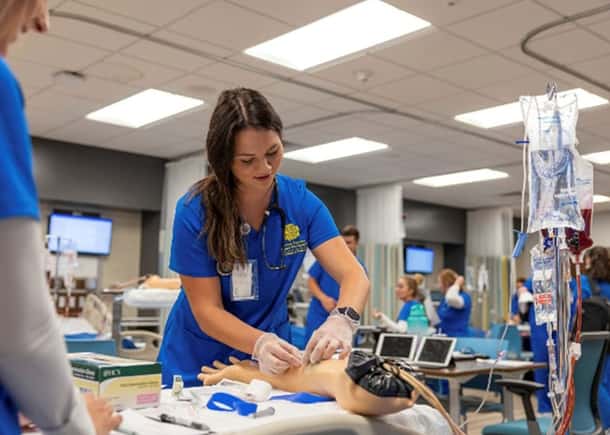
“We were really trying to figure out: students that are in the skills lab for six to eight hours a day…how do we get them excited? How do we keep them practicing?”


“We would see them practice one or two hours, be really engaged, and then the rest of the day they’re saying, ‘What should I do? This is boring.’ And then they just kind of moped around.

And then of course, the last two weeks of the semester, they say, ‘We don’t have enough time. We need to practice more. We’re not ready for validations,’ (or the grade, or whatever the scenario was).”


“We really took this pilot and said, ‘How can we innovate and be ready for competency-based education?’ That’s where we found SimCapture for Skills: that peer-to-peer feedback, and just giving them the ability to know the expectations, but have the freedom to move about with skills and with peer feedback and with intentional feedback from faculty, and move about at their own pace.”


“So that’s how we started our pilot. And then of course, now we’re in our true competency-based curriculum.

And we took things from the pilot that we learned. Is it perfect? No. Nothing’s perfect, but we innovated it enough that it works now for our skills lab. The other thing we ended up doing is that our skills are only in the first semester, whereas in our previous semesters, we had two semesters of lab. Now it’s one semester of lab. And then they go on to the clinical setting.

So it’s all jam packed. You have to be ready and safe for clinical versus having a little bit more of a two-semester timeline.” 


Key takeaway

Redesigning the skills lab was driven by a need to keep students engaged, practicing longer, and truly prepared for a compressed, competency‑based transition into clinical settings. 

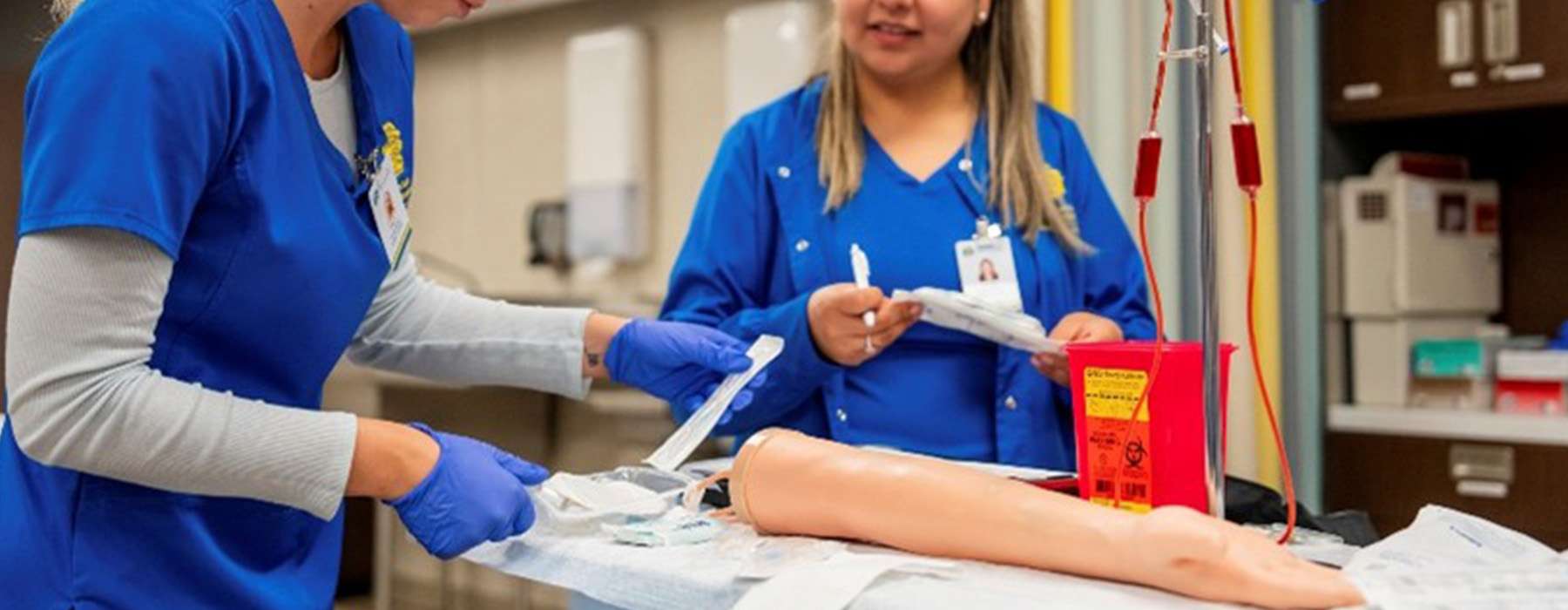
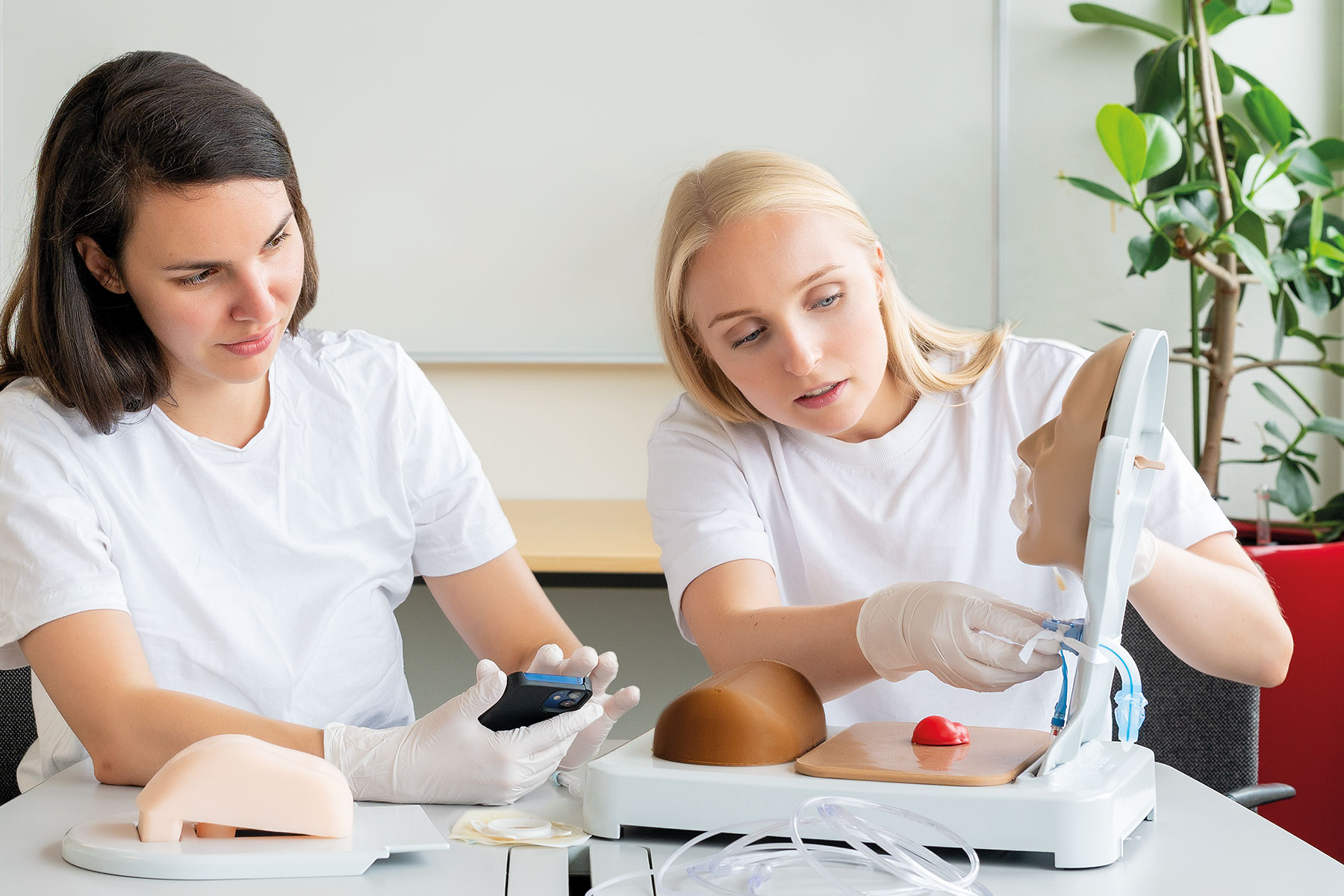
Two nursing students practicing IV catheter preparation and insertion on a task trainer arm.

What did you learn about how approaches like peer-to-peer evaluation and rapid cycle deliberate practice influence student confidence and skill development?

Dr. Zweifel: “During our pilot, I think the biggest challenge was faculty buy-in. Students loved the peer-to-peer feedback because they could have this not-so-high level of feedback.  

But faculty were really concerned about it because they got stuck in [concerns about] ‘How do peers give feedback? They don’t know the skills themselves.’ So we had to kind of step back and [discuss that] peers have a guide. You need to teach peers how to give constructive feedback.

And then faculty are the ones that are the experts still. So it’s not replacing the faculty feedback. It’s in addition to. So really taking that peer-to-peer structure and making it tangible for faculty to understand. It’s just giving feedback constructively from a checklist.

But then the faculty should still be walking around the lab, giving that true intentional feedback, saying, ‘You performed that incorrectly. This is a better way to do it. This is a safer practice.’ And catching those mistakes, because the peers aren’t going to catch those mistakes. The faculty are.  

So it’s using a tool that’s a little bit uncomfortable for faculty to get used to because we still see faculty wanting to watch the peer feedback and critique it if it’s right or wrong. It’s really not that. It’s just giving feedback to grow. And the faculty also give feedback to correct any unsafe practices.

And then that deliberate practice piece, we saw a lot of students that would practice one session and then not go back to the skill the next week or the next month.” 


“You can’t just ‘one-and-done’ your skill. You have to build that repetition, build that confidence. And then when you’re more experienced, that’s when you’ll start to retain those skills.”


“So that was also challenging, because students thought that if they performed it well once, it wasn’t important to go back. So that’s where we really focused on that deliberate, repetitive practice.” 


Key takeaway

Peer feedback supports confidence and engagement when guided by clear expectations, while faculty oversight and repeated, deliberate practice remain essential for safety and skill retention. 

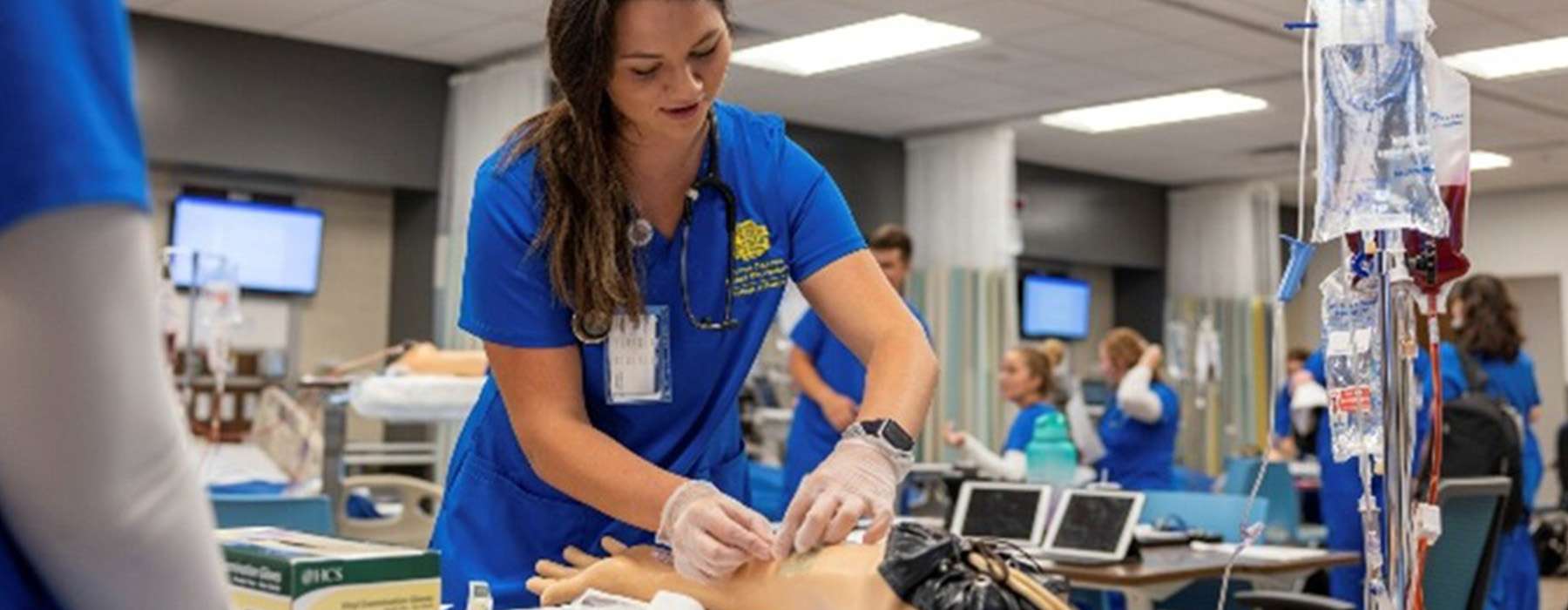
A nursing student practicing medical procedures on an arm simulator in a training environment.

What’s one practical takeaway programs can apply immediately to improve skills confidence?

Dr. Zweifel: “I think the biggest takeaway I have is, remember your learning theories. Because what I’ve seen is, there are faculty that are louder than others, that have opinions or previous experiences, or you’ll have one or two students that have a negative experience related to skills lab or practice.  

And you shouldn’t base your teaching styles just from those really loud people or that one or two students.  Go back to the theory. What’s the framework? What do we know from years and years of theory research?

And then taking that and building your course from it. Because there’s always that foundation that you need to keep, or your course will just explode and move in the wrong direction.  

I am constantly taking my team back to, ‘What’s our foundation? What’s our goal?’ It’s that deliberate practice. And then you can build in the technology, and then you can build in a little bit of freedom above that.”  


Key takeaway

Effective skills education starts by grounding course design in learning theory, then layering in deliberate practice, technology, and flexibility without losing that foundation.  

Any final thoughts?

Dr. Zweifel: “Remember your standards of best practice in simulation. They’re not written for a certain structure, a certain environment. Just always go back to those and ensure that everybody understands them and they’re doing them every time you’re teaching­—and then you’ll have a really strong foundation.” 

Contact us about Competency-based Education Solutions

Vi vil håndtere dine personlige kontaktopplysninger med forsiktighet som beskrevet Laerdal's Privacy Policy.

Vi vil håndtere dine personlige kontaktopplysninger med forsiktighet som beskrevet Laerdal's Privacy Policy.

You may also like...