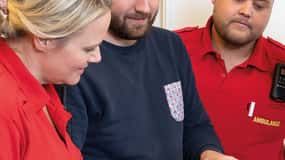
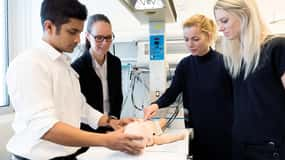
If you’re like many EMS educators, you likely struggle with finding time to dedicate to debriefing. But remember, the evidence is undeniable: research shows that without effective debriefing, learning won’t occur.2 It’s crucial to prioritize making the time for this critical piece of the simulation experience.
2
Remember that debriefing isn’t the same as feedback
Some EMS educators think of debriefing and feedback as interchangeable terms. While both are important, they have key differences. Feedback is typically a one-way delivery of performance information intended to modify behavior. It often consists of telling the learner what went right and what went wrong. Debriefing is a bidirectional, collaborative, and reflective conversation.
3
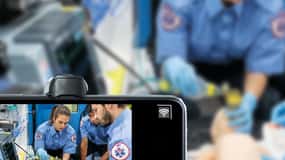
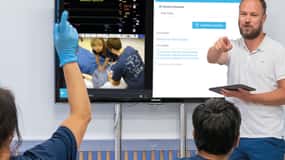
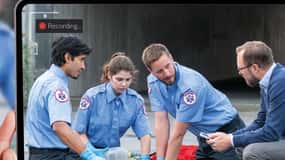
Leverage video-assisted debriefing
Video-assisted debriefing can give learners self-awareness of their psychomotor skills, body language, and more. “To give them that ‘view from the outside’ … I think it has the potential to really change the way we do debriefing,” says Ed Biebel, Clinical Simulation Manager of the School of Paramedic Sciences at Rowan College. Read how Rowan College found success using this approach with their paramedic students.
4
Let the Healthcare Simulation Standards of Best Practice®: Debriefing be your guide
Tried and tested, the Healthcare Simulation Standards of Best Practice®: Debriefing offers evidence-based best practices in the debriefing process. But many EMS programs aren’t taking advantage of this important resource, despite its relevance for all simulation environments – including the pre-hospital setting.3 Look to these Standards to guide you in ensuring your debriefings are solid.
5
Avoid turning your debriefing into a lecture
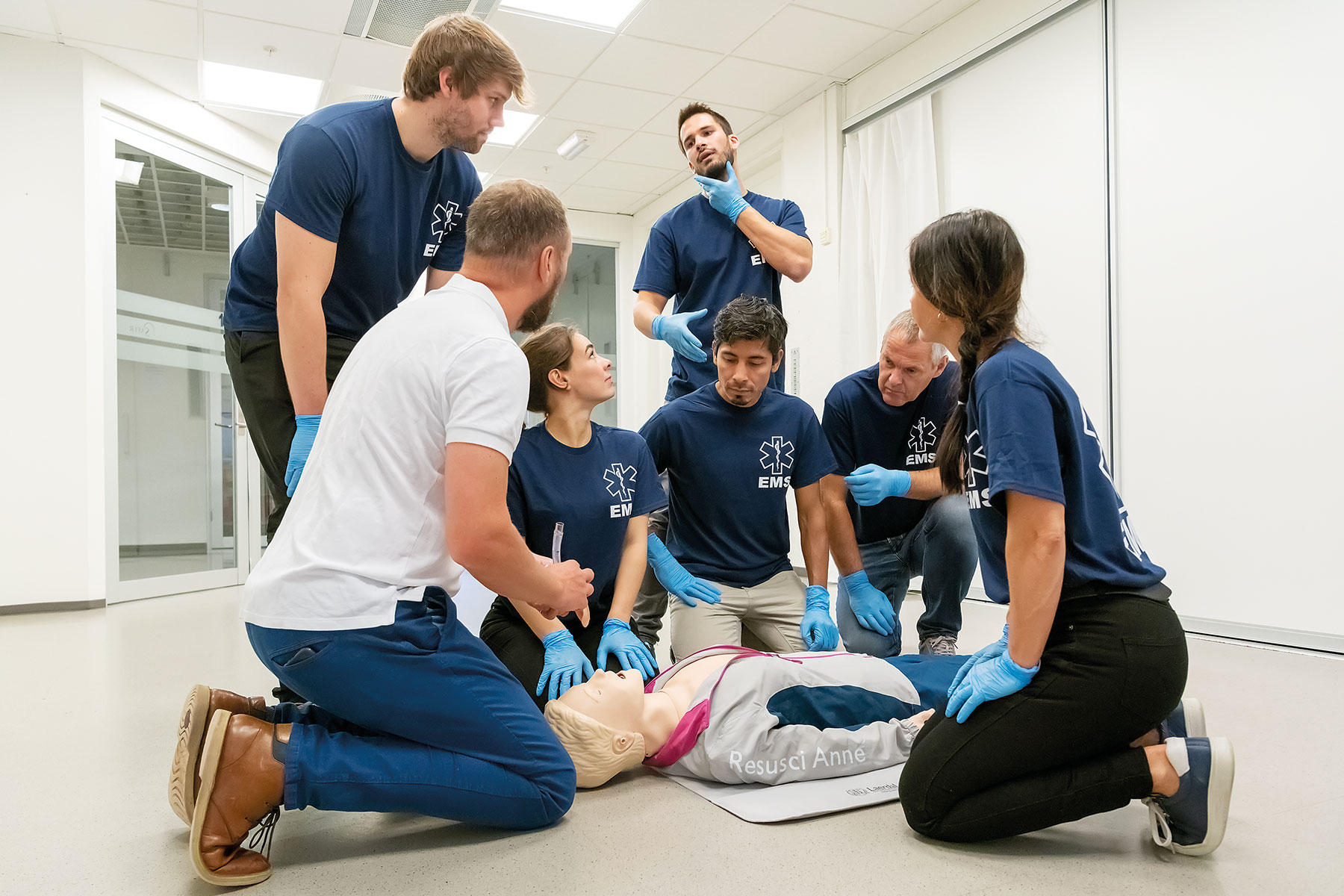
“You are not the sage on the stage. You are the guide by the side as a debriefer,” advises simulation expert Adrienne Wilk, PhD, RN, CHSE, CNE, CHSOS-A. “Lectures, they’re great – but keep them in the classroom. Debriefing is meant to be a learner-led process where you help them go through the steps, but you’re not lecturing at them – and that’s hard for us as educators.”4
6
Explore structured debriefing models
Using a theory-based debriefing model that is grounded in research will ensure that you’re using a “tried and true” method to guide your debriefing. Some well-known ones are Plus/Delta, GAS (Gather, Analyze, and Summarize – this is the method that the American Heart Association uses in their courses), and Debriefing with Good Judgment. Use your learning objectives, learner levels, and the amount of time you have available to debrief to help you determine the right model.5
7
Consider taking a debriefing course
About 45% of paramedic educators cite lack of debriefing training as a barrier to successfully implementing simulation.6 You may want to consider having your team take a course or workshop such as CORE Debriefing. Taught by a skilled educator, the course is designed to support novice or intermediate participants from protocol-driven organizations.
8
Evaluate your team's debriefing skills with the DASH tool
Remember the Debriefing Duties: “Make It Safe, Make It Stick, Make it Last.”
“Make It Safe” for learners by creating an engaging, psychologically safe environment. “Make It Stick” by guiding your learners to identify areas they need to improve and come up with solutions. Finally, “Make It Last” by asking each learner to come up with a key takeaway that they’ll work on in practice.7
10
Understand the importance of continued professional development
No simulation educator becomes an expert debriefer overnight: it’s a journey. The path to debriefing competence has even been described as a 3-stage process of discovery, growth, and maturity.8 Support your team with ongoing professional development strategies, such as peer feedback and mentorship, to meet them where they are on their journey from novice to expert debriefers.9
Cheng, A., Eppich, W., Kolbe, M., Meguerdichian, M., Bajaj, K., & Grant, V. (2019). 要約スキルを向上させるための概念的フレームワーク. シミュレーション健康管理: シミュレーション医療学会ジャーナル, 15(1), 1. https://doi.org/10.1097/sih.0000000000000398